

Imagine waking up at 3 AM to the steady rhythm of a heavy downpour, only to realize the familiar, rhythmic hum of your basement pump has gone silent. That sudden quiet often leads to a frantic dash downstairs, where you are left wondering exactly what happens when a sump pump fails during the peak of a storm. It is a stressful situation that many homeowners face, especially since standard insurance policies usually don't cover the resulting water damage without a specific, extra rider. We understand that feeling of uncertainty, and it is completely natural to worry about the health of a system that stays tucked away in a dark corner of your basement.
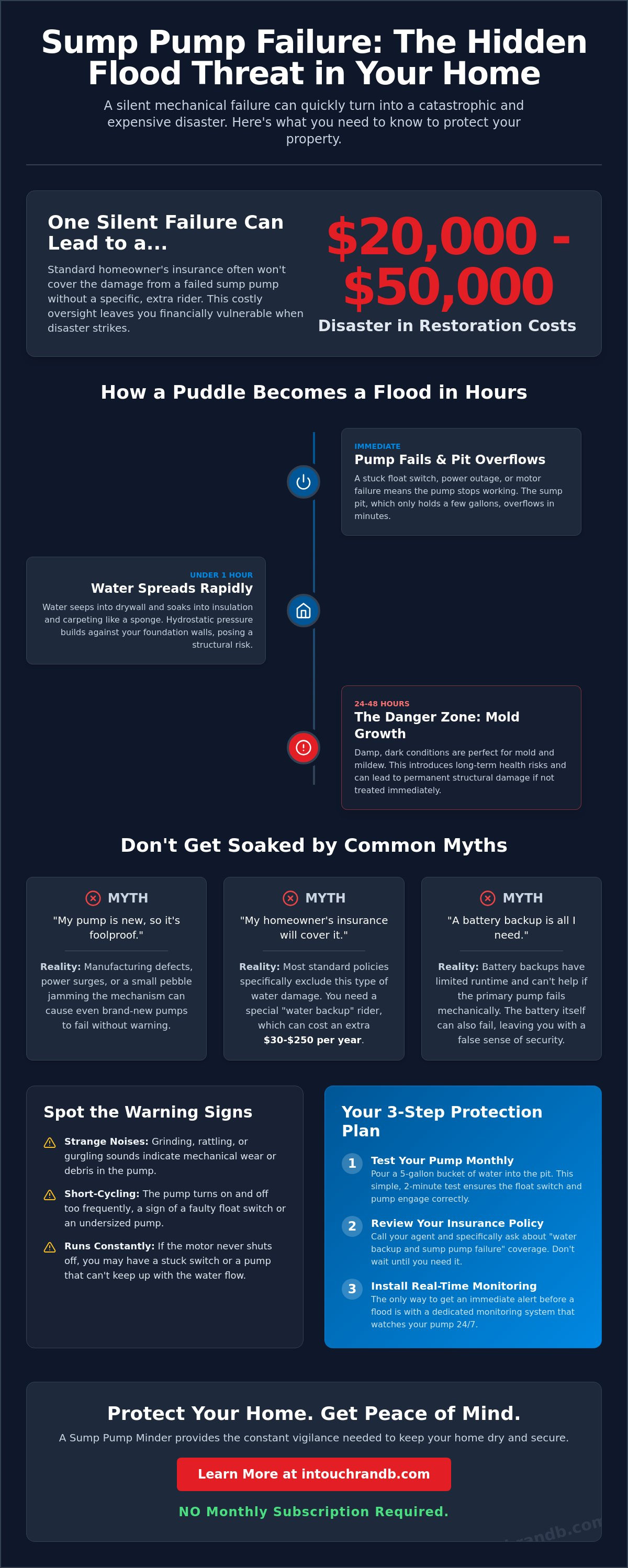
The reality is that a single failure can lead to restoration costs ranging from $20,000 to $50,000, but you don't have to wait for a flood to take control. This guide will walk you through the real-world consequences of pump failure and provide a clear timeline of how quickly water can escalate from a puddle to a disaster. You will also learn how to identify early warning signs, such as unusual vibrations or frequent cycling, and discover reliable ways to receive an immediate notification the moment your system needs attention. By the time you finish reading, you will have a practical plan to keep your basement dry and your mind at ease before the next storm hits.
Key Takeaways
- Learn exactly what happens when a sump pump fails so you can recognize the immediate risks to your foundation and basement.
- Audit your current setup by uncovering common myths about battery backups and the reliability of newer pumps.
- Identify early mechanical red flags like "short-cycling"—where the pump runs too often for short bursts—to catch problems before the storm hits.
- Understand the 24-to-48-hour timeline for mold growth to ensure you act quickly enough to prevent long-term structural issues.
- Discover how real-time alerts from a Sump Pump Minder provide the constant vigilance needed to keep your home dry and secure.
What Happens When a Sump Pump Fails? The Immediate Reality
Sump pump failure is the inability to manage incoming groundwater, leading to rapid basement inundation. When this happens, the water that is normally diverted away begins to collect in the sump pit immediately. This creates a chain reaction where hydrostatic pressure (the physical force of water pushing against a surface) builds up behind your foundation walls and beneath the floor. To get a better sense of the hardware involved, you can learn more about What is a Sump Pump? and how it serves as your first line of defense. Understanding exactly what happens when a sump pump fails starts with realizing that your foundation is constantly fighting against the weight of the earth and the water within it.
Once the pit overflows, the water follows the path of least resistance. This usually means it seeps into the bottom of your drywall and gets soaked up by fiberglass insulation like a sponge. Because water spreads quickly across a flat concrete floor, a small overflow can ruin the entire perimeter of a finished basement in minutes. If you aren't standing right there to see it, the first sign of trouble is often the smell of damp earth or the sight of wet carpet in a far corner.
To better understand this concept, watch this helpful video:
The Role of the Sump Pit
Think of the sump pit as a small holding tank that buys you a little bit of time, but it only holds a few gallons. The float switch acts as the brain of the operation; it is a buoyant device that rises with the water level to trigger the motor. If this switch becomes tangled or the motor fails, the water has nowhere else to go. In some cases, a failed check valve (the one-way flap in your plumbing) allows water already in the discharge pipe to rush back into the pit. This causes the pit to overflow even faster because you are fighting the same water twice. Knowing what happens when a sump pump fails helps you realize that the pit is just a temporary buffer, not a long-term solution.
Why Gravity is Your Basement’s Enemy
Groundwater naturally seeks the lowest point, which is the "bowl" created by your basement excavation. Without a working pump, your basement effectively becomes a swimming pool for the neighborhood’s runoff. It is a simple matter of physics. Even a small failure can lead to several inches of water in under an hour, especially during a heavy spring thaw or a summer thunderstorm. To stay ahead of this, you need a system like the Sump Pump Minder that monitors these levels for you and provides an alert before the water clears the rim of the pit.
Actionable Tip: Once a month, pour a five-gallon bucket of water into your sump pit. This simple test ensures the float switch moves freely and the pump engages as it should. If the water level doesn't drop immediately, you know you have a problem that needs fixing before the next rain starts.
Busting Common Myths About Sump Pump Protection
Many homeowners live with a false sense of security because they believe a few basic safety nets make them immune to flooding. However, understanding exactly what happens when a sump pump fails involves looking past these common misconceptions. Relying on outdated assumptions is often the primary reason why discovery happens too late. Let's look at the reality behind these myths so you can better audit your own home's defenses.
One of the most dangerous myths is the belief that standard homeowners insurance covers all flood damage. In reality, standard policies typically exclude damage caused by a failed pump. You usually need a specific "water backup and sump pump failure" endorsement. Verified data shows these riders typically cost between $30 and $250 per year; a small price compared to the $20,000 or more you might spend on restoration without it. Another common mistake is assuming a new pump is invincible. Mechanical items can fail at any time due to manufacturing defects, power surges, or even a small pebble jamming the impeller. Age is just one factor in a complex system.
The False Security of Battery Backups
While having a backup is a great step, it is not a "set it and forget it" solution. Batteries lose their charging capacity over time, often lasting only two to three years before they become unreliable. If the power goes out during a multi-day storm, a degraded battery might only provide a few hours of pumping. Additionally, backup pumps are prone to the same mechanical issues as primary ones, such as a stuck float switch or a clogged discharge line. If your backup fails while you are away, you are still left with the same devastating results.
Why Local Alarms Often Fail You
Most basic sump systems come with a local alarm that emits a high-pitched beep when water levels rise too high. The problem is that these buzzers only work if someone is there to hear them. If you are at work, running errands, or even just sleeping soundly on the third floor, that alarm is effectively useless. This creates what we call the "Notification Gap," which is the critical time between the equipment failure and the moment you actually find out. To close this gap, many homeowners are switching to sump pump alarms with remote alerts that send a notification directly to your phone.
Actionable Tip: Take ten minutes today to call your insurance agent and confirm you have a water backup rider. While you are at it, check the manufacture date on your backup battery; if it is more than three years old, it is time to replace it. For total peace of mind, consider a dedicated monitoring solution from inTouch R&B to ensure you are always the first to know when something goes wrong.
The Costly Consequences of Water Damage
The damage from a basement flood moves with surprising speed. Once you understand what happens when a sump pump fails, you realize that the ticking clock is your biggest enemy. It isn't just about the initial puddle; it is about how that moisture interacts with your home's infrastructure over the next few hours. The average cost of basement flood remediation often exceeds $10,000, depending on the water level and finishings, but for fully finished spaces, the bills can quickly climb between $20,000 and $50,000.
Finished basements face the highest costs because they contain expensive materials that weren't designed to get wet. Drywall, for example, acts like a wick, pulling water up several inches above the actual flood line. This means even a small amount of water requires cutting out large sections of wall to prevent hidden rot. Similarly, wooden studs and floor joists absorb water and swell, which can compromise the structural integrity of your home if the moisture isn't removed immediately. When you think about what happens when a sump pump fails, you have to look beyond the floor and consider the bones of the house itself.
Beyond the structural risks, consider the valuable personal property often kept in finished basements. For those with a home studio or music room, you might explore Acoustic Guitars at Acoustic Vibes Music to appreciate the level of craftsmanship that a dry, climate-controlled basement helps protect from humidity and water damage.
The Health Risks of Mold and Mildew
One of the most persistent issues is that mold can begin to colonize damp surfaces in as little as 24 to 48 hours. Stagnant groundwater is rarely "clean" water; it often carries organic matter that creates a perfect breeding ground for bacteria and fungal spores. If this moisture gets trapped behind drywall or under floorboards, it can lead to long-term respiratory issues and allergies for your family long after the visible water is gone. You might not see the problem, but you will certainly feel its effects on your indoor air quality.
Actionable Tip: If you experience even a minor spill or a small pit overflow, don't just mop it up. Always use a high-capacity dehumidifier for at least three days to pull deep-seated moisture out of the air and porous materials to prevent spore growth.
Electrical Hazards and Appliance Loss
When water levels rise, your basement's electrical systems become a major safety concern. Water reaching the furnace, water heater, or low-lying electrical outlets creates a lethal shock risk for anyone entering the area. Most water-damaged appliances must be replaced entirely rather than repaired because internal components corrode quickly and pose a fire hazard once they dry out. It is often safer and more cost-effective to install new units than to risk a mechanical failure later.
Knowing the status of your power is just as important as knowing the water level. Devices like the AC Minder can help monitor power status to these critical areas, ensuring you know if a circuit has tripped before your appliances are sitting in a pool of water. Protecting your home means being aware of every factor that contributes to a safe, dry environment.
How to Spot a Failing Pump Before the Storm
Waiting for a heavy rain to see if your equipment works is a risky strategy. By understanding what happens when a sump pump fails, you can appreciate why early detection is so critical. Most pumps don't just quit without warning; they usually send out distress signals in the form of sound or erratic behavior. Catching these signs during a dry spell gives you the luxury of time to repair or replace parts without the pressure of rising water.
Listen for unusual noises like grinding or loud thumping. These sounds often indicate a failing motor or a damaged impeller (the internal fan that pushes the water). Excessive vibration is another red flag that suggests the pump is no longer balanced or has sucked up debris. Another sign to look for is "short-cycling." This happens when the pump turns on and off every few seconds. It is often caused by a faulty float switch or a check valve that is stuck open, allowing water to flow back into the pit. This constant starting and stopping wears out the motor much faster than normal operation.
This attention to mechanical warning signs is equally important in industrial environments, where technicians often explore Jaltest MHE (Material Handling Equipment) Kit to diagnose issues in heavy lifting machinery and prevent costly operational downtime.
Actionable Maintenance Checklist
Routine care is the best way to ensure your basement stays dry. You should clear the intake screen of small stones or silt at least twice a year to maintain maximum suction. While you are down there, check the discharge pipe for clogs, ice, or debris that might block the water flow. It is also vital to ensure the discharge line carries water at least 10 feet away from your foundation to prevent it from simply seeping back into the pit. Finally, always verify that the pump is plugged into a dedicated outlet; sharing power with other appliances can lead to tripped breakers at the worst possible moment.
The "Bucket Test" for Peace of Mind
One of the best ways to verify your system is to safely simulate a rain event. This "Bucket Test" is simple and takes less than five minutes. First, slowly pour a five-gallon bucket of water into the sump pit. Watch the float switch as it rises; it should move freely without catching on the sides of the pit. Once the pump engages, it should empty the pit completely and shut off without struggling. Taking these steps helps prevent the chaotic scenario of what happens when a sump pump fails in the middle of the night.
Actionable Tip: Keep a stopwatch handy during your test. If the pump takes more than 30 seconds to empty a standard pit, the motor may be weakening or the discharge line could be partially blocked. To ensure you never miss these warning signs, consider a reliable remote monitoring system that watches your pump when you can't.
Securing Your Home with Real-Time Monitoring
By now, you understand the high stakes of what happens when a sump pump fails, but the final piece of the puzzle is how you stay informed before the water reaches your floorboards. Mechanical repairs and maintenance are vital, but they cannot help you if a failure occurs while you are away or asleep. This is where real-time monitoring transforms your basement from a source of anxiety into a managed part of your home. Instead of discovering a flood days later, remote monitoring allows you to react within minutes, giving you the window of time needed to call a plumber or swap out a pump.
The Sump Pump Minder acts as the ultimate watchful guardian for your basement, bridging the "notification gap" we discussed earlier. While many modern systems rely on your home's WiFi, those can be unreliable during the very storms when you need them most. If the power flickers and your router resets, a WiFi-based alarm may lose its connection. Choosing a system that utilizes cellular alerts ensures that even if your local internet goes down, the signal still gets through. You can find more detail on how to stay notified if your sump pump fails in our comprehensive guide to remote alerts.
Why Sump Pump Minder is Different
This system operates on a simple but effective "trigger and response" mechanism. When the sensor detects that water has risen past a safe level, an immediate notification is sent directly to your smartphone. This happens instantly, regardless of whether your primary pump or your battery backup is the one struggling. Because it is designed for maximum reliability, it provides a layer of protection that standard backups alone simply cannot match. For a full breakdown of technical specifications and how it integrates with your existing pit, visit the Sump Pump Minder product page.
The Relief of Being Informed
There is a significant emotional shift that happens when you move from "storm anxiety" to "informed security." You no longer have to run to the basement every time you hear thunder just to check the water level. This device fits into a larger property damage prevention strategy that protects your home's value and your family's health. By knowing exactly what happens when a sump pump fails and having a plan to catch it, you can finally enjoy the peace of mind you deserve.
Actionable Tip: Once your monitoring system is installed, perform a "live alert test." Trigger the sensor manually and time how long it takes for the notification to reach your phone. Knowing that the system is active and responsive will give you the confidence to trust it during the next big storm.
NO Monthly Subscription Required.
Take Control of Your Basement's Safety
Protecting your home starts with moving beyond the myths of "good enough" equipment and embracing a strategy of constant vigilance. You now understand that what happens when a sump pump fails isn't just a mechanical breakdown; it's a race against time that can lead to rapid structural damage and mold growth. By performing regular maintenance and clearing intake screens, you can catch many issues before they start. However, true peace of mind comes from knowing you'll be notified the moment your water levels rise, no matter where you are.
The Sump Pump Minder provides this essential security through real-time cellular alerts that remain active even if your home's WiFi fails during a storm. It is designed for an easy DIY installation, making it the most reliable protection for finished basements and high-value storage areas. You don't have to spend another stormy night wondering if your basement is flooding. Protect your basement with the Sump Pump Minder today and take the first step toward a drier, safer home.
NO Monthly Subscription Required.
Frequently Asked Questions
Is it normal for a sump pump to run constantly during heavy rain?
It is common for a pump to run frequently during a storm, but it shouldn't run indefinitely without a break. If the motor never shuts off, the volume of incoming water might be matching the pump's maximum discharge rate. You should check the discharge pipe to make sure water is actually leaving the house; if the pump is running but the pit stays full, the impeller could be damaged or the line might be blocked.
How long does a typical sump pump last before it fails?
Most sump pumps have a reliable lifespan of seven to ten years. This timeline can vary depending on how often the pump cycles and the quality of your groundwater, such as high levels of silt or minerals that wear down the motor. It is wise to consider a replacement once you hit the seven-year mark to avoid the stress of what happens when a sump pump fails unexpectedly during a major weather event.
Can a sump pump fail even if the power is still on?
Yes, many failures are mechanical and have nothing to do with your electrical service. A pump can fail due to a burnt-out motor, a jammed impeller, or a float switch that has become tangled or stuck against the side of the pit. This is why regular testing is so important; it ensures that all the moving parts are functioning correctly even when your home's power is perfectly stable.
What is the most common cause of sump pump failure?
The most frequent cause of failure is a problem with the float switch. This component can become stuck, pinned against the basin wall, or weighed down by debris, which prevents the pump from activating as the water rises. Keeping your sump pit clear of stones and dirt is a simple way to prevent the majority of these common mechanical issues from occurring in the first place.
What should I do immediately if I find my basement is flooding?
Your first step must be safety, so don't enter the water until you've turned off the electricity to the basement at your main breaker. Once it's safe, check to see if the pump is simply unplugged or if the discharge line is blocked by ice or debris. If the pump has failed completely, using a wet-dry vacuum or a portable utility pump can help manage the water until professional help arrives.
Does a battery backup pump need its own discharge pipe?
While many systems tie the backup into the main discharge line with a connector, a dedicated second pipe is much safer. Having its own path outside ensures that the backup can still function even if the primary pipe is blocked by ice or a clog. If you do share a line, make sure your check valves are working perfectly to prevent water from flowing back into the pit.
Will a sump pump alarm work if my home WiFi goes down during a storm?
A standard WiFi-based alarm will not send notifications if your router loses power or your internet connection is interrupted. This is a significant weakness during severe storms when power outages are common. For the best protection, choose a monitoring system that uses a cellular connection, as it operates independently of your home network and ensures you get the alert even if your internet goes dark.
How much water is too much in a sump pit?
Water should never be allowed to reach the rim of the pit or spill onto your basement floor. Ideally, the pump should trigger when the water is at least six inches below the floor level to provide a safe buffer for sudden surges. If the water consistently sits near the top of the basin, your pump might be undersized for the amount of groundwater your home is handling.
NO Monthly Subscription Required.

Article by
Jimmy Nesbitt
Principle
Be the first to comment