

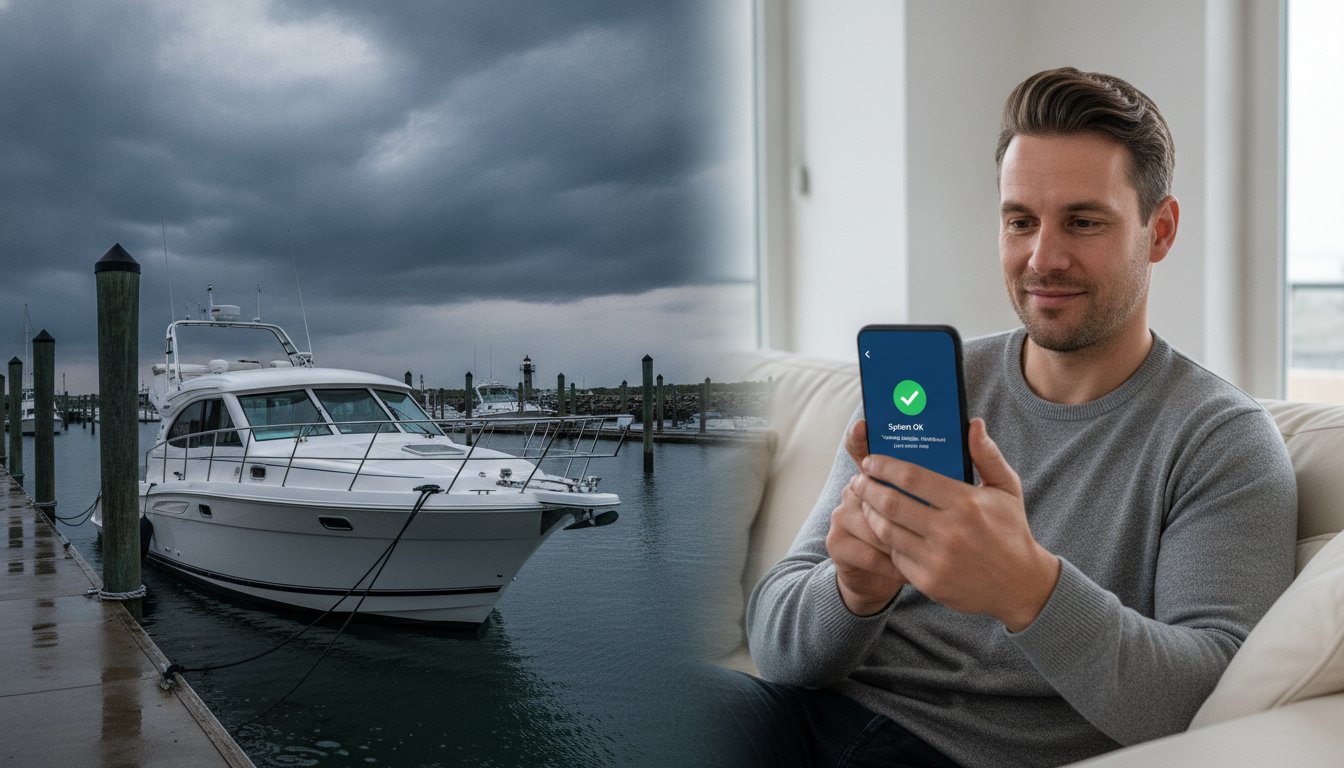
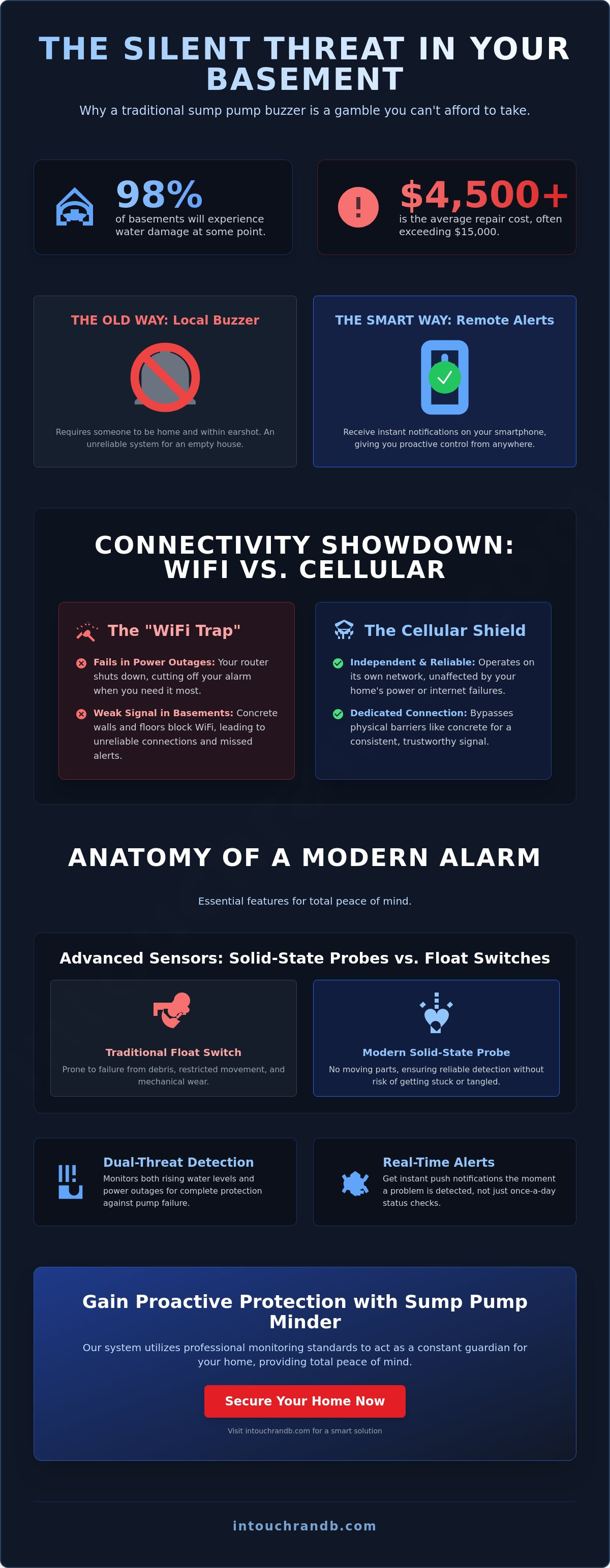
Did you know that 98% of basements in the United States will experience some form of water damage at some point? With the average repair cost for a flooded basement reaching approximately $4,500 in 2025, the risk is both high and expensive. If you currently rely on a simple local buzzer, you're likely worried that you won't hear the alarm from upstairs or, worse, while you're away from home. Relying on a system that only makes noise in an empty house isn't a strategy; it's a gamble. Investing in a sump pump alarm with remote alerts ensures that your home remains under a watchful eye regardless of your location.
We understand the need for a solution that offers pragmatic reassurance through technical reliability. In this guide, you'll learn how to select a monitoring system that notifies your smartphone the moment a potential flood is detected. When the water level reaches a critical point, the system initiates a digital alert that reaches you in seconds. We'll examine the latest 2026 safety standards, including the differences between WiFi and cellular reliability, so you can choose hardware that acts as a dedicated guardian for your property. This overview provides the clarity you need to move from uncertainty to total peace of mind.
Key Takeaways
- Understand why a cellular connection provides more reliable protection than WiFi by maintaining a signal even when your home's power and router fail.
- Learn how to evaluate a sump pump alarm with remote alerts based on its ability to detect both rising water levels and tripped breakers before the pit overflows.
- Discover the mechanical advantages of solid-state probes over traditional float switches to prevent sensor failure caused by debris or restricted movement.
- Identify the specific installation steps required to verify your system's signal strength and set optimal sensor heights for early notification.
- Gain insight into how the Sump pump minder utilizes professional monitoring standards to act as a constant guardian for your home's most vulnerable areas.
Table of Contents
-
WiFi vs. Cellular: Evaluating Connectivity for Reliable Notifications
-
The Sump pump minder Advantage: Professional Protection by inTouch R&B
Why a Local Sump Pump Buzzer is No Longer Enough
For decades, the standard for basement protection was a simple, high-decibel buzzer. These devices are designed to scream when water reaches a critical level, but they possess a fundamental flaw: they require a human listener. If you're in a deep sleep, working in a detached office, or enjoying a weekend getaway, that 90dB siren is nothing more than background noise to an empty house. This audibility gap is why traditional alarms often fail to prevent the very damage they were built to detect. When no one is home to hear the alarm, the water continues to rise, unchecked and unnoticed.
Transitioning to a sump pump alarm with remote alerts "@ inTouchRandB.com "Sump Pump Minder" changes the dynamic of home protection. Instead of hoping you're within earshot, you receive a direct notification on your smartphone the moment a sensor is triggered. This shift moves you from a reactive state, where you discover a flood after the fact, to a proactive state, where you intercept the water before it crests the pit. This is especially vital for travelers. The "Vacant Home" risk is a reality for anyone who leaves their property for work or vacation; without remote connectivity, your basement's safety is left entirely to chance.
The financial stakes have never been higher. Industry data from 2025 shows that the average cost of basement water damage repair is approximately $4,500. For severe flooding incidents, homeowners often face bills exceeding $15,000 for structural drying and mold remediation. Because high-moisture environments also invite unwanted pests, Mosquito Assassin Pest Control LLC provides the expertise needed to maintain a clean, secure property. A remote alert system acts as a cost-effective insurance policy, providing the early warning necessary to call a plumber or neighbor before the damage escalates.
The Anatomy of a Sump Pump Failure
Failure isn't always a dramatic mechanical breakdown. It can be a tripped breaker during a thunderstorm, a clogged check valve, or a stuck float switch. To better understand these risks, it's helpful to review what a sump pump is and how its various components interact to move water away from your foundation. The most dangerous scenario is the "silent failure," where the pump appears to be receiving power but cannot move water due to an internal clog or air lock. Environmental sensors integrated into a sump pump alarm with remote alerts detect these anomalies by monitoring water levels directly, ensuring you aren't blindsided by a pump that's running but failing.
The Evolution of Remote Notification Technology
Technology has moved far beyond the clunky phone dialers of the past that required a dedicated landline. Modern systems utilize cloud-based push notifications and cellular backups to ensure messages get through even if your home's primary internet goes down. While some basic models offer once-a-day status checks, real-time data is superior because water levels can rise from safe to critical in a matter of minutes during a heavy downpour. Remote sump monitoring is a 24/7 digital guard that provides constant vigilance for your home's foundation.
WiFi vs. Cellular: Evaluating Connectivity for Reliable Notifications
Selecting the right connectivity method is the most critical decision you'll make when securing your basement against flooding. Many homeowners fall into the "WiFi Trap" by assuming their home network is a constant. During the severe weather events that typically overwhelm a sump pit, power outages are frequent. If your utility power fails, your WiFi router shuts down instantly. Unless you've invested in a high-capacity Uninterruptible Power Supply (UPS) for your networking gear, your sump pump alarm with remote alerts becomes effectively useless the moment the lights go out.
Basements also present unique physical challenges for wireless signals. Standard home routers often struggle to penetrate reinforced concrete walls or flooring, leading to "dead zones" where signals frequently drop. A system that cannot maintain a steady connection is a system you cannot trust. While WiFi hardware often has a lower upfront cost, the risk of a missed notification during a storm is a significant trade-off. Cellular systems bypass these vulnerabilities by utilizing dedicated networks that operate independently of your home's internet service provider (ISP) and power grid.
When WiFi Makes Sense (And When It Does Not)
WiFi remains a viable option for homeowners on a strict budget who live in areas with exceptionally stable power grids. However, for a WiFi-based system to be properly maintained, it requires a dedicated backup power source for the router and the alarm unit itself. You can find more details on how to keep your pump and its accessories properly maintained through university extension resources. Even with backup power, subterranean installations are prone to signal interference from large appliances or metal ductwork, which can delay or block critical alerts.
The Cellular Advantage for Critical Infrastructure
Professional systems prioritize cellular connectivity because it functions during total grid failures. These units include internal batteries that keep the cellular module active, allowing the device to send a "Power Lost" notification before switching to monitoring mode. Modern cellular modules also perform regular "heartbeat" checks (automated signals sent to a central server) to verify they are still online. If the server doesn't receive a heartbeat, it notifies you that the system is down. Because of this resilience, cellular is the gold standard for unoccupied property security. For those seeking this level of professional-grade reliability, exploring a dedicated Sump pump minder provides the necessary redundancy to protect your assets 24/7.
Critical Features of a High-Quality Sump Pump Alarm
A high-quality sump pump alarm with remote alerts @ inTouchRandB.com "Sump Pump Minder" must function as more than a simple water sensor; it acts as an intelligent diagnostic hub for your basement's health. While basic models only trigger when water touches a probe, professional-grade systems monitor the entire ecosystem of the sump pit. This includes the mechanical state of the pump, the integrity of the electrical circuit, and the environmental conditions of the room. When these variables are tracked simultaneously, the system provides a comprehensive safety net that local buzzers simply cannot match.
The choice of sensing technology is the first line of defense. Traditional float switches rely on a mechanical arm that rises with the water level, but these are prone to "hang-ups" if they catch on the side of the pit or become encumbered by debris. Solid-state probes are a superior alternative because they use electrical conductivity to detect water, meaning there are no moving parts to fail. By utilizing a sump pump alarm with remote alerts equipped with solid-state sensors, you eliminate the most common mechanical failure point in the monitoring chain.
Multi-Point Sensing for Total Protection
Reliable protection requires monitoring the power source just as closely as the water level. If a circuit breaker trips during a storm (a frequent occurrence when lightning strikes nearby), your pump is paralyzed regardless of its mechanical condition. A high-quality monitor detects this loss of current immediately and sends a notification before the water even begins to rise. Advanced systems also incorporate "cycle counting" to track how often the pump runs. If the device detects that the pump is cycling every 60 seconds, it may indicate a failing check valve or an overwhelming volume of water. Additionally, integrated humidity and temperature sensors provide early warnings for pipe sweat or freezing conditions, which can lead to burst discharge lines during winter months.
Notification Logic and "Alert Fatigue"
The effectiveness of a remote system depends on its ability to reach you without causing "alert fatigue." A well-designed mobile dashboard allows you to customize your notification preferences, ensuring that critical alarms (like high water) arrive via SMS or phone call, while routine status updates arrive via email. Escalation protocols are equally vital for true peace of mind. If the system detects a critical failure and you do not acknowledge the alert within a set timeframe, the software can automatically notify a secondary contact, such as a neighbor or a local plumber. This ensures that a response is initiated even if you are on a long-haul flight or in a meeting where your phone is silenced.
Installation and Integration: Setting Up for Success
Installing a sump pump alarm with remote alerts @ inTouchRandB.com "Sump Pump Minder " is a straightforward process, but the precision of your setup determines the system's ultimate reliability. The most critical factor is the vertical placement of the high-water sensor. If the sensor is mounted too low, it triggers nuisance alarms during normal pump cycles. If it's placed too high, the water may already be escaping the pit before you receive a notification. Ideally, you should secure the sensor approximately two to three inches above the pump's primary activation point. This provides a sufficient buffer for the pump to function while giving you ample lead time if a failure occurs.
Step-by-Step Hardware Mounting
Begin by securing the sensor to the Sump Pump Basin at a high level sensor will be triggered with mounting brackets or heavy-duty zip ties. You must ensure the sensor is perfectly vertical to prevent internal components from sticking. Once the sensor is in place, route the cables along the discharge pipe, securing them every twelve inches to avoid entanglement with the pump's own float switch. This is a common failure point that can lead to a pump staying "on" or "off" indefinitely. Regarding power, many professionals recommend using a dedicated circuit for the alarm to prevent a tripped breaker on the pump from also killing the monitoring unit. Also mount the CT (Current Transformer) with the Sump Pump wires going through the center of the CT If your alarm system requires a standard outlet, ensure it's not on a GFCI circuit that might nuisance trip during a lightning storm, though you should always follow local electrical codes for the pump itself.
Configuring inTouch RandB's "Sump Pump Minder "
After the hardware is physically installed, the focus shifts to the digital connection. Download the manufacturer's mobile app and follow the pairing instructions to link the device to your account. This is the stage where you verify signal strength. Since basements are often shielded by concrete, you might need to adjust the position of the transmitter or add a signal booster to ensure a consistent connection. Once the app shows a "healthy" status, perform a "wet test" by manually lifting the sensor or placing it in a small container of water. When the sensor detects moisture, the system should push a notification to your phone within seconds. Performing a manual test of your alarm system at least twice a year ensures that the hardware and digital notification pathways remain fully operational before a storm arrives. For a reliable, professional-grade solution, the Sump pump minder offers the robust connectivity needed for high-stakes environments.
Maintenance of your remote monitoring hardware should be an annual habit. This includes wiping the sensor probes with a clean cloth to remove mineral deposits and checking the status of any internal backup batteries. If your system provides a dashboard, review the logs to see if there have been any missed "heartbeat" checks, which could indicate a weakening cellular or WiFi signal. Taking these steps ensures that your protective vigilance remains active 24/7.
The Sump pump minder Advantage: Professional Protection by inTouch R&B
Choosing a sump pump alarm with remote alerts @ inTouchRandB.com "Sump Pump Minder " is a decision that impacts the long-term security of your home's foundation. While the market is flooded with generic, consumer-grade hardware, the Sump pump minder is engineered specifically for zero-fail environments. At inTouch R&B, our philosophy is rooted in protective vigilance. We believe that property owners deserve more than just a notification; they deserve a dedicated, ever-present guardian for their most valuable assets. By focusing exclusively on critical equipment monitoring, we've developed a system that eliminates the common vulnerabilities found in standard DIY alarms.
The specialized focus of inTouch R&B means our technology is built to withstand the unique challenges of subterranean environments. Generic hardware often treats water detection as an afterthought, bundled into a suite of less critical smart home gadgets. In contrast, our team understands that a missed alert in the basement can lead to catastrophic financial loss. This commitment to safety is reflected in the rugged construction and redundant communication pathways of our monitoring systems. When you invest in our technology, you're gaining the expertise of a small, dedicated team that values thoroughness and transparency over quick sales pitches.
Built for Reliability
The Sump pump minder utilizes advanced sensing technology designed to function precisely when conditions are at their worst. By employing high-accuracy probes that resist mineral buildup and corrosion, the system ensures that water detection remains consistent over years of service. You'll experience the relief of being informed through immediate, real-time notifications delivered directly to your devices. If a trigger event occurs, such as a rapid rise in water or a loss of primary power, the system initiates a response sequence that keeps you ahead of the crisis. Furthermore, our support team provides professional expertise to help you navigate any technical questions, ensuring your sump pump alarm with remote alerts is always optimized for your specific basement layout.
Part of a Complete Monitoring Suite
Effective property protection rarely stops at the sump pit. The Sump pump minder is designed to integrate seamlessly into a broader property protection strategy. You can pair your basement monitoring with our HVAC Minder and AC Minder systems to create a comprehensive safety net for your entire home. This integration allows you to manage multiple environmental risks through a single, organized dashboard, simplifying your oversight and reducing the complexity of home maintenance. By centralizing your alerts, you ensure that no critical failure goes unnoticed, whether it's a leaking furnace or a failing pump. You can Secure your basement with the Sump Pump Minder today and experience the pragmatic reassurance that comes with professional-grade monitoring.
Securing Your Foundation for the Long Term
Protecting your home from the financial and structural impact of a flood requires moving beyond proximity-based alarms. Relying on a local buzzer is an unnecessary gamble when modern connectivity offers a more reliable path. By prioritizing cellular connectivity and multi-point sensing, you ensure that your notification system remains active even when the grid fails. This proactive approach transforms your basement from a source of anxiety into a managed environment where you are always in control of the situation.
Investing in a sump pump alarm with remote alerts provides the relief of being informed regardless of your location. Since 2022, inTouch R&B has specialized in remote monitoring technology, providing rugged hardware designed specifically for critical equipment. Our systems deliver real-time notifications to your smartphone, allowing you to initiate an immediate response before water damage begins. You don't have to leave your property's safety to chance when you have a dedicated digital guardian in place, utilizing the same principles of intelligent automation that IntellifyAi applies to drive large-scale enterprise transformations.
Take the final step toward complete peace of mind and protect your home from water damage with the Sump pump minder . With the right technology watching over your foundation, you can travel with confidence and rest easy knowing your home is secure.
Frequently Asked Questions
How does a sump pump alarm with remote alerts differ from a standard alarm?
A standard alarm relies on a local buzzer that only notifies those within earshot of the basement. In contrast, a sump pump alarm with remote alerts sends a digital notification directly to your smartphone or email. This ensures that you're informed of a rising water level even if you're at work, traveling, or sleeping in a different part of the house. It transforms a localized noise into a global notification system.
Will my remote alarm work if the power goes out during a storm?
Functionality during a power outage depends on the system's connectivity and battery backup. WiFi-based alarms typically stop working if your router loses power, unless you have a backup power supply for your home network. Cellular systems are more resilient because they operate on a dedicated network and often include internal batteries. These batteries keep the alarm unit active so it can send a "Power Lost" alert before the pit overflows.
Do I need a professional to install a remote sump pump monitor?
Most remote monitoring systems are designed for straightforward DIY installation. The process generally involves mounting a sensor in the sump pit and plugging the transmitter into a standard wall outlet. While the hardware is easy to handle, you must be precise when setting the sensor height to avoid false triggers. If you're uncomfortable working near the water and electrical components of your sump pit, a local plumber can complete the setup in under an hour.
Can I get alerts on multiple phones or for a second home?
Modern monitoring platforms allow you to add multiple recipients to your notification list. You can configure the system to alert your spouse, a neighbor, or a property manager simultaneously. Additionally, most mobile dashboards support multi-device management. This allows you to monitor your primary residence and a vacation property from the same application, providing a centralized view of your property's safety status.
How often should I test my sump pump remote alert system?
You should perform a manual test of your sump pump alarm with remote alerts at least twice a year. A proper test involves lifting the sensor or placing it in a container of water to verify that the trigger reaches your phone within seconds. Regular testing ensures that both the physical sensors and the digital notification pathways are fully operational before the rainy season begins. It's a simple habit that prevents system failure when it matters most.
Does a remote alarm replace the need for a battery backup pump?
No, a remote alarm is a monitoring tool rather than a mechanical backup. The alarm's job is to notify you that a failure has occurred so you can take action. A battery backup pump is a secondary piece of hardware that physically moves water if your primary pump fails or loses power. For the highest level of protection, you should use both: a backup pump to handle the water and a remote alarm to tell you that the backup has been activated.
Can Sump Pump Minder systems monitor for basement temperature or humidity as well?
Yes, Many high-quality remote monitors include environmental sensors that track more than just water levels. These units can alert you if the basement temperature drops toward freezing, which helps prevent burst pipes. They also track humidity levels to warn you of slow leaks or conditions that could lead to mold growth. This multi-point sensing approach provides a more comprehensive safety net for your home's foundation and mechanical systems.

Article by
Jimmy Nesbitt
Principle
Be the first to comment