

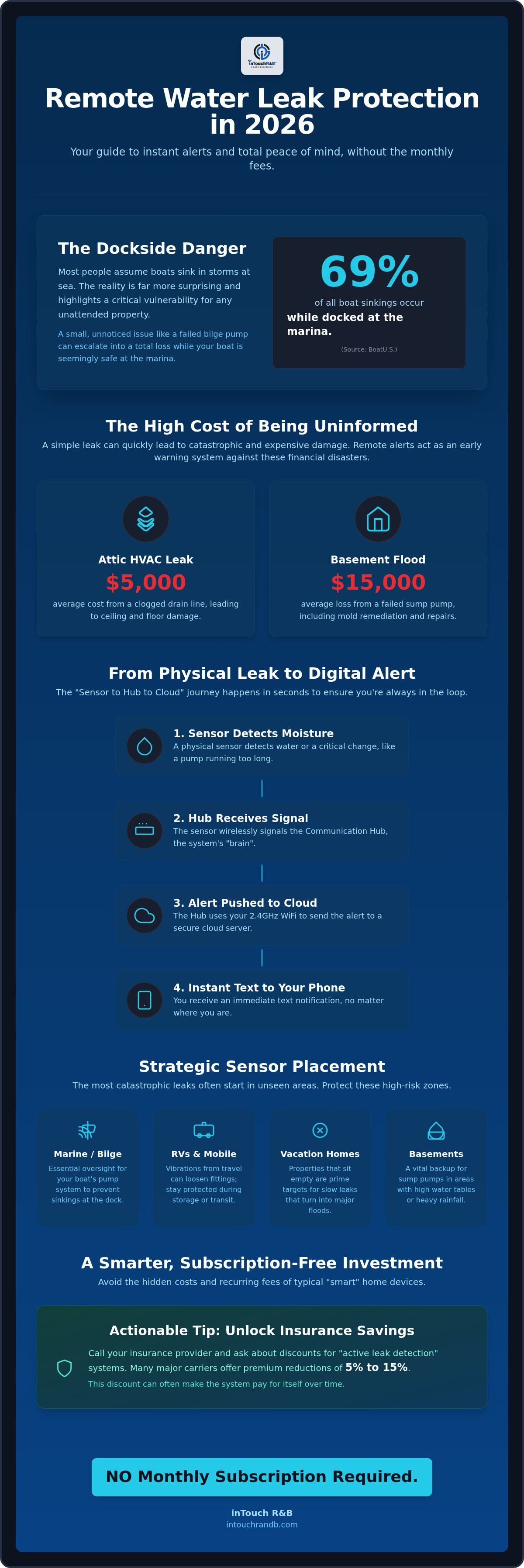
Did you know that according to BoatU.S., 69% of all boat sinkings happen while the vessel is safely docked at the marina? It's a sobering thought that highlights how quickly a small leak can turn into a total loss when you aren't there to see it. Whether it's a bilge pump failing on your boat or a pipe bursting in your basement, the fear of coming home to a flooded disaster is something every property owner understands. You want to feel secure when you're away, but nobody likes the idea of being tethered to another smart device that demands a monthly fee just to keep you informed.
That's where a reliable water leak text alert system becomes your most trusted guardian. In this 2026 guide, you'll discover how to set up a remote monitoring system that sends instant notifications directly to your phone the moment moisture is detected. We'll walk you through the simple steps of using a captive portal, which is a user friendly setup screen in your browser, to connect your devices to 2.4GHz WiFi without the usual technical headaches. You'll learn exactly where to place sensors for maximum protection and how to achieve total peace of mind for a one time cost.
Key Takeaways
- Learn why a water leak text alert system acts as a 24/7 digital guard, replacing outdated floor alarms with instant notifications sent straight to your smartphone.
- Understand how the "Sensor to Hub to Cloud" process bridges the gap between a physical leak and a digital alert so you can act before damage occurs.
- Discover how to avoid the hidden costs of "smart" home devices by choosing a standalone system that provides full protection without recurring monthly fees.
- Identify high-risk zones in your home or boat, such as attic HVAC units and bilge areas, to ensure your sensors are placed exactly where a leak is most likely to start.
- Explore specialized solutions like the Bilge Minder and Sump Pump Minder to protect your most valuable assets from catastrophic water damage while you are away.
What is a Water Leak Text Alert System and Why Do You Need One?
Think of a water leak text alert system as a digital sentry that stands guard over your property's most vulnerable areas 24 hours a day. While traditional floor alarms rely on a loud siren to wake you up in the middle of the night, modern technology has shifted toward remote notifications. These systems don't just make noise; they take action by sending a direct message to your smartphone the second moisture is detected. This shift from "beeping" to "texting" means you can respond to a plumbing failure from across the street or across the country.
The cost of staying uninformed is high. For example, a clogged drain line in an attic-based HVAC Minder setup can lead to ceiling collapses and floor damage averaging $5,000. If a primary pump fails in a finished basement, the resulting flood often results in a $15,000 loss once you factor in mold remediation and structural repairs. A reliable alert system acts as a proactive shield against these catastrophic expenses.
Actionable Tip: Call your insurance provider today to ask about "active leak detection" discounts. Many major carriers offer premium reductions of 5% to 15% when you install a monitored system, effectively letting the technology pay for itself over time.
The Difference Between Local Alarms and Remote Alerts
Local alarms are simple devices that emit a high-pitched sound when their sensors get wet. They are useful if you are standing in the next room, but they are completely ineffective if you are at work or out for dinner. Remote systems bridge this gap by using a communication hub, which is a small device that acts as a translator between your sensors and your phone. By utilizing leak detection technology, these systems ensure that the "relief of being informed" is always within reach, no matter where you are.
Critical Environments: Beyond the Kitchen Sink
While most people think of leaks under the sink, the most damaging water events happen in less visible areas. Property owners must consider these high-risk environments:
- Marine Protection: According to BoatU.S., 69% of boat sinkings happen while the vessel is docked. A Bilge Minder provides essential oversight for your boat's pump system.
- RV and Mobile Monitoring: Vibrations from travel can loosen fittings in RV plumbing. Remote monitoring ensures your mobile home stays dry during storage or transit.
- Vacation Homes: Properties that sit empty for weeks are prime targets for slow leaks that turn into major floods.
- Basements: A Sump Pump Minder is a vital backup for homes in areas with high water tables.
How Remote Leak Detection Technology Works
Understanding how a water leak text alert system operates helps you trust the protection it provides. The process follows a logical "Sensor to Hub to Cloud" journey that happens in seconds. First, a sensor detects moisture or a mechanical change, such as a pump running too long. It immediately sends a signal to the Communication Hub, which acts as the "brain" of the system. This hub then uses your local internet connection to push an alert to a secure cloud server, which finally delivers a text message to your smartphone. This chain of events ensures you're never out of the loop when your property is at risk.
Most reliable systems utilize 2.4GHz WiFi because it's the "long-distance runner" of wireless frequencies. While 5GHz is faster for streaming movies, 2.4GHz has a much better ability to travel through thick concrete basement walls or across a marina dock. Using this frequency ensures your hub stays connected even in challenging environments. Beyond just protecting your assets, these devices help reduce water waste by catching small drips before they become massive floods. To ensure your system works perfectly, you can explore our full range of protection systems designed for various property types.
Actionable Tip: Before you mount your hub, take your smartphone to the exact spot where you plan to install the sensor. Check if you have at least two bars of WiFi signal on the 2.4GHz band. If the signal is weak, you might need a simple range extender to bridge the gap.
Sensors: The Front Line of Protection
Sensors come in different styles to match specific needs. Moisture-wicking floor sensors are perfect for placing under a water heater or behind a toilet. However, for more complex environments, you might need specialized equipment. For instance, the Bilge Minder uses sensors that track voltage and pump run-time. This allows it to distinguish between normal operation and a potential emergency. Wired sensors are often preferred in permanent installations for their reliability, while wireless options offer flexibility for hard-to-reach corners.
The Setup Process: From Box to Smartphone
Setting up a modern alert system is much easier than it used to be. Most devices now use a "Captive Portal," which is essentially a private setup webpage. When you first power on the hub, it creates its own temporary WiFi signal. You connect your phone to that signal, go to your browser, and type in a specific address like 192.168.4.1. This allows you to enter your home WiFi details and configure multi-recipient alerts. You can add your own number, a spouse's number, or even a trusted neighbor. Once you receive that first test text, you'll know your property is being watched 24/7.
Subscription-Free vs. Monthly Fee Systems: Finding the Real Value
Choosing a water leak text alert system often involves a choice between a low upfront cost with a monthly bill or a one-time investment for a standalone device. While big-box retailers push "smart" ecosystems that require $10 to $30 in monthly fees, the long-term math is startling. Over five years, those small monthly payments can balloon into a $600 to $1,800 expense. Systems like those from inTouch R&B provide a value you cannot ignore by eliminating these recurring costs while offering the same high-level protection for your property.
A common misconception is that a monthly fee ensures better hardware or faster response times. In reality, the core leak-detection technologies used in these sensors don't change based on your subscription status. A sensor detects moisture and triggers an alert through the hub; adding a human middleman at a call center often introduces more delays than it solves. Relying on a standalone system ensures that your protection remains active even if you change your credit card or forget to renew a service plan.
Actionable Tip: Before you buy, calculate the "Total Cost of Ownership" for five years. Take the purchase price and add 60 months of subscription fees. You'll often find that a higher-quality standalone system is significantly cheaper within the first 18 months of operation.
Why No-Fee Systems Are Often More Reliable
Subscription-free systems prioritize direct-to-cloud reporting. This means the signal goes straight from your hub to the cloud server and then to your phone. There are no third-party call centers to slow down the process or misinterpret the data. When you own a reliable water leak text alert system, you maintain complete ownership of your data and alert settings. This ensures you receive notifications exactly how and when you want them. Additionally, you avoid "subscription fatigue," where a failed payment or an expired card could leave your boat or basement unprotected without you realizing it.
What to Look for in a One-Time Purchase System
When you choose a no-fee system, ensure the manufacturer uses secure, reliable cloud servers for their reporting. You should also look for devices that offer "Over-the-Air" firmware updates. These updates are technical improvements sent wirelessly to your hub to keep the software current and secure against new digital threats. To find the right fit for your specific property, you can Compare different Minder models to see which features align with your needs, from bilge monitoring to HVAC protection.
Strategic Placement: Where to Put Your Leak Sensors
Strategic placement is the difference between a minor cleanup and a major renovation. When you install a water leak text alert system, you should adopt a "High-Risk Zone" approach. This means identifying every point where water enters your property or where a mechanical system manages water flow. In a residential setting, the most common culprits are washing machine hoses, which are under constant pressure, and water heaters that can develop slow, silent leaks at the base. By placing sensors in these specific locations, you ensure that the technology can act as an early warning system before structural damage begins.
For boat owners, placement is even more critical due to the unique environment of a vessel. You should position sensors in the lowest part of the bilge and near high-water lines. This setup allows you to track if your pump is keeping up with the inflow or if a breach has occurred. Because 69% of sinkings happen at the dock, having a sensor in the right place is your primary defense against a total loss. Whether you are protecting a home or a boat, the goal is to catch the "trigger" event before the "response" becomes an expensive repair.
Actionable Tip: Place your sensor directly inside the HVAC emergency drain pan, but slightly away from the drain hole. This ensures the system triggers an alert the moment water begins to pool, giving you hours of lead time before a spill occurs.
Protecting the HVAC System
Attic-based HVAC units are often described as "leaky time bombs" because gravity pulls any overflow through the floors below. When the primary drain line clogs, water migrates through your ceiling and into your living space. You can prevent this by using an HVAC Minder to monitor for moisture and high humidity levels. High humidity is a precursor to mold growth, so catching it early protects both your property and your health. To learn more about setting up these safeguards, read the HVAC Remote Monitoring Device Guide.
Basement and Sump Pump Security
A sump pump alarm is only as good as its power source. During a heavy storm, power outages are common, which is why your system needs a power loss monitor like the AC Minder. This device notifies you if the pump loses power before the water starts to rise. Additionally, you should monitor for "continuous running." If your pump never shuts off, it's a sign that a float switch is jammed or the inflow is too heavy for the pump to handle. You can find more advice by choosing a sump pump monitoring system that fits your specific basement layout.
Ready to secure your property? Browse our specialized monitoring systems today to find the perfect fit for your home or vessel.
Choosing Your inTouch R&B Solution for 2026
Selecting the right water leak text alert system depends on the specific assets you need to protect. While the underlying technology remains consistent across the board, the way each device interacts with your environment varies to meet specific risks. For boat owners, the Bilge Minder is an essential tool that monitors pump activity to prevent sinking while docked. Homeowners with finished basements often prioritize the Sump Pump Minder, which ensures that a pump failure doesn't lead to thousands of dollars in property damage. Finally, the HVAC Minder offers a proactive approach by detecting moisture in drain pans and monitoring humidity levels that could lead to mold growth in confined spaces.
Actionable Tip: Configure your system's multi-recipient feature to send a secondary alert to your HVAC technician or marina manager. This allows a professional to respond to the issue immediately, even if you are currently out of cell service or otherwise unavailable to take a call.
Marine and RV Specific Features
Vessels and mobile homes face unique challenges that go beyond simple water detection. The Bilge Minder includes battery voltage monitoring, which is critical for ensuring you have enough power to start your engine after a long period of pump activity. It also features GeoFencing, which is a digital perimeter that sends a text if your boat moves outside its designated anchor or dock area. These specialized features provide a level of security that generic home sensors simply cannot match. By tracking how often your pump runs, your water leak text alert system helps you identify a slow leak before it becomes a crisis. View the Bilge Minder for total vessel security.
Home and Property Protection
For stationary properties, environmental threats extend to power outages and extreme weather. The AC Minder is designed to alert you the moment power is lost at a rental property or vacation home. This notification is vital because without power, your sump pump and HVAC systems cannot function, leaving your basement vulnerable to rising water. Additionally, integrated temperature sensors help prevent frozen pipes in cold climates by notifying you if your furnace fails during the winter months. This allows you to restore heat before the water in your plumbing freezes and bursts. Explore the Sump Pump Minder for home safety.
Investing in a dedicated monitoring system is about more than just hardware; it is about the peace of mind that comes from knowing your property is protected by a vigilant, 24/7 guardian. Whether you are at home or halfway around the world, you can rest easy knowing that you will be the first to know if a problem arises. NO Monthly Subscription Required.
Take Command of Your Property's Safety
Protecting your home or boat doesn't have to be a technical puzzle or a recurring financial burden. By choosing a dedicated water leak text alert system, you move from a reactive stance to a proactive one. You've learned how strategic sensor placement in high-risk zones like the bilge or attic HVAC pan can stop a flood before it starts. You also now understand that true value comes from owning your hardware and your data without being tethered to monthly fees.
Since 2014, inTouch R&B has been trusted by boat and home owners to provide 24/7 protection and control. Our systems feature easy DIY installation, allowing you to secure your assets in just a few minutes using our simple browser-based setup. Don't wait for a disaster to remind you of the risks. You deserve the relief of being informed and the confidence that your property is watched by a reliable guardian. It's time to enjoy the peace of mind that comes with modern, reliable protection.
Protect your property today with an inTouch R&B Minder. NO Monthly Subscription Required.
Frequently Asked Questions
How do I get text alerts for a water leak without a subscription?
You can get text alerts without a subscription by using a standalone hardware system that connects directly to your WiFi. Systems from inTouch R&B use a communication hub to bridge the gap between your sensors and your phone. Because you own the hardware, you don't have to pay for a monthly service plan. This allows you to monitor your property 24/7 while avoiding the recurring costs of big-brand ecosystems.
Will a water leak alert system work if the power goes out?
Most systems rely on a 12vdc or battery-backed power source to remain operational during an outage. For home monitoring, an AC Minder can specifically alert you the moment power is lost on a circuit. This is critical because a power outage often leads to sump pump failure. Having an alert system that detects power loss gives you the chance to switch to a generator or battery backup before water starts rising.
Can I send leak alerts to my plumber or marina manager automatically?
Yes, you can configure a water leak text alert system to notify multiple people at the same time. Using the captive portal setup screen, you can add phone numbers for your marina manager or a service technician. This multi-recipient feature is a proactive way to ensure someone can respond to a leak even if you are traveling or away from your phone, providing an extra layer of security.
What is the difference between a WiFi and a cellular water alarm?
WiFi systems use your existing internet connection and are generally more cost-effective for homes and marinas with available networks. Cellular systems require a dedicated data plan and are better for remote locations without internet access. WiFi models from inTouch R&B utilize 2.4GHz frequencies because they travel better through walls and across docks. This provides a reliable connection without the high cost of a cellular service contract or recurring data fees.
How long do the batteries last in wireless leak sensors?
Battery life for wireless sensors typically ranges from one to two years depending on the sensor type and reporting frequency. Sensors that monitor voltage or constant bilge activity may consume power faster than a simple moisture sensor. It is a good practice to check your battery levels annually. Most hubs will also notify you if a sensor's voltage drops too low, ensuring you aren't left unprotected by a dead battery.
Do I need a professional to install a water leak text alert system?
No, a water leak text alert system is designed for easy DIY installation. You can set up the communication hub using a captive portal, which is a private setup screen accessed through your phone's browser. Most sensors are either wireless or use simple plug-and-play connections. You don't need to hire a licensed contractor to protect your home or boat, which saves you money on installation costs while providing professional-grade monitoring.
What happens if my WiFi signal is weak near the sump pump or bilge?
If your WiFi signal is weak near a sump pump or bilge, you should use a 2.4GHz signal because it has a longer range than 5GHz. If the signal still doesn't reach, you can install a simple WiFi range extender between your router and the monitoring hub. Always test your signal strength at the exact installation spot before mounting the hardware to ensure the hub can reliably reach the cloud servers for reporting.
Can one system monitor multiple areas like the kitchen and the basement?
A single communication hub can monitor multiple areas of your property simultaneously. You can connect various sensors to track your sump pump, HVAC unit, and kitchen appliances all at once. During the setup process, you can give each sensor a custom name, such as "Basement Floor" or "Attic Pan." This ensures that when an alert arrives, you'll know exactly where the moisture was detected so you can take immediate action.
NO Monthly Subscription Required.

Article by
Jimmy Nesbitt
Principle
Be the first to comment