

Did you know that a single leaky air conditioning unit in an attic can cause over $5,000 in water damage before you even notice a drip? It's a staggering figure that highlights just how quickly a mechanical failure can turn into a financial nightmare. Most property owners understand the importance of maintenance, but they often feel helpless when they aren't physically present to catch a problem. Whether you're managing a seasonal home, a boat, or an RV, finding the right hvac remote monitoring device is the difference between a minor fix and a total renovation caused by mold growth or frozen pipes.
Installing a monitoring system changes that dynamic by putting you back in control. You'll discover how these smart sensors track temperature, humidity, and power loss (the primary trigger for secondary system failures) to send real-time text alerts to your phone. We'll walk through the benefits of a proactive monitoring system that protects your assets without the burden of ongoing costs. You'll learn how to choose a reliable solution that offers comprehensive coverage and a simple setup via a 2.4GHz WiFi connection, which is the standard frequency for long-range home signals, ensuring your property stays safe while you're miles away.
Key Takeaways
- Understand how an hvac remote monitoring device acts as a watchful guardian, sending instant text alerts if your system stops functioning or loses power.
- Identify the essential sensors required to catch drip pan overflows and humidity spikes before they lead to expensive mold or water damage.
- Discover how to correctly position your monitoring hardware in high-risk areas and connect it to your 2.4GHz WiFi network for reliable, long-distance communication.
- Learn why choosing a one-time purchase solution provides the same high-level security as complex industrial systems without the burden of recurring monthly fees.
- See how simultaneous notifications to you and your technician can speed up emergency repairs and offer peace of mind while you are away from home.
What is an HVAC Remote Monitoring Device?
An hvac remote monitoring device is essentially a digital sentry that bridges the gap between your cooling system and your smartphone. It uses remote monitoring technology to transmit real-time data about your unit's health directly to you, regardless of where you are. Instead of discovering a disaster when you walk through the door, you receive a notification the moment something goes wrong. This technology acts as a watchful guardian for your property, constantly checking for environmental triggers like rising water levels in a drip pan or a sudden drop in ambient temperature.
The core philosophy here is shifting from re-active repairs to pro-active maintenance. Re-active maintenance is what happens when you find a puddle on the floor and face a $5,000 repair bill for water damage. Pro-active maintenance, powered by a device like the HVAC Minder, allows you to address a clogged drain or a power failure before the chain reaction of property damage begins. It's about having the relief of being informed so you can take action on your own terms.
How Remote Monitoring Prevents Property Damage
Mechanical failures rarely happen all at once; they usually start with a small trigger that escalates. A remote monitoring system identifies these triggers early. For instance, if a condensate drain line clogs, the water will back up into the safety pan. A sensor detects this moisture immediately and sends an alert, preventing the water from overflowing and soaking through your ceiling or flooring. In warmer climates, these devices monitor humidity levels to help you prevent mold growth. During winter, the device monitors for 120 VAC power loss. If the power fails, your heater stops, and pipes can freeze within hours. Receiving an instant text alert gives you the window of time needed to intervene and save your plumbing.
Who Needs Remote HVAC Alerts?
While large commercial buildings have used complex systems for years, smaller property owners often feel left behind. This technology is vital for homeowners with units tucked away in attics or crawlspaces where leaks often go unnoticed until it's too late. It's equally critical for landlords who can't be on-site every day to check on their tenants' comfort or the property's safety. Perhaps most importantly, boat and RV owners benefit significantly from a dedicated hvac remote monitoring device. These mobile investments are often left unattended in marinas or storage lots for weeks. A reliable alert system ensures that a tripped breaker or a leaking AC unit doesn't result in a ruined interior or a costly insurance claim.
Essential Sensors for a Complete HVAC Monitoring System
A comprehensive hvac remote monitoring device is much more than just a fancy digital thermometer. It's a network of specialized sensors designed to catch the silent killers of property value before they escalate into expensive disasters. While many owners focus solely on temperature, a truly effective system monitors water levels, humidity, and electrical stability. These sensors work together to enhance HVAC system performance by providing a complete picture of your property's environmental health, ensuring that you're never left in the dark about a developing problem.
The Role of Water and Humidity Sensors
Clogged drain lines are the leading cause of HVAC-related water damage in homes and RVs. Over time, bacteria and algae create a thick slime that blocks the condensate pipe. When this happens, water backs up into the primary or secondary drip pan. High-level water sensors detect this accumulation immediately. By monitoring humidity alongside water, you can also identify if your system is struggling to dehumidify the air, which is often a precursor to mechanical failure. You can learn more about these warning signals in our guide on 7 Critical Signs of HVAC Failure.
Actionable Tip: Set your humidity alerts to trigger at 60% or lower. Mold typically begins to thrive when humidity stays above this level for extended periods, so catching a spike early can save your drywall and upholstery.
Why Power Monitoring is a Game Changer
Most property damage happens because of a chain reaction that starts with a simple power loss. If a circuit breaker trips, your AC stops cooling, but other vital systems like sump pumps might also lose power. A quality hvac remote monitoring device includes an AC Voltage Monitor. This sensor tracks the 120 VAC (standard household electricity) flowing to your system. If the power cuts out, you'll receive an alert before the indoor temperature rises or pipes have a chance to freeze in cold climates.
Actionable Tip: Configure your device to notify both you and your HVAC technician at the same time. This allows a professional to head to your property with the right tools before you even have to coordinate a service call, saving you hours of stress. Investing in a dedicated HVAC Minder ensures these sensors are always on guard to protect your assets.
Choosing the Right Device: Comparison and Analysis
Selecting an hvac remote monitoring device involves more than just looking at the price tag. You need to consider how the device communicates, how much it costs to maintain over time, and who gets notified during an emergency. While industrial-grade systems often seem impressive, they are frequently overkill for residential homes, vacation properties, or mobile investments like boats and RVs. A well-chosen device should offer a balance of sophisticated sensing and user-friendly operation without burying you in recurring costs or complex technical requirements.
WiFi vs. Cellular: What Works Best?
Most industrial setups rely on cellular networks, which require their own data plans and monthly fees. For most property owners, a WiFi-based system is a much more practical choice. These devices connect directly to your existing home or marina network. Specifically, a 2.4GHz WiFi connection is the reliable standard because it offers a much better range through thick walls, insulation, and fiberglass hulls compared to 5GHz signals. This ensures your device stays connected even if it's tucked away in a remote attic or a deep engine room.
Setup shouldn't be a headache. Modern devices use a "captive portal" process. When you first power the unit on, it creates its own temporary WiFi network. You simply connect your phone to that network, enter your home WiFi credentials, and the device is ready to go. It's a straightforward trigger and response sequence that gets your protection up and running in minutes. This simplicity provides the relief of being informed without needing an IT degree to manage your hardware.
The Financial Impact of Monitoring
The real value of an hvac remote monitoring device is found in the "cost of inaction." If you catch a clogged drain line early, a technician might charge you between $75 and $350 to flush the line and restore service. However, if that same leak goes undetected, the average loss from a leaky attic A/C unit is $5,000. When you compare these numbers, the initial investment in hardware pays for itself the very first time it sends an alert. You can see how different models stack up by reviewing our Comparison Matrix of all Minders.
Actionable Tip: Prioritize a "One-Time Purchase" model. Many competitors offer low entry prices but hide their true cost behind monthly subscription fees for cloud access or text alerts. By choosing a system with no recurring fees, you ensure your property is protected for years without adding another bill to your monthly budget. Additionally, look for systems that send alerts to both you and your technician simultaneously. This ensures that the person capable of fixing the problem is informed at the same time you are, cutting down on response time during a crisis.
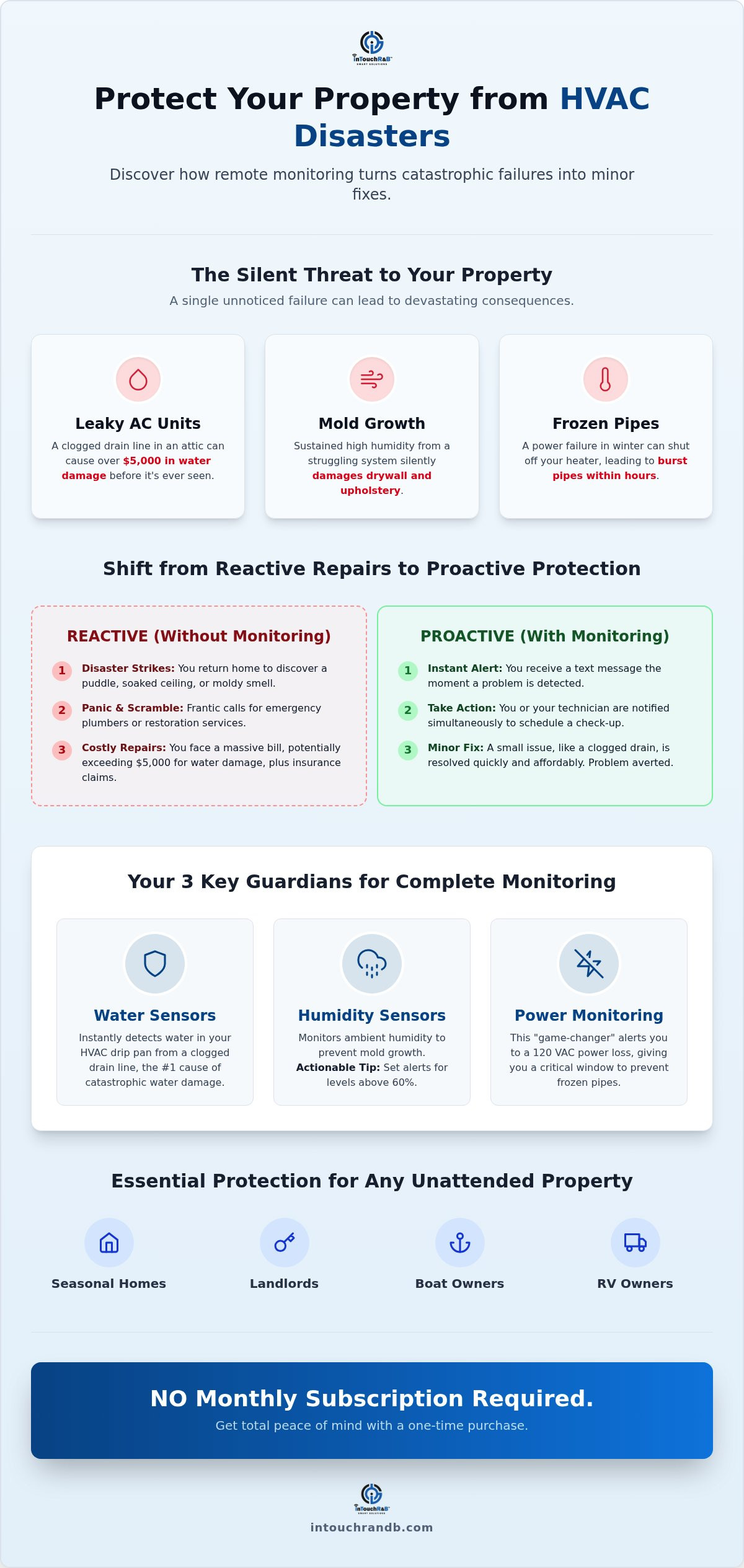
NO Monthly Subscription Required
How to Install and Set Up Your Monitoring System
Setting up your hvac remote monitoring device is a straightforward process that doesn't require a professional electrician, but a few strategic choices will ensure your property stays protected. The goal is to create a reliable bridge between your HVAC hardware and your smartphone so that no alert is ever lost. By following a methodical path during installation, you can transform your unit from a potential liability into a managed asset that reports its health to you 24/7.
Hardware Placement for Maximum Safety
Start with the sensor placement. The High Level Water Sensor should be positioned in the secondary drain pan (this is the emergency basin located directly beneath your attic or closet unit). You want the sensor probes facing down, just a fraction of an inch above the bottom of the pan. This ensures that the moment water begins to accumulate, the trigger and response sequence activates your alert before the water can overflow onto your ceiling or floor.
Actionable Tip: Keep the main monitoring hub away from large metal appliances or microwaves. These can create signal interference that disrupts the 2.4GHz WiFi connection, which is the specific frequency your device uses to communicate with your router. To confirm your system is working, look at the LED indicators on the face of the device. A solid green light confirms the unit is receiving power, while the blue light indicates a successful connection to your internet network.
Configuring Your Alert Dashboard
Once the hardware is in place, use your smartphone or tablet to access the captive portal and connect the device to your local network. This is where you can truly personalize your protection. Give each device a clear, descriptive name like "Main Salon" or "Attic Unit" so you know exactly where the trouble is the moment your phone buzzes. One of the most powerful features of this hvac remote monitoring device is the ability to add a secondary recipient. By including your HVAC technician's number, the device sends them the same real-time fault data it sends to you, allowing for immediate professional intervention.
Actionable Tip: When you have a professional performing routine service, set your alerts to "On Demand" mode. This prevents your phone from being flooded with notifications while the technician is intentionally triggering sensors or cycling the power to test the system. After the service is complete, simply toggle the alerts back to their standard protective settings.
To verify everything is ready, perform a quick "cup test" by dipping the water sensor into a small container of water. You should receive a text notification within seconds. This final step provides the pragmatic reassurance that your watchful guardian is online and ready for duty. To get started with your own setup, you can find the HVAC Minder here to begin protecting your property today.
NO Monthly Subscription Required
Proactive Protection with the inTouch R&B HVAC Minder
The HVAC Minder isn't just another smart home gadget; it's a professional-grade hvac remote monitoring device designed specifically for the high-stakes environment of unattended properties. When you're away, you need the relief of knowing that a secure, dedicated cloud server is processing your system's data every second of the day. This infrastructure ensures that alerts are routed instantly and reliably, giving you the same level of control you'd have if you were standing right next to the thermostat. By acting as a watchful guardian, inTouch R&B provides a solution that bridges the gap between complex industrial systems and basic consumer sensors.
Specialized Solutions for Boats and RVs
Mobile environments present unique challenges that standard home sensors simply can't handle. Marine and RV systems are subject to constant vibration, salt air, and fluctuating shore power connections. The HVAC Minder is built with high-quality mosfets (solid-state electronic switches that manage power without moving parts) and a rugged hardware design that withstands these harsh conditions. It integrates seamlessly into these mobile spaces, ensuring that a tripped dock breaker or a clogged AC drain doesn't result in a moldy interior or a ruined vacation. You can explore the full range of mobile benefits in The Complete Guide to AC Monitoring Systems.
Why Landlords Trust the HVAC Minder
For property managers and landlords, the risk of tenant neglect is a constant concern. A tenant might not notice a slow leak in a crawlspace or might accidentally block a return vent, leading to a frozen evaporator coil. By installing an hvac remote monitoring device, landlords gain a transparent window into the property's health without invading a tenant's privacy. To ensure you have a complete record of your property's condition, using an automated photo labeling app during routine inspections can provide the visual evidence needed for insurance or maintenance logs. This proactive approach allows you to schedule a technician the moment a fault is detected, preventing a minor maintenance issue from becoming a major structural repair. Our HVAC Monitoring: A Landlord’s Guide provides deeper insights into protecting your rental investments.
Protecting your home, boat, or RV from the chain reaction of mechanical failure is all about staying one step ahead of the problem. By choosing to install a dedicated hvac remote monitoring device, you've taken the most effective path toward preventing the average $5,000 loss associated with undetected attic leaks. You now understand how specialized sensors for water, humidity, and 120 VAC power loss create a comprehensive safety net, ensuring you're never caught off guard while your property is unattended.
With our secure cloud reporting and simultaneous alerts sent to both you and your trusted technician, the repair process can often begin before any physical damage has a chance to spread. It's time to trade the stress of uncertainty for the relief of being informed. Get Peace of Mind with the HVAC Minder and invest in a solution that offers professional-grade security for your most valuable assets. Your property deserves a watchful guardian that works 24/7 to keep you in control of your environment.
NO Monthly Subscription Required
Frequently Asked Questions
Do I need a special app to receive HVAC alerts?
No, you don't need a special app to receive notifications from your hvac remote monitoring device. Alerts are sent directly to your phone as standard text messages. This approach is more reliable than app-based systems because text messages are less likely to be blocked by background data settings or software updates. It ensures that critical information about water leaks or power loss reaches you immediately, providing the relief of being informed without the hassle of managing additional software.
What happens if my WiFi goes down?
If your internet connection drops, the device will temporarily lose its ability to send real-time reports to the cloud server. However, the hardware is programmed to automatically reconnect as soon as the signal is restored. To maintain the highest level of protective vigilance, it's a good idea to use a high-quality router. This ensures that your watchful guardian stays online and ready to notify you of any environmental triggers the moment they occur.
Can the system alert my HVAC technician directly?
Yes, the system is designed to notify a secondary recipient simultaneously. During the initial setup, you can enter the phone number of your preferred HVAC service company. This means that if a fault is detected, the technician receives the same text alert that you do. This proactive approach allows the professional to begin coordinating a repair immediately, which significantly reduces the window of time that your property is at risk of damage.
Will this device work on a 5GHz WiFi network?
No, the device is designed to operate strictly on 2.4GHz WiFi networks. While 5GHz is faster for short-range data like streaming, 2.4GHz is the reliable standard for monitoring equipment because it offers a much better range through obstacles. It can easily penetrate thick walls, attic insulation, and fiberglass boat hulls. Most modern home routers are dual-band, meaning they provide both signals at once, so your device will have no trouble finding a connection.
How much does it cost to monitor my HVAC remotely?
Monitoring your system doesn't have to be an ongoing financial burden. Once you've purchased the hardware, there are no recurring costs for the cloud reporting or text notification services. This stands in contrast to many industrial systems that require monthly data plans or subscription fees. By choosing a one-time purchase solution, you're investing in long-term property protection that pays for itself by catching a single mechanical failure before it leads to a costly disaster.
Is the HVAC Minder difficult to install?
The HVAC Minder is built for a straightforward DIY installation that doesn't require professional help. You simply position the sensors in high-risk areas, like the secondary drain pan, and plug the unit into a standard outlet. Connecting to the internet is handled through a simple captive portal on your smartphone. The entire process is methodical and highly organized, allowing you to get your protective system up and running in just a few minutes.

Article by
Jimmy Nesbitt
Principle
Be the first to comment