

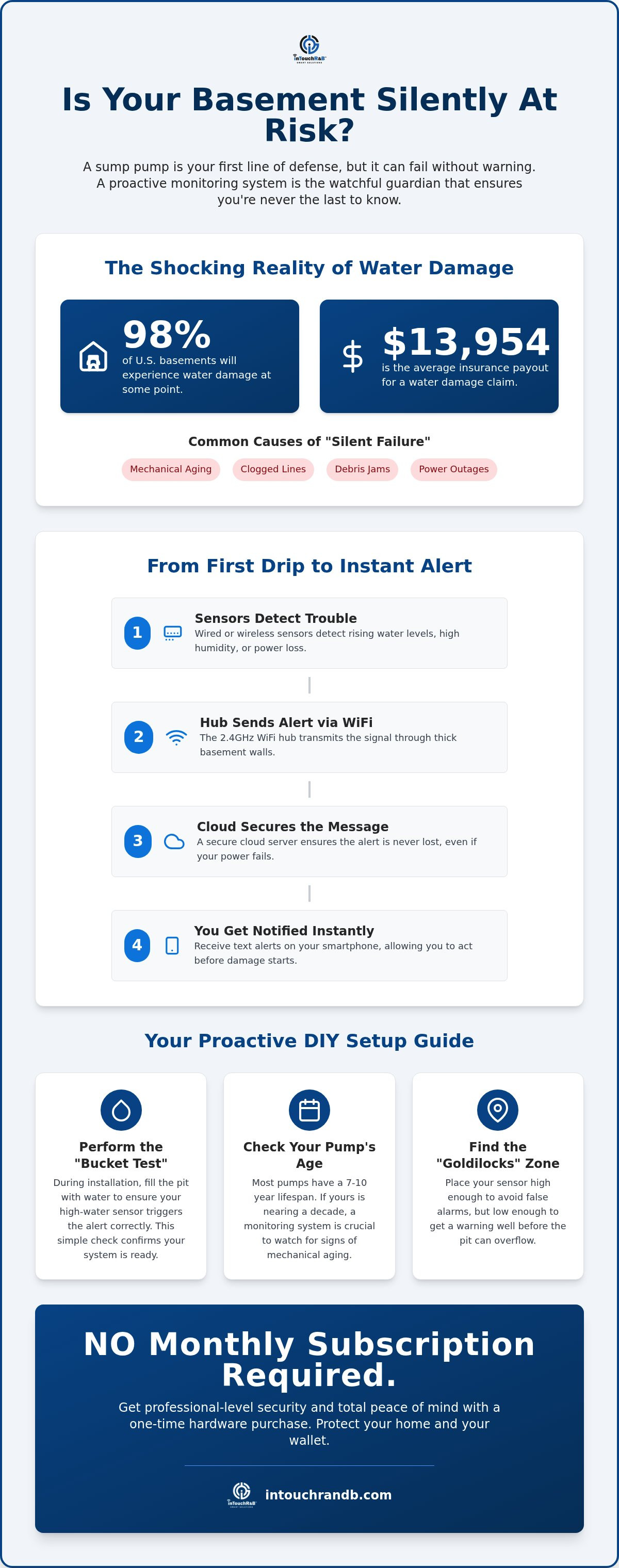
Did you know that 98% of basements in the U.S. will experience some form of water damage at some point? It is a staggering figure, especially when you consider that the average insurance payout for a water damage claim is $13,954. Most homeowners feel a justified sense of dread when the clouds turn gray, worrying that a power outage or a mechanical failure might lead to a catastrophe while they are away. We agree that you should not have to pay a recurring fee just for the peace of mind that your home is dry. In this guide, you will discover how to choose a proactive sump pump monitoring system that provides instant text alerts for high water, power loss, or even humidity changes. We will review the best-performing hardware for 2026, focusing on devices that offer a simple DIY setup and reliable 2.4GHz WiFi connectivity. When the water level reaches the sensor, the hardware immediately pushes a notification to your smartphone, allowing you to act before the damage starts. As a quick tip, always perform a "bucket test" during installation by manually filling the pit to ensure your high-water sensor triggers the alert correctly. This ensures your technology is ready to act as a watchful guardian the moment a threat arises.
NO Monthly Subscription Required.
Key Takeaways
- Understand why mechanical pumps often fail silently and how a proactive communication hub acts as a watchful guardian for your basement.
- Discover how a modern sump pump monitoring system uses 2.4GHz WiFi to send real-time alerts to multiple recipients at once.
- Compare the benefits of WiFi and cellular hardware to find the most reliable connection for your home or remote property.
- Use our DIY installation tips to find the "Goldilocks" zone for your water sensors, ensuring you get notified before the pit overflows.
- Protect your basement with a durable, marine-grade system that offers professional-level security with NO Monthly Subscription Required.
Why a Sump Pump Alone Isn't Enough for Basement Security
While many homeowners understand what a sump pump is, they often view it as a set-it-and-forget-it appliance. In reality, a pump is a mechanical device subject to the laws of wear and tear. Relying solely on the pump is a reactive strategy that assumes everything will work perfectly during the worst possible storm. A sump pump monitoring system changes this dynamic by acting as a proactive communication hub. It ensures you're never the last to know when your basement is at risk.
Mechanical aging, clogged discharge lines, or simple debris can cause what we call a "silent failure." Your pump might sound like it's running, but if the impeller is jammed or the pipe is frozen, water continues to rise. Without a digital watchdog, you won't realize there's a problem until you step into two inches of cold water. The financial stakes are high. Data shows the average cost of damage from a failed pump ranges between $6,000 and $15,000. This isn't just about replacing a carpet; it's about structural remediation, mold removal, and the loss of irreplaceable personal items.
To better understand how these systems integrate into your home, watch this helpful video:
The Chain Reaction of Basement Flooding
When the power goes out, your primary pump stops. If you have a battery backup, it buys you time, but batteries eventually drain. This creates a dangerous chain reaction. If the water level rises unchecked, it doesn't just ruin the floor. High humidity can lead to mold growth within 24 to 48 hours, especially if your air conditioning system is also offline. Understanding what happens when a sump pump fails helps you see that it's often a multi-stage disaster. A simple backup pump cannot fully protect your home without a dedicated alert system to tell you the backup is actually running.
Vigilance vs. Reaction: A New Approach
Actionable Tip: Check the manufacture date on your current pump today. Most units have a reliable lifespan of 7 to 10 years. If yours is approaching a decade of service, it's time to consider a replacement or, at the very least, add a sump pump monitoring system to watch for the inevitable signs of mechanical aging.
NO Monthly Subscription Required.
How a Modern Sump Pump Monitoring System Works
A high-quality sump pump monitoring system functions as a cohesive network of three specific pillars: the sensors, the communication hub, and the secure cloud. The process begins with the sensors, which act as the eyes of the system. In a typical basement layout, you might choose between wired or wireless sensors. Wired sensors are often preferred for the primary pit because they don't require batteries and provide a constant, physical connection to the hub. Wireless sensors, on the other hand, offer the flexibility to monitor distant corners of the basement where a leak might start unnoticed.
The communication hub is the brain of the operation. It typically utilizes 2.4GHz WiFi because these lower-frequency waves are better at penetrating thick basement walls and wooden subfloors than higher-frequency signals. When the sensor detects water, the hub immediately sends a data packet to a secure cloud server. This cloud-based approach is vital because it ensures no alert is ever lost. Even if your home router loses power a split second after the signal is sent, the cloud server has already received the "trigger" and will continue to push the notification to your smartphone until it is acknowledged.
Beyond Water: Environmental Sensing
Modern protection goes beyond simply checking for a flood. High humidity and extreme temperature shifts can be just as damaging as standing water, often leading to hidden mold growth or frozen pipes. Many systems, such as the Sump Pump Minder, integrate environmental sensors that track these variables in real-time. This allows the system to detect "leaky time bombs" like a sweating water heater or a failing HVAC unit before they become full-scale disasters. If you want to explore how these different sensors work together, you can find more details on reliable home monitoring solutions that prioritize environmental health.
The Setup: Captive Portals vs. Finicky Apps
Connecting your device to the internet should be a straightforward process. Rather than relying on a dedicated smartphone app that might crash or require frequent updates, many reliable systems use a "captive portal" for setup. This is a temporary, local webpage (usually accessed at 192.168.4.1) that allows you to link the device to your home network using any standard web browser. This method is often more stable and ensures that your hardware remains functional regardless of future smartphone software changes.
Actionable Tip: For the most consistent connection, consider assigning a static IP address to your monitoring hub through your router's settings. A static IP is essentially a permanent digital "parking spot" for your device, which prevents the router from accidentally disconnecting the hub during a routine network refresh.
NO Monthly Subscription Required.
Comparing Your Options: WiFi, Cellular, and Subscription Models
Choosing a sump pump monitoring system for your home depends heavily on your local infrastructure and how you plan to use the device. Most homeowners in 2026 opt for WiFi-based units because they leverage the high-speed internet already present in the house. These systems are typically a one-time investment. They provide a direct line of communication between your basement and your phone without adding another bill to your stack. However, if you are protecting a remote cabin or a property without a stable internet connection, a cellular monitor is the more reliable choice. While cellular units often involve a small annual fee for the data connection, they remain operational even if a storm knocks out the local cable lines. To see how these different technologies stack up, you can review this comparison matrix of all Minders to find the right fit for your specific property.
Sump Pump WiFi Alert vs. Cellular Alarms
The primary advantage of a WiFi alert system is its seamless integration with your existing network. It provides a constant stream of data regarding water levels and environmental conditions without any extra monthly costs. Cellular alarms are the "heavy-duty" alternative. They are specifically designed for locations where WiFi is spotty or non-existent. For a deeper look at these two technologies, check out our Sump Pump Cellular Alarm vs. WiFi guide.
Actionable Tip: Before you purchase a WiFi-based system, take your smartphone down to the sump pit. Open a web browser and try to load a video. If it buffers or fails, your basement might need a WiFi extender or a cellular-based monitoring unit instead.
The Hidden Cost of 'Free' Apps
Many modern tech brands use a "freemium" model. They sell you the hardware at a low price but then lock essential features behind a monthly paywall. This is often called the "forever service" trap. You might find that text alerts, which are the most critical part of a sump pump monitoring system, require an ongoing subscription. Other brands might charge extra to send alerts to more than one person, such as a neighbor or a plumber. A one-time purchase strategy is almost always more cost-effective over the life of the device. Look for systems that prioritize simple, direct text notifications. These shouldn't require you to keep an app open or pay a recurring fee just to stay informed about your own home. Reliability should not be a subscription-based service.
NO Monthly Subscription Required.
Actionable Steps to Install and Test Your Monitoring System
Installing a sump pump monitoring system is a straightforward process that doesn't require a professional plumber or an IT degree. By following a few logical steps, you can transform your basement from a source of anxiety into a managed environment. The goal is to create a reliable bridge between your water pit and your smartphone, ensuring that every component is positioned for maximum accuracy. When you take a proactive approach to installation, you eliminate the guesswork that often leads to failure during a storm.
- Step 1: Positioning the Sensor. You want to find the "Goldilocks" zone. Place your high-level water sensor about two to three inches above the point where your pump normally kicks on. This prevents false alarms during heavy rain but gives you enough lead time to react before the water reaches the floorboards.
- Step 2: Connecting the Hub. Instead of wrestling with a finicky mobile app, use the browser-based setup. Power up your device and look for its temporary WiFi signal on your phone. Once connected, navigate to 192.168.4.1 in your browser. This captive portal allows you to securely enter your home WiFi credentials without the need for third-party software.
- Step 3: Configuring Alerts. Set up multi-recipient notifications. It's wise to include yourself, a spouse, and perhaps a trusted neighbor or your local service technician. This redundancy ensures that if you're in a meeting or sleeping, the alert is still seen and acted upon.
- Step 4: The Bucket Test. This is the most important part of the setup. Slowly pour water into your sump pit until it reaches the sensor. Do not just trust the lights on the box; wait until you receive the actual text message on your phone. This confirms the entire chain, from sensor to cloud to cell tower, is working perfectly.
Optimizing Your WiFi Signal
Basements are notoriously difficult for wireless signals. To ensure your sump pump monitoring system stays online, keep the main hub away from large metal objects and appliances like microwaves, which can cause significant signal interference. If your pit is located in a deep corner far from your router, a simple WiFi range extender can bridge the gap. Actionable Tip: Once your device is configured, look for the Blue LED status light. Two short blinks typically indicate a successful connection to the cloud. If you see a different pattern, it's time to adjust the hub's position for a clearer line of sight to your router.
Maintenance and Testing Schedule
Even the best hardware needs an occasional check-up. Over time, dust, debris, or even bacterial growth can create a film on your sensors, which might lead to false readings. We recommend wiping the sensor probes with a clean, dry cloth every six months. You can also trigger an "on demand" alert by briefly touching the sensor probes with a damp finger to verify the system is still responsive. For a deeper dive into these procedures, read our guide on how to get notified if your sump pump fails. If you are ready to secure your home today, you can browse our full line of Minder products to find your ideal solution.
NO Monthly Subscription Required.
The inTouch R&B Advantage: Proactive Protection for 2026
The foundation of a reliable sump pump monitoring system lies in the quality of its components. Since our founding in 2014, inTouch R&B has focused on creating hardware that thrives in challenging environments. Our marine-grade heritage means we build sensors to withstand the same humidity and corrosive conditions found on boats and in RVs. This expertise translates directly to your basement, where dampness and debris can cause lesser sensors to fail prematurely. When you choose a Minder, you are investing in a system designed for longevity and precision.
A Suite of Safety Solutions
Total property coverage often requires more than just water detection. By integrating our HVAC Minder into your home safety network, you can monitor for condensate overflows and furnace failures simultaneously. We also recommend using an AC Minder to track your home's voltage. This is a vital step because it prevents "dead battery" syndrome, where your backup pump fails simply because the charger lost power days ago without you noticing. We believe that simple, easy-to-read text alerts are far superior to complex app dashboards. You don't want to navigate a cluttered interface during an emergency; you just want to know that your home is safe.
Conclusion: Peace of Mind for the Unattended Home
The transition from reactive to proactive maintenance is the best way to avoid the $13,954 average cost of a water damage claim. By installing a sump pump monitoring system, you gain the freedom to travel or work without the constant fear of a flooded basement. It's a one-time investment that pays for itself the very first time it prevents a disaster. You deserve a system that works for you without hidden fees or recurring costs. This approach ensures your property remains protected by a watchful, ever-present guardian that never takes a day off.
NO Monthly Subscription Required.
Secure Your Home Against the Next Major Storm
Your basement is often the most vulnerable part of your property, but it doesn't have to be a source of constant stress. By shifting from a reactive strategy to a proactive one, you ensure that a mechanical failure or a power outage won't lead to a devastating repair bill. A modern sump pump monitoring system provides the 24/7 vigilance you need, sending instant text and email alerts the moment water levels rise or the power drops. Throughout this guide, we've explored how to position sensors for accuracy and why a browser-based setup offers superior reliability over finicky apps. Now is the ideal time to take action before the next heavy rain arrives. You can secure your basement with the Sump Pump Minder today! This system provides 24/7 proactive monitoring and includes all text and email alerts as part of your one-time investment. Take control of your home's safety and enjoy the relief of knowing your assets are protected by a watchful, ever-present guardian. You've done the research; now give your home the security it deserves.
NO Monthly Subscription Required.
Frequently Asked Questions
What is the difference between a sump pump alarm and a monitoring system?
A sump pump alarm typically makes a loud noise inside your home, whereas a monitoring system sends remote notifications to your phone. While a local siren is helpful if you are in the house, it does not protect you while you are at work or traveling. A monitoring system acts as a communication hub that ensures you are informed of high water levels or power loss regardless of your physical location.
Does a sump pump monitor work if the power goes out?
Yes, a proactive sump pump monitoring system will alert you even if the power goes out at your property. While the device itself needs power to send a signal, our secure cloud servers monitor the connection constantly. If the device goes offline due to a power failure or a router issue, the cloud detects the missing heartbeat and pushes a notification to your phone immediately to let you know your home is vulnerable.
Can I install a sump pump monitoring system myself or do I need a plumber?
You can absolutely install this system yourself without hiring a plumber or an electrician. The setup process is designed for homeowners and involves mounting the sensor in the pit and connecting the hub to your WiFi. Since there is no pipe cutting or complex wiring involved, most people can complete the entire installation in about 15 minutes. It is a simple way to add professional-grade protection to your basement.
Will I get an alert if my basement WiFi disconnects?
You will receive an alert if your basement WiFi disconnects for an extended period. Because our systems use a secure cloud reporting method, the server expects a regular signal from your device. If that signal stops because your router crashed or the internet provider has an outage, the server recognizes the disconnection and sends you an email or text alert so you can investigate the situation.
How many people can receive alerts from the Sump Pump Minder?
The Sump Pump Minder allows for multi-recipient alerts, meaning you can notify the homeowner and a technician simultaneously. This is especially useful for home watch services or for those who want their local plumber to be informed of a high-water event immediately. You can easily manage these contacts through the browser-based portal to ensure the right people are notified during an emergency.
Does this system require a special app to be downloaded to my phone?
No, this system does not require you to download a special app to your smartphone. Instead, it uses a captive portal, which is a temporary local webpage, for the initial setup and sends standard text and email notifications for alerts. This approach is often more reliable because it is not affected by smartphone software updates or app store compatibility issues, ensuring your monitoring remains consistent over the years.
What happens if the sensor gets covered in debris or bacteria?
If a sensor gets covered in heavy debris or bacterial slime, it may lead to false alarms or a failure to trigger. To prevent this, we recommend a simple maintenance routine of wiping the sensor probes with a clean cloth every six months. This quick action ensures the electrical path remains clear so that your sump pump monitoring system can accurately detect rising water levels the moment they occur.
Is there a monthly fee for the text and email notifications?
There are no monthly fees for the text and email notifications provided by our systems. We believe that once you purchase the hardware, you should have full access to its protective features without a recurring bill. This one-time investment covers the 24/7 monitoring and all alert types, providing long-term value and peace of mind for your home without the burden of a subscription.
NO Monthly Subscription Required.

Article by
Jimmy Nesbitt
Principle
Be the first to comment