

Imagine waking up to the sound of a torrential downpour at 3 AM and feeling a familiar knot of anxiety in your stomach. Most homeowners know that feeling all too well, wondering if their basement is currently transforming into an indoor swimming pool. It's a stressful way to live, especially when you consider that the average insurance claim for water damage (often exceeding $10,000) can be financially devastating. This is exactly why remote sump pump monitoring has shifted from a luxury to a necessity for anyone who wants to protect their home from the ground up.
We agree that your home should be a place of sanctuary, not a source of constant worry. You deserve to know your property is safe whether you're upstairs in bed or miles away on vacation. In this 2026 guide, you'll learn how to set up a proactive system that keeps you informed 24/7. When a sensor detects rising water or a loss of power, the technology immediately sends a notification to your phone so you can act before a disaster happens. We'll walk you through how these systems work to help you secure lower insurance premiums and absolute peace of mind. NO Monthly Subscription Required.
Key Takeaways
- Understand why traditional alarms often fail during emergencies and how to prevent water damage that averages over $10,000 in repairs.
- Discover how remote sump pump monitoring provides 24/7 vigilance by sending instant alerts to your phone the moment a problem is detected.
- Compare WiFi and cellular options to ensure your monitoring system remains active even if your home loses power or internet.
- Get practical tips for DIY installation, including how to use a "captive portal" (a simple setup screen) to connect your device quickly.
- Find out how the Sump Pump Minder protects your home by alerting multiple people with NO Monthly Subscription Required.
Why Remote Sump Pump Monitoring is Essential for Modern Homeowners
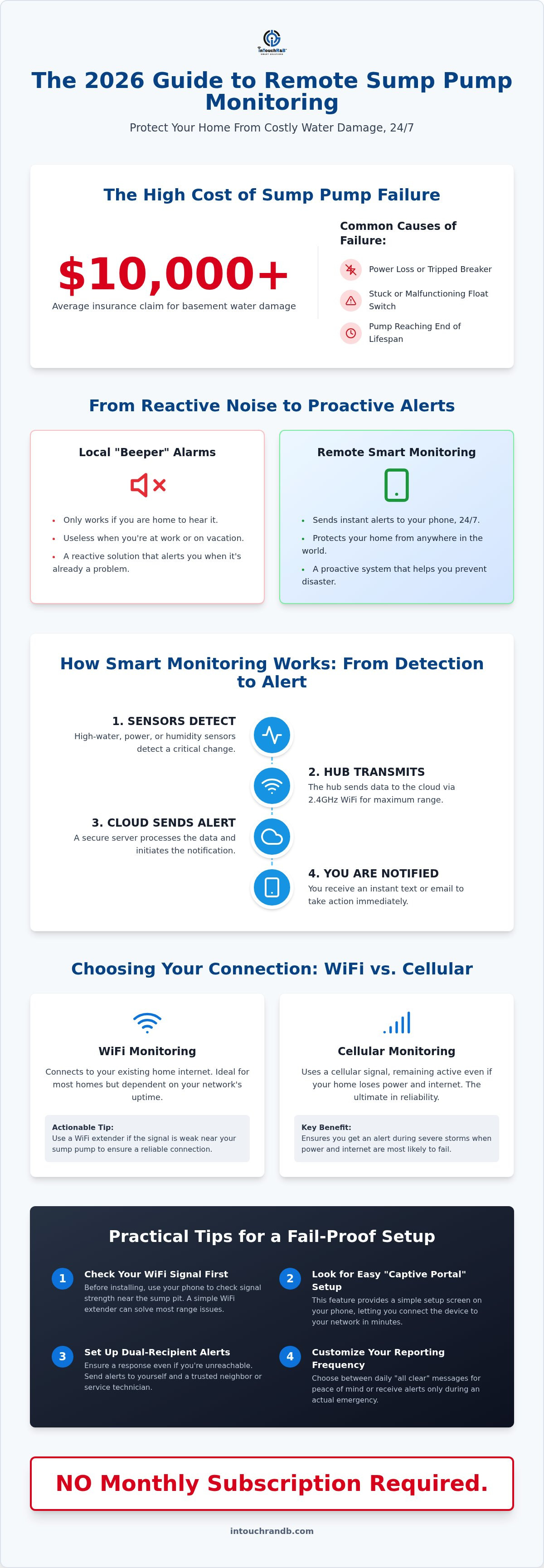
Think of remote sump pump monitoring as a digital watchdog that never sleeps. While a standard Sump pump is designed to move water out of your basement, it's a mechanical device that can fail due to power loss, a stuck float switch (the part that triggers the pump to turn on), or simply reaching the end of its lifespan. A remote monitor acts as your eyes and ears when you're away, checking the status of your system every second. It's the difference between finding out your pump failed through a text message and finding out because you stepped into six inches of cold water. By shifting from a reactive mindset to a proactive one, you gain a layer of security that traditional setups simply can't provide.
The True Cost of Sump Pump Failure
When a pump stops working, the financial impact happens fast. Industry data shows that the average cost to repair basement flood damage ranges between $6,000 and $15,000. This includes professional mold remediation and replacing ruined drywall. Insurance companies often view this as "preventable" if you didn't monitor the system, which can lead to denied claims. Proactive monitoring helps you catch a small leak before it becomes a five-figure disaster. Beyond home infrastructure, you can also apply this proactive approach to personal safety by using The Wellbeing App for comprehensive family security monitoring.
Many homeowners rely on a local "beeper" alarm that sounds a siren when water levels get too high. The problem is simple: if you aren't home to hear it, the alarm doesn't exist. Remote sump pump monitoring solves this by bridging the gap between detection and action. Instead of just making noise in an empty house, the system sends an instant alert to your smartphone.
One actionable tip is to set up your system with dual-recipient alerts. By sending notifications to both yourself and a neighbor or a trusted service technician, you ensure someone can respond even if you're out of cell range. You can set these alerts to trigger for various events, such as high water levels or a complete loss of power. This turns a potential catastrophe into a simple service call and ensures you're never left in the dark about the state of your home's foundation.
How Smart Sump Pump Monitors Work to Protect Your Property
Understanding the mechanics of remote sump pump monitoring helps you appreciate its reliability. At the heart of the system is a communication hub. This device acts as the "brain" and stays connected to your home's 2.4GHz WiFi network. We use 2.4GHz because it travels through thick basement walls and floors much better than the faster 5GHz signal. It's built for range. When a sensor detects a change, the hub instantly transmits that data to a secure cloud server. This cloud reporting ensures that "No Alert is ever lost," even if your local network connection fluctuates during a storm.
Sensors and Their Specific Roles
A comprehensive system uses different sensors to provide a full picture of your basement's health. High-water sensors are your first line of defense; they detect rising levels before they crest the pit. However, knowing your pump has power is just as vital as knowing it's wet. Power monitors alert you the millisecond a breaker trips or a cord is unplugged. You might also consider environmental sensors that track humidity and temperature. These help you catch conditions that lead to mold growth long before you smell it.
Here's a practical tip: before you mount your device, use your smartphone to check your WiFi signal strength right next to the sump pit. If the signal is weak, a simple WiFi extender can bridge the gap. For a system that handles these variables automatically, you might look at the Sump Pump Minder.
The Alert Delivery Process
The journey from a wet sensor to a text on your phone is nearly instantaneous. Once the hub detects a fault, it triggers a response through the cloud, which then formats the raw data into a simple text or email. You don't have to decipher technical codes. Most devices use LED indicators during startup to confirm they're online and healthy. If the light is solid green, you're protected. If it flashes, it's telling you it needs attention.
You can also customize your reporting frequency. Whether you want a daily "all clear" heartbeat message or only want to hear from the system during an actual emergency, the choice is yours. This flexibility ensures you stay informed without feeling overwhelmed by constant pings. By setting up these preferences early, you create a personalized safety net that works for your specific lifestyle. NO Monthly Subscription Required.
WiFi vs. Cellular: Choosing the Most Reliable Connection
Choosing the right connection for remote sump pump monitoring is about balancing convenience with absolute reliability. For most residential properties, WiFi is the clear winner because it integrates seamlessly with your existing home network without requiring extra data plans. However, some homeowners worry about "dead zones" or what happens during a major storm. If your basement is deep or has thick concrete walls, you need a signal that can punch through those barriers without dropping the connection.
Is WiFi Reliable Enough for My Basement?
The short answer is yes, provided you use the right frequency. Most modern routers offer both 5GHz and 2.4GHz bands. While 5GHz is faster for streaming movies, the 2.4GHz band is the workhorse for smart home devices because its longer waves penetrate walls and floors much more effectively. This ensures your monitor stays locked onto the signal even in a far corner of the basement.
One practical tip to bulletproof your setup is to plug your internet router and modem into a small battery backup, also known as an Uninterruptible Power Supply (UPS). This simple step ensures that if a storm knocks out the power, your WiFi stays active long enough for the Sump Pump Minder to send an emergency notification to your phone. Cellular systems are an alternative for remote cabins without any internet service, but they typically involve recurring data costs that add up every single month.
Subscription Models vs. One-Time Purchases
When you're shopping for a monitoring system, it's easy to get lured in by low-cost hardware. You should look at the total cost of ownership over several years. Many big-brand systems require a monthly fee just to keep the alert service active. Over five years, those recurring charges can easily exceed the original cost of the device itself, making a "cheap" monitor much more expensive in the long run.
We believe in a more transparent approach. A one-time purchase for a high-quality monitor is not only more sustainable but also ensures you aren't locked into a contract just to keep your basement dry. By choosing a system with a zero-fee model, you get the same high-level protection and cloud reporting without the burden of another monthly bill hitting your credit card. NO Monthly Subscription Required.
Practical Steps for Installing and Testing Your Alert System
Installing a remote sump pump monitoring system shouldn't feel like a weekend long engineering project. Most modern devices are designed for DIY success, allowing you to go from unboxing to active protection in about fifteen minutes. The goal is to create a seamless link between your sump pit and your smartphone so that you can receive updates no matter where you are. By following a structured setup and testing routine, you ensure the system is ready to act the moment water levels begin to rise.
Setting Up Your Sump Pump Minder
Most systems use what's called a "captive portal" for the initial configuration. This is a simple process where the device creates its own temporary WiFi network. You connect your phone to this network, and a setup page automatically opens in your browser, just like when you sign into WiFi at a hotel. From here, you'll select your home's SSID (your WiFi name) and enter your password.
One helpful tip is to give your sensors specific names during this stage. Instead of leaving it as "Sensor 1," name it "North Basement Pit" or "Utility Room Pump." This clarity is invaluable when you receive an alert at 2 AM. Before finishing, you'll need to acknowledge the terms and conditions in the browser to finalize the cloud connection. To get started with a system designed for this kind of simplicity, you can view our specialized monitoring hardware.
Actionable Maintenance Tips for Total Security
Once your system is online, you need to verify it actually works. Watch the LED indicators on the hub; a steady glow usually confirms a solid connection, while a sequence of flashes at half second intervals might indicate the device is searching for a signal. We recommend performing a "wet test" every six months. Simply dip the high water probe into a cup of water and wait to see how quickly the notification hits your phone. This confirms the entire "trigger and response" chain is fully functional.
If you're managing an unattended home, your maintenance checklist should also include a quick check of your pump's battery backup voltage. A monitor can tell you the power is out, but it can't pump the water for you if the backup battery is dead. For more advice on keeping your property safe, read our guide on preventing water damage from equipment failure. Regular testing ensures that your safety net is always ready. NO Monthly Subscription Required.
Peace of Mind with the inTouch R&B Sump Pump Minder
Implementing a comprehensive home safety strategy often feels like a series of small, disconnected choices. You buy a better lock for the front door or install a smoke detector in the hallway, but the basement often remains a blind spot. Choosing the Sump Pump Minder is the logical conclusion to securing your property because it addresses the one area where damage is most silent and expensive. By integrating remote sump pump monitoring into your home, you transition from hoping things work to knowing they do. This system is designed for "set it and forget it" reliability, meaning once it's plugged in and connected, it acts as a silent guardian that only speaks up when you actually need to take action.
One of the most practical features for travelers or those with second homes is the dual-recipient alert system. You can program the device to send notifications to both your smartphone and a secondary contact, such as a neighbor, a professional home watch service, or a trusted technician. This ensures that even if you're on a long flight or in a meeting, someone is informed the millisecond a fault occurs. Beyond the basement, you can expand this protective umbrella by linking other devices from the same ecosystem, such as the HVAC Minder or the AC Minder, to monitor for leaks or power failures across all your critical home systems.
Why inTouch R&B is a Value You Cannot Ignore
Our philosophy is built on the difference between being pro-active and being re-active. A re-active approach means waiting for a disaster and then spending thousands on cleanup and restoration. A pro-active approach uses technology to prevent that disaster from ever starting. We've designed our hardware to provide 24/7 protection without the burden of an ongoing bill. When you compare this to systems that require a monthly "service fee" just to send you a text, the long-term value becomes clear. For more help deciding which features are right for your specific home layout, you can read our detailed guide on choosing the best sump pump monitoring system.
Final Action Steps for Homeowners
To fully protect your home, start by reviewing your basement's current vulnerability points. Look for signs of aging in your pump and identify where a high-water probe would give you the earliest warning. Once you know your needs, check our comparison matrix to find the exact hardware that fits your WiFi range and sensor requirements. Taking these steps today means you'll never have to come home to the devastating surprise of a flooded basement. You get professional-grade remote sump pump monitoring and the relief of being informed. NO Monthly Subscription Required.
Take Control of Your Home’s Safety
Securing your basement doesn't have to be a complicated or expensive endeavor. We've explored how remote sump pump monitoring transforms your home from a vulnerable space into a self-reporting sanctuary. By choosing a system with reliable 24/7 cloud-based reporting and dual-recipient alerts, you ensure that someone is always ready to act, even when you're out of reach. It's about more than just avoiding a $15,000 repair bill; it's about the peace of mind that comes from knowing your foundation is protected while you sleep or travel.
You now have the tools to set up, test, and maintain a professional-grade alert system that works for your specific needs. Don't wait for the next major storm to find out if your pump is up to the task. You can secure your basement today with the Sump Pump Minder and enjoy a lifetime of vigilance with no hidden fees or contracts. It's time to move forward with a solution that values your security as much as you do. NO Monthly Subscription Required.
Frequently Asked Questions
Do I need a professional plumber to install a remote sump pump monitor?
No, you don't need a professional plumber to get started. The system is designed for simple DIY installation that anyone can handle. You mount the sensors and use a smartphone to access the captive portal for setup. This browser-based interface guides you through connecting the device to your home network in about fifteen minutes. It's a practical way to establish remote sump pump monitoring without the cost of a service call.
Will the alert system still work if my home loses power during a storm?
The system needs power to send alerts. If the grid fails, your WiFi router and the communication hub will turn off. We suggest using a small battery backup, known as a UPS, for your internet equipment. This keeps your connection active during a storm so the system can still send a text if the water rises. It's a simple step that ensures your protective guardian stays awake when you need it most.
Can I set up the monitor to alert my HVAC technician as well as myself?
You can definitely alert your technician. Our hardware supports dual-recipient alerts, which send notifications to two people at the same time. This is a great way to keep your HVAC professional or a neighbor in the loop. If a fault is detected while you're at work or on vacation, your secondary contact will know immediately. This ensures that someone can respond to the problem even if you're not available to handle it yourself.
What is the difference between a water leak sensor and a sump pump monitor?
A leak sensor is reactive; it only triggers once water is already on your floor. remote sump pump monitoring is proactive because it watches the water level inside the pit and monitors the pump's power. It warns you about a failure before the water overflows. This difference is vital because it turns a potential $10,000 flood into a simple fix, like resetting a breaker or clearing a jammed pump intake before damage starts.
How many people can receive the text and email alerts from one device?
Our system is designed for multi-recipient alerts. You can set it up to notify both yourself and a secondary person, such as a service technician or a friend. This ensures that no alert is ever lost and provides an extra layer of security for your property. Whether you prefer text or email, the system delivers simple, easy-to-read messages to everyone on the list, making it easy for your support team to coordinate a fast response.
Does the Sump Pump Minder work on 5GHz WiFi networks?
The Sump Pump Minder works strictly on 2.4GHz WiFi networks. While 5GHz is common for high-speed devices, 2.4GHz is the standard for smart home monitoring because the signal travels through walls and floors much better. This is especially important in basements where concrete can block weaker signals. Most routers support both frequencies, so you'll just need to make sure your 2.4GHz band is available during the initial setup to ensure a reliable connection.
What happens if my WiFi router goes offline for a short period?
If your router goes offline, the monitor will try to reconnect as soon as the signal is back. While the internet is down, the device cannot send live texts. However, our secure cloud reporting tracks the connection status. Once the link is restored, the hub syncs with the cloud to update your logs. To avoid missed alerts during short outages, we recommend using a battery backup for your router to keep your home network running.
Can I use this system for a septic tank or a pond as well?
You can use this system for a variety of water-monitoring needs. The high-level sensors are effective for septic tanks, outdoor ponds, or even large tanks. Since the hub monitors for power loss and water intrusion, it's a flexible tool for any area where a leak or overflow could cause a problem. This versatility allows you to apply the same reliable technology to multiple parts of your property for total peace of mind. NO Monthly Subscription Required.

Article by
Jimmy Nesbitt
Principle
Be the first to comment