

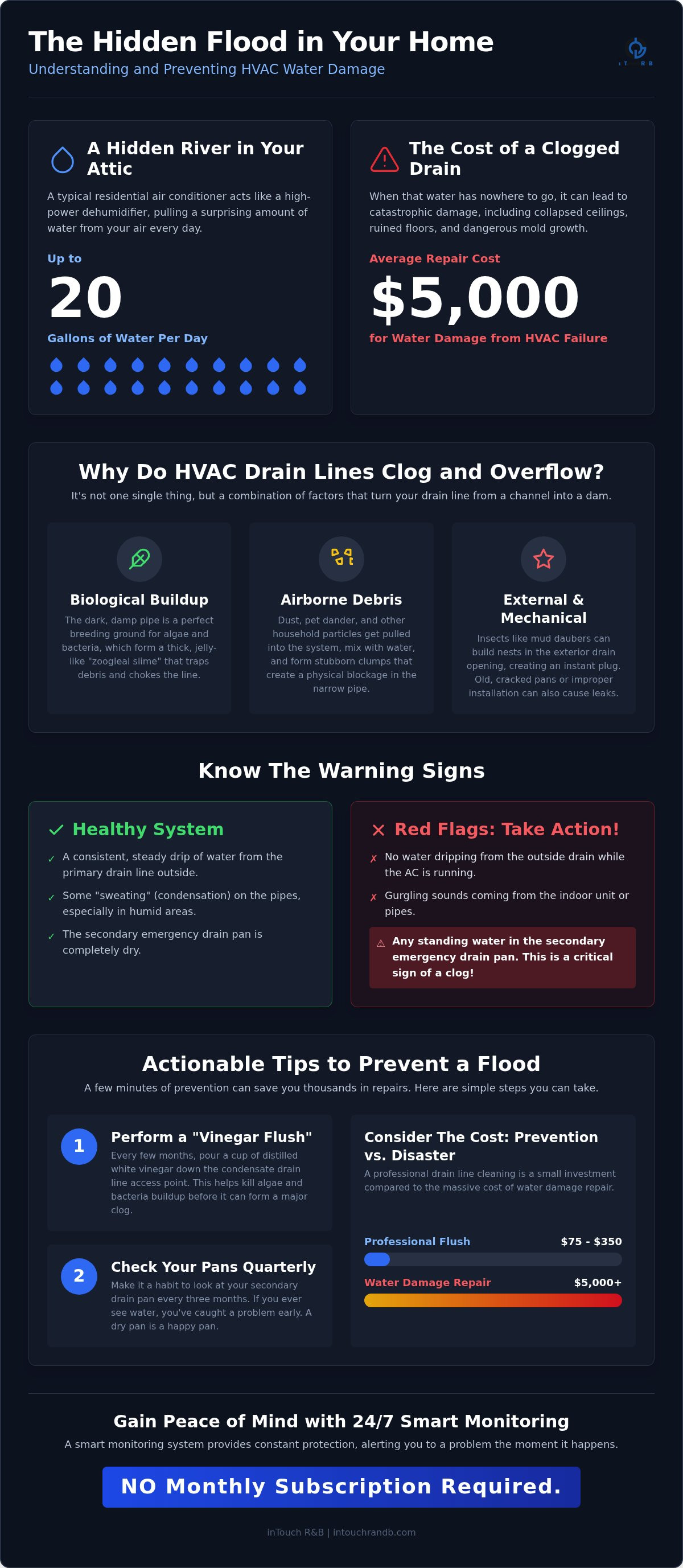
Did you know that a typical residential air conditioner can pull up to 20 gallons of water out of the air every single day? It's a lot of moisture that usually stays hidden in your drain lines. However, it's vital to understand the impact of HVAC Systems on how much water filters through your system. If your HVAC System fails i.e. HVAC Drain line backs up and overflows on how much damage can be done, you aren't just looking at a damp floor. You're looking at a potential $5,000 disaster involving collapsed ceilings and dangerous mold growth.
We know how stressful it is to manage home maintenance when you aren't sure what to look for. It's completely normal to feel a bit of anxiety about the hidden systems in your attic or crawlspace. The good news is that you don't have to be an expert to protect your property. In this guide, you'll discover exactly how much water your system produces and how to spot a clog before it turns into a flood. You'll walk away with practical steps to safeguard your home and avoid those high repair costs. Let's look at how your AC handles water and the simple ways you can keep everything flowing smoothly.
NO Monthly Subscription Required
Key Takeaways
- Learn why your air conditioner produces up to 20 gallons of water every day and where that moisture needs to go so it doesn't damage your home.
- Understand the risks of HVAC Systems on how much water filters through your system. If your HVAC System fails i.e. HVAC Drain line backs up and overflows on how much damage can be done, the resulting repairs often average $5,000.
- Discover the "Vinegar Flush" and other simple, actionable tips you can use to prevent algae and bacteria from clogging your drain lines.
- Find out how to catch early warning signs, like standing water in your secondary pan, before they lead to a collapsed ceiling.
- See how a smart monitoring system provides 24/7 protection for your property with NO Monthly Subscription Required.
How Much Water Filters Through Your HVAC System?
Your air conditioner does much more than just lower the temperature; it effectively acts as a giant dehumidifier for your entire living space. As warm, muggy air from your home passes over the cold evaporator coil—the internal component responsible for the cooling—the water vapor in that air hits the cold metal and turns into liquid. This liquid is known as "condensate," a simple byproduct of the cooling process that must be carried out of your home through a dedicated drain pipe. It is essential to understand the mechanics of HVAC Systems on how much water filters through your system. If your HVAC System fails i.e. HVAC Drain line backs up and overflows on how much damage can be done, you are suddenly dealing with a high volume of water trapped inside your structure.
The actual amount of water your system produces might shock you. A standard 3-ton residential unit can easily generate between 5 and 20 gallons of water every single day, depending on the humidity levels. If you have a modern, high-efficiency unit, it likely produces even more water than older models because these systems are designed to run for longer cycles to maintain a consistent temperature. This constant moisture extraction means your drain lines are under a steady, heavy load for most of the summer.
The Impact of Humidity on Water Production
On those sweltering 90-degree days when the humidity is high, your AC is forced to work twice as hard to keep you comfortable. The "tonnage" of your system, which refers to its overall cooling capacity, directly influences the volume of water filtered through the coils. A higher tonnage means a larger volume of air is being processed, which naturally leads to more condensation. During these peak months, your primary drain line might feel like a running faucet. This is perfectly normal, provided the water has a clear path to the outside of your home.
Normal vs. Excessive Water Signs
Identifying the difference between a healthy system and a failing one is a skill every homeowner should have. In a properly functioning setup, you will see a consistent drip or a small, steady stream of water exiting the primary drain line outside. Sometimes you might notice "sweating" on the PVC pipes themselves; this is usually just moisture from the air condensing on the cold outside of the pipe and often indicates a need for better insulation rather than a clog. However, if the main drain stops dripping while the unit is running, or if you find any standing water in the secondary emergency pan, it is time to take action. Checking that pan quarterly is a simple way to stay ahead of potential floods.
NO Monthly Subscription Required
Why HVAC Drain Lines Back Up and Overflow
Most homeowners assume a major HVAC failure involves a broken compressor or a complex electrical short. In reality, the most common reason a system shuts down or causes a disaster is a simple clogged pipe. It's essential to understand the mechanics of HVAC Systems on how much water filters through your system. If your HVAC System fails i.e. HVAC Drain line backs up and overflows on how much damage can be done, the result is often a costly emergency. When dust, pet dander, and household debris get pulled into your unit, they mix with the condensation on the coils and flow into the narrow drain line. Over time, these particles clump together and create stubborn plugs that stop the water from exiting your home.
The Biological Culprit: Algae and Bacteria
Inside the dark, damp environment of a PVC drain pipe, a living ecosystem often takes root. Bacteria and algae thrive in the constant moisture, creating what experts call "zoogleal" slime. This isn't just common dirt; it's a thick, jelly-like substance that clings to the walls of the pipe and traps other debris. Once this slime begins to grow, it can fill the entire diameter of the pipe in just a few weeks. Standing water in your drip pan accelerates this growth, leading to serious health risks of water damage like mold. Generally, having a professional flush or repair a drain line costs between $75 and $350, which is a small price to pay to avoid a flood.
Mechanical and Physical Blockages
Sometimes the problem is mechanical. A primary drain pan can develop small cracks as it ages, allowing water to bypass the drain line entirely and leak into your ceiling. We also see issues with "double trapping." This happens when an extra P-trap is installed, which prevents proper air flow and stops the water from draining. It's like trying to pour water out of a bottle without letting air in. Outside the home, insects like mud daubers or wasps frequently build nests inside the exit point of the drain pipe, creating an instant backup. Keeping an eye on these components is much easier when you use a tool like the HVAC Minder to watch for rising water levels.
Attic-mounted units are especially vulnerable to these issues. Because they're tucked away in a space you rarely visit, a small clog from attic dust or insulation fibers can go unnoticed until it's too late. By the time you notice a damp spot on your ceiling, the damage is already extensive. Being proactive is the only way to stay ahead of these hidden threats. You can find more ways to protect your property at inTouch R&B.
NO Monthly Subscription Required
The True Cost of Water Damage from HVAC Failure
A single afternoon of heavy cooling can lead to a massive financial headache. According to industry data, the average loss from a flooding attic AC unit is $5,000. This isn't just a random estimate; it represents the combined cost of professional water extraction, replacing saturated drywall, and restoring the home's structural integrity. It's critical to understand the impact of HVAC Systems on how much water filters through your system. If your HVAC System fails i.e. HVAC Drain line backs up and overflows on how much damage can be done, you aren't just paying for a simple repair. You're paying for a full-scale renovation. Water intrusion quickly destroys ceiling joists and ruins expensive insulation, which loses its ability to protect your home once it becomes wet.
The damage often extends far beyond the immediate area of the leak. When water escapes the unit, it follows the path of least resistance. This means it can travel along electrical wires or pipes, causing shorts and hidden damage in rooms you wouldn't expect. Secondary damage frequently includes ruined hardwood flooring, fried electronics, and the loss of irreplaceable personal possessions that were stored directly beneath the unit.
The Attic Unit Danger Zone
Units located in the attic pose a unique threat because gravity works against you. When the primary pan overflows, the water has nowhere to go but down. A ceiling cave-in happens when drywall becomes so saturated that it can no longer support its own weight. We often hear from homeowners who noticed a small, musty smell in their vents and thought it was just a dirty filter. In reality, that smell was the first sign of hidden water pooling behind the walls. By the time the smell is noticeable, the water has likely been rotting the wood frame of the house for days.
Mold and Air Quality Risks
Speed is your best friend when dealing with a leak. Mold can begin to colonize damp drywall within 24 to 48 hours, especially in warm, humid climates. Once mold takes hold, the remediation costs skyrocket and the health implications for your family become a serious concern. Breathing in spores from a neglected leak can lead to long-term respiratory issues. You can learn more about preventing water damage from equipment failure to stay ahead of these risks. Taking a proactive approach is the only way to ensure your home remains a safe and healthy environment.
NO Monthly Subscription Required
Actionable Tips to Prevent HVAC Water Damage
Preventing a $5,000 repair bill starts with a few simple habits that any homeowner can master. The most effective DIY maintenance step is the "Vinegar Flush." Once a month, locate the T-shaped vent on your PVC drain line and pour in about a cup of distilled white vinegar. This helps kill the algae slime and bacteria that love to grow in dark, wet pipes. While we've discussed the impact of HVAC Systems on how much water filters through your system. If your HVAC System fails i.e. HVAC Drain line backs up and overflows on how much damage can be done, these small acts of vigilance keep the water flowing where it belongs: outside your home.
Another critical step is changing your air filters every 30 to 90 days. When a filter is clogged with dust, it restricts airflow across the cooling coils. This can cause the coils to drop below freezing, turning the normal condensation into a block of ice. When that ice eventually melts, it creates a sudden surge of water that can easily overwhelm a standard drain pan. To ensure your system is truly protected, you should also schedule a professional service technician to flush your lines annually. They have the specialized tools to clear deep blockages that a simple vinegar flush might miss. For those managing commercial or retail properties, RWI EQUIPMENT LIQUIDATORS, LLC provides professional retail general services to help maintain and manage facility equipment effectively.
If you suspect a slow drain, you can often clear it yourself using a common wet/dry vacuum. Go to the exterior of your home and find where the PVC drain line exits the wall. Wrap a damp rag around the vacuum hose to create a tight seal against the pipe and run the vacuum for about 30 seconds. This often pulls out the "plugs" of hair and dust we mentioned earlier. While you are at it, check your float switch. This is a small safety device (usually a white plastic cylinder) located near your indoor unit. It's designed to cut power to the AC if water levels rise too high. Gently lift the float inside; if the system shuts off, you know it's working correctly.
Monitoring the "Invisible" Signs
Sometimes the signs of a backup aren't visible puddles. If your home feels unusually "sticky" or humid even though the air is cold, your system might not be draining properly. High indoor humidity is often a precursor to a total drain failure. We recommend setting a quarterly calendar reminder to perform a "pan inspection." Open the access door to your HVAC unit and look at the secondary drip pan. It should be bone dry. If you see even a small amount of standing water, it means your primary line is already blocked. To get the tools you need for 24/7 peace of mind, visit inTouch R&B and explore our monitoring solutions.
NO Monthly Subscription Required
The HVAC Minder: Proactive Protection for Your Home
While DIY maintenance is a great start, it's impossible to watch your drain pan every second of the day. This is where the HVAC Minder steps in to provide 24/7 vigilance for your property. It acts as a watchful guardian, monitoring water levels, temperature, and humidity simultaneously. By keeping a constant eye on HVAC Systems on how much water filters through your system. If your HVAC System fails i.e. HVAC Drain line backs up and overflows on how much damage can be done, you can stop a catastrophe before it starts. This level of protection is especially valuable for rental properties or vacation homes where a leak might go unnoticed for weeks, leading to devastating structural rot.
The system is designed to notify more than just the homeowner. You can set up multi-recipient alerts that send real-time notifications to your service technician or a trusted friend at the same time you receive them. This ensures that even if you're on a plane or in a meeting, someone can take immediate action to clear the line. This proactive approach turns a potential disaster into a simple service call rather than a major restoration project.
Real-Time Alerts vs. Manual Inspections
Manual checks are only as good as your last visit to the attic. The HVAC Minder uses a communication hub that sends text and email alerts directly to secure cloud servers the moment it detects a problem. There's a profound sense of relief that comes from being informed; you get a notification on your phone long before a ceiling has the chance to cave in. It even monitors for power loss, so you'll know if a circuit trips and shuts down your cooling entirely. For a deeper look at how this technology works, check out our HVAC remote monitoring device guide.
Simple Installation and Total Control
You don't need to be a master electrician to set this up. The device works on standard 2.4GHz WiFi and requires no complex wiring or specialized tools for installation. Once it's connected, you have total control over how you receive information. You can customize your reporting to get hourly, daily, or on-demand updates depending on your preference. It's a smart, one-time investment that protects a $5,000 asset. When you consider the impact of HVAC Systems on how much water filters through your system. If your HVAC System fails i.e. HVAC Drain line backs up and overflows on how much damage can be done, having this early warning system is the difference between a dry home and a flooded one.
NO Monthly Subscription Required
Secure Your Home Against Hidden Water Threats
Protecting your home from water damage doesn't have to be a full-time job. By staying consistent with monthly vinegar flushes and changing your air filters, you've already taken great steps to prevent a backup. However, manual maintenance can't catch every risk, especially when you're away from home or sleeping. It's crucial to stay mindful of HVAC Systems on how much water filters through your system. If your HVAC System fails i.e. HVAC Drain line backs up and overflows on how much damage can be done, those structural repairs can quickly reach $5,000.
The HVAC Minder provides the ultimate safety net by identifying faults before they turn into a disaster. Trusted by homeowners and HVAC professionals nationwide, our system ensures no alert is ever lost thanks to our secure cloud servers. You deserve the peace of mind that comes from knowing your property is guarded by a reliable expert. Protect your home from HVAC floods with the HVAC Minder today! Taking this simple step ensures your home stays dry and your budget stays intact. It's a practical way to stay informed and keep your living space healthy.
NO Monthly Subscription Required
Frequently Asked Questions
How much water should normally drain from my AC unit per hour?
On a hot, humid day, a typical residential unit can produce about half a gallon to nearly a full gallon of water per hour. This rate depends on the size of your unit and the moisture levels in the air. If you notice the drip has stopped completely while the system is running, it's a major red flag. This often indicates that a blockage is forming inside the pipe, which could lead to a messy overflow.
Why is my PVC drain line sweating and is it a sign of a clog?
Sweating on a PVC pipe is usually caused by condensation forming on the cold exterior surface, not a clog. When the cold water inside the pipe meets the warm air in your attic or crawlspace, moisture naturally accumulates on the outside. While this isn't a sign of a blockage, it can lead to secondary water damage or mold if the pipe isn't properly insulated. Adding foam insulation sleeves can solve this issue quickly and affordably.
Can I use bleach to clear my HVAC drain line?
We recommend using distilled white vinegar instead of bleach to clear your lines. While bleach is effective at killing algae, it's a harsh chemical that can damage the plastic components of your drain pan and degrade the glue used in PVC joints. Vinegar is much gentler on your system while still being powerful enough to dissolve the biological slime that causes clogs. It's a safer, more sustainable choice for regular monthly maintenance that protects your equipment. For those interested in broader water quality solutions and purification systems for the whole house, aclear.com provides expert guidance and services.
What are the first signs that my HVAC drain line is backed up?
The most common early warning sign is water appearing in the secondary emergency pan located directly under your indoor unit. You might also notice a musty odor coming from your vents or a sudden increase in indoor humidity. It's vital to monitor HVAC Systems on how much water filters through your system. If your HVAC System fails i.e. HVAC Drain line backs up and overflows on how much damage can be done, these small signs are your last line of defense.
Is a condensate pump necessary for my HVAC system?
A condensate pump is only necessary if your HVAC unit is located in a spot where gravity cannot naturally pull water away, such as a basement. These pumps collect the water in a small tank and then pump it up and out of the building. If you have one, it's another mechanical part that needs regular inspection to ensure the float switch and motor are working correctly. A failure here can lead to a quick flood.
How does humidity affect the amount of water my AC filters through?
Higher humidity levels directly increase the amount of water your system extracts from the air. On a muggy day, your evaporator coil works much harder to dehumidify your home than it does on a dry day. This results in a higher volume of water flowing through your drain lines. Understanding the role of HVAC Systems on how much water filters through your system. If your HVAC System fails i.e. HVAC Drain line backs up and overflows on how much damage can be done helps you prepare.
What happens to my HVAC system if the power goes out while I am away?
If the power goes out, your HVAC system will stop running, and the cooling process will cease. While this stops new water production, any moisture already on the coils will continue to drip into the pan. If your system was already on the verge of a backup, this extra runoff could trigger an overflow. Using a monitoring system that alerts you to power loss ensures you aren't left in the dark about your home's status while you're away.

Article by
Jimmy Nesbitt
Principle
Be the first to comment