

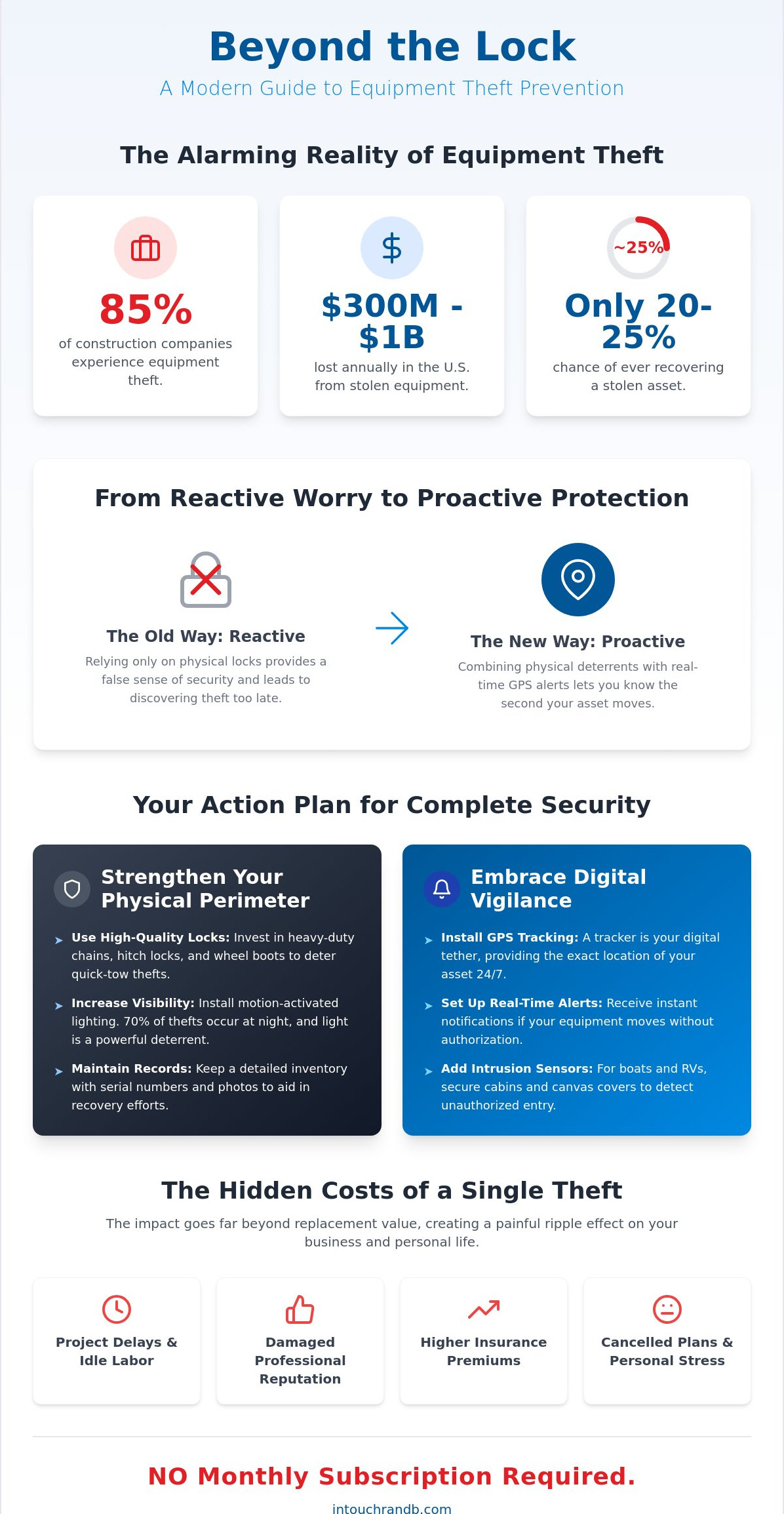
Did you know that 85% of construction companies have experienced some form of theft, and once a piece of machinery vanishes, there is only a 20% to 25% chance you will ever see it again? It's a gut-wrenching feeling to pull up to a job site or a marina only to realize your investment has disappeared. You likely already know that traditional padlocks and chains are often the first things thieves bypass; they often provide a false sense of security that leads to high replacement costs and immense stress. Robust equipment theft prevention requires more than just physical barriers to protect your boats, RVs, or critical assets.
We want to help you regain your peace of mind through a strategy that combines physical deterrents with modern digital vigilance. This guide provides the actionable security tips you need to move from reactive worrying to proactive protection. We will walk through how to implement real-time monitoring strategies, including GPS tracking systems that trigger an immediate alert if your property moves. You will discover how these layers of security work together to lower your insurance risks and ensure your equipment remains exactly where you parked it. It's about being informed and staying one step ahead of potential threats.
Key Takeaways
- Understand why a standard lock is just the beginning and how to protect high-value parts like engines that thieves often strip for resale.
- Learn how to strengthen your physical perimeter with simple tools like motion lighting and organized serial number records.
- Explore how a GPS Tracking System provides a digital tether for effective equipment theft prevention, sending real-time alerts if your asset is moved.
- Discover specialized security strategies for boats and RVs, including the use of intrusion sensors for cabins and canvas covers.
- Transition to a proactive security model where you can customize alert frequencies to catch potential issues before they become expensive losses.
Why Equipment Theft Prevention is More Than Just Buying a Better Lock
Equipment theft isn't just a minor nuisance; it's a massive industry that results in losses between $300 million and $1 billion every year in the United States alone. Most of these crimes occur because high-value assets are left unattended on weekends or during the overnight hours, creating a perfect window for criminals to act. While you might feel secure after snapping a heavy-duty padlock shut, physical barriers are often just a temporary delay for a determined thief with the right tools. True equipment theft prevention is about more than just physical hardware; it's about creating a system of vigilance that alerts you the moment a boundary is crossed.
To build a better defense, it helps to understand the different types of anti-theft systems available today. Modern security has evolved from simple disabling devices to integrated monitoring that provides real-time data. Instead of merely trying to keep someone out, you need a way to know exactly when they try to get in. This shift from reactive security (discovering a theft days later) to proactive vigilance (knowing the second it happens) is the key to protecting your investment.
To better understand this concept, watch this helpful video:
Identifying Your Most Vulnerable Assets
Trailered boats and RVs are frequently targeted because they are essentially "mobile" by design. A thief doesn't need to spend time hotwiring an engine if they can simply hitch your trailer to their truck and drive away in under two minutes. Beyond losing the entire unit, you face a significant risk of component theft. Items like outboard motors and the copper found in HVAC units are high-value targets because they're easy to strip and even easier to sell on the secondary market. You should carefully assess your storage location; while a driveway feels safe, a remote lot or an unlit dock offers the cover of darkness that criminals look for when scouting their next hit.
The Hidden Costs of a Stolen Piece of Equipment
The financial sting of theft goes far beyond the $30,000 average loss per incident. There is a brutal chain reaction that starts the moment an asset disappears. If you're a contractor, a stolen piece of machinery leads to idle labor, project delays, and the high cost of renting a replacement. These setbacks can quickly damage your professional reputation. For boaters and RV owners, a theft usually means a cancelled vacation and months of stress. When you factor in rising insurance premiums and the difficulty of finding replacement equipment in a tight market, it's clear that prevention is always more affordable than a claim. For commercial operators, discovering if you are eligible for an IEEPA tariff refund claim can provide a welcome financial boost to help cover these rising costs of doing business. Catching a fault before it becomes a total failure is the only way to maintain your peace of mind.
Step-by-Step: Strengthening Your Physical Security Perimeter
Securing your assets starts with a strong physical perimeter. Think of this as your first line of defense in equipment theft prevention. While digital tools provide the alerts, physical barriers provide the resistance that can make a thief decide your property isn't worth the effort. High-quality chains, hitch locks, and wheel boots are essential tools for anyone storing a trailer or boat. These devices don't just stop a quick tow; they send a clear message that you've taken steps to protect your investment. A property that looks "watched" is far less likely to be targeted by opportunistic criminals looking for an easy score.
Visibility is a powerful deterrent. Since approximately 70% of equipment thefts occur at night, removing the cover of darkness is your most effective strategy. Motion sensors and light towers can turn a quiet, dark lot into a high-visibility zone the moment someone steps onto the property. This sudden change in the environment often causes a thief to abandon their plan. It's about creating an atmosphere of risk for the intruder while maintaining a sense of safety for your assets.
Creating a Detailed Asset Inventory
If the worst happens, having a paper trail is your best friend. You should log the make, model, and serial numbers of every piece of equipment you own. For boat owners, your Hull Identification Number (HIN) is critical for identification. Don't just take standard photos; capture "distinctive mark" shots, like a specific scratch on the hull or a custom decal. If you store these records in the cloud, you can access them instantly from your phone during a crisis to give police the exact details they need for recovery. This habit ensures you aren't scrambling for paperwork when every minute counts.
Using Light Minder Technology for Deterrence
Lighting is one of the most effective ways to discourage a criminal. Thieves love the dark because it gives them time to work without being seen. By using a Light Minder, you can create automated schedules that make a remote lot or a dock look occupied even when you're miles away. Instead of just a single motion light, you can integrate sensors to illuminate dark corners that are usually hidden from view. Actionable Tip: Set your lights to trigger based on specific events, like a gate opening, to create a sudden, surprising burst of light that can scare off an intruder before they reach your equipment. For more specialized protection, you might explore how different monitoring solutions can fit your specific storage layout.
Using GPS and Remote Alerts for Real-Time Vigilance
While physical locks provide a visible deterrent, a modern equipment theft prevention strategy relies heavily on what we call a "digital tether." This is where a GPS Tracking System comes into play. By utilizing satellite technology to monitor the real-time location of your asset, you're no longer left wondering where your property is. Instead of asking "where is my boat now?" after discovering it's gone, these systems allow you to ask "did my boat just move?" the very second it happens. This shift from recovery to active monitoring is what provides true peace of mind for owners of high-value equipment.
In remote marine environments or storage lots, relying on WiFi is often a recipe for failure. WiFi signals are notoriously short-range and prone to dropping out just when you need them most. Cellular-based alerts are far superior because they utilize robust mobile networks that cover vast coastal and rural areas. If a thief tries to move your RV or boat, a cellular-connected device can transmit that data to the cloud instantly, ensuring you get the notification regardless of how far you are from the site. It's the difference between a silent alarm and a guardian that can reach you anywhere in the world.
How GeoFencing Acts as an Invisible Boundary
GeoFencing is one of the most powerful features of a modern tracking system. It allows you to use digital maps to define a "safe zone" around your property. If your boat drifts out of its slip due to a failed line or is towed away by a criminal, the system recognizes that the asset has crossed that invisible boundary. You'll receive an instant text or email alert the moment the breach occurs. This is also incredibly useful for detecting anchor dragging during a storm or spotting unauthorized use of your equipment by someone else. You can find more details on setting up these boundaries in our Remote Notification Systems: A Complete Guide.
Remote Notifications: The Watcher That Never Sleeps
The core of this technology is the Communication Hub, which acts as the brain of your security setup. When a sensor is triggered, the hub sends that data directly to secure cloud servers. From there, the alert is routed to your phone or computer in seconds. You can even set up multi-recipient alerts, ensuring that both you and your marina manager or a trusted neighbor are notified at the same time. This redundant layer of communication means that even if you're in a meeting or asleep, someone else can respond to the situation. It's a proactive way to manage your equipment theft prevention without having to physically stand guard over your assets 24/7.
Securing Mobile Assets: Specialized Tips for Boats and RVs
Boats and RVs present unique challenges because they often sit unattended for weeks at a time. While we've discussed general equipment theft prevention, these mobile assets require a more granular approach to security. For instance, data indicates that 69% of boat sinkings actually happen while the vessel is tied to the dock. This often occurs because a bilge pump fails or shore power is lost, leaving the boat vulnerable. When a boat is in distress or sitting low in the water, it becomes a prime target for opportunistic theft of onboard electronics and expensive gear.
You can protect your cabin and storage compartments by installing intrusion sensors. These small, effective devices can even be attached to canvas snaps, alerting you the moment someone tries to peel back your boat cover. Monitoring your shore power is equally vital. If your connection is cut or the marina loses power, your batteries will eventually die, causing your security system and bilge pumps to fail. It's about maintaining a constant state of readiness so you don't return to a flooded or stripped asset.
Actionable Tip: Use a Bilge Minder to track pump activity, which can signal unauthorized entry or leaks before they become catastrophic.
Protecting Trailered Assets from Tow-Away Theft
Trailered boats are the most commonly stolen marine assets because they are ready to roll. A thief can hitch up and disappear in minutes without needing to bypass complex engine ignitions. To counter this, you should use motion sensors that detect the specific vibrations of a trailer being hitched. If your asset is moved, the first 60 minutes are the most critical for recovery. Having a real-time tracking system allows you to give law enforcement a live location, which significantly increases the odds of getting your property back before it's hidden or dismantled.
Environmental Monitoring as a Security Layer
Security isn't just about stopping people; it's about protecting the environment inside your asset. High humidity or extreme temperatures can ruin the interior of a vacant RV or boat cabin. By using temperature and humidity sensors, you can receive alerts if your climate control fails. This is often an early indicator of a power loss that could eventually disable your security hardware. You can learn more about these strategies in The Ultimate Guide to Remote Monitoring for Vacant Properties. Ensuring your power stays on is the foundation of any long-term equipment theft prevention plan.
If you want to ensure your mobile assets are truly protected, check out our full range of remote monitoring tools today.
Implementing a Proactive Security Strategy with inTouch R&B
Adopting a proactive strategy for equipment theft prevention means moving beyond simple reactive measures. Instead of discovering a theft after the damage is done, a proactive approach focuses on catching a fault before it leads to a total failure. This philosophy relies on constant communication between your assets and your phone. You can customize your alert frequency to fit your specific needs, whether you prefer hourly check-ins, daily status reports, or on-demand updates (which allow you to ping your device for an immediate location or status). If you're unsure which specific hardware is right for your boat or RV, you can check the comparison matrix to find the perfect fit for your storage situation.
Installing these systems is designed to be straightforward, even if you don't have a background in electrical engineering. Most sensors utilize Bluetooth or WiFi for a quick, wireless setup, while others can be wired directly into your asset's power supply for long-term reliability. For those who prefer a professional touch, specialized retailers like Music In Motion can help integrate these technologies seamlessly into your vehicle or vessel. This flexibility ensures that your security system is as mobile as your property. When a sensor is triggered, the response is immediate, providing you with the data you need to take action before a thief can make a clean getaway.
The Relief of Being Informed
There is a unique sense of relief that comes from knowing exactly what is happening with your property at all times. Simple, easy-to-read text alerts remove the guesswork from property management; if a door opens or a trailer moves, you'll know. Because all data is logged via cloud reporting, no alert is ever lost. This provides a clear history of every event, which is invaluable for insurance purposes or police reports. Actionable Tip: Add your service technician or a trusted marina manager as a secondary alert recipient. If a power failure or a bilge alarm triggers while you're away, they can respond to the site immediately on your behalf.
Ownership Without the Ongoing Burden
Many industrial security solutions require high monthly fees that can quickly eclipse the cost of the hardware. Choosing a system that is a one-time investment is a much smarter long-term strategy for protecting your personal assets. A dedicated Communication Hub is far more reliable than generic smart home gadgets because it's built specifically for the harsh environments of docks and remote lots. These hubs are designed to be "always-on" guardians that don't rely on a home router to stay connected. Secure your peace of mind by choosing a system that puts you in total control of your property's safety.
NO Monthly Subscription Required.
Take Control of Your Asset Security
Take control of your property's safety by moving from a reactive mindset to one of constant, quiet vigilance. Effective equipment theft prevention isn't just about the strength of your chains; it's about the speed of your information. By combining physical barriers with real-time text and email alerts, you create a layered defense that protects your boats and RVs even when you're miles away. This approach ensures that you aren't just finding out about a problem after the fact, but responding to it the moment it happens.
Founded in 2014, our team provides specialized marine and RV sensors that act as a watchful guardian for your most valuable assets. You shouldn't have to spend your time away from the dock or the lot feeling anxious about what might be happening. Instead, lean on a system that is built to notify you the moment a boundary is crossed or a power source fails. It's a practical way to manage your assets without the stress of constant manual checks. Protect your investment today when you shop our GPS Tracking and Monitoring Systems. You deserve the confidence that comes with a reliable, innovative security strategy.
NO Monthly Subscription Required.
Frequently Asked Questions
What is the best way to prevent my boat from being stolen?
The most effective strategy is a layered approach that combines physical deterrents with real-time digital monitoring. Since 70% of thefts happen at night, you should use a Light Minder to remove the cover of darkness and a GPS Tracking System to act as a digital tether. Combining these with high-quality hitch locks ensures your boat isn't an easy target for opportunistic thieves who are looking for a quick and quiet score.
How does a GPS asset tracker actually help with theft recovery?
A GPS tracker provides law enforcement with exact, real-time coordinates, which significantly increases the chances of getting your property back. While the general recovery rate for stolen equipment is only about 20% to 25%, studies show that 69% of recovered equipment had a GPS device installed. It turns a broad search into a targeted recovery operation, allowing police to act quickly before the asset is hidden or dismantled for parts.
Can I monitor my boat or RV without a WiFi connection?
Yes, you can monitor your assets using cellular-connected systems that operate independently of local WiFi networks. WiFi is often unreliable in marinas or remote storage lots because the signal range is limited and prone to interference. Cellular-based systems use robust mobile networks to send alerts directly to your phone, ensuring you stay informed about your property's status even if you're hundreds of miles away from the site.
What is GeoFencing and how does it work for equipment security?
GeoFencing is a digital boundary that you set around your asset's location using a virtual map. Think of it as an invisible fence; if your boat or RV moves outside of this pre-set area, the system triggers an immediate alert to your mobile device. This is a vital tool for equipment theft prevention because it tells you exactly when an unauthorized movement begins, whether your boat is drifting or being towed away.
Is it possible to get alerts on my phone if someone steps onto my boat?
You can receive instant notifications by installing specialized intrusion sensors on cabin doors, storage hatches, or even canvas snaps. These sensors detect when a point of entry is disturbed and send a signal to your communication hub. This allows you to respond to a potential theft in progress rather than discovering the loss days later. It's a proactive way to maintain a constant, watchful eye on your vessel's perimeter.
What happens if my equipment loses power while I am away?
If your shore power is cut or a breaker trips, a dedicated monitoring system like an AC Minder will send an immediate alert to your phone. This notification is critical because a loss of power eventually leads to dead batteries, which can disable your bilge pumps and security hardware. Knowing about a power failure the moment it happens allows you to fix the issue before it leads to a much larger problem.
Are there security systems for boats and RVs that don’t have monthly fees?
Yes, there are high-quality security systems designed for equipment theft prevention that don't require ongoing costs. Many owners prefer a one-time investment in hardware that provides professional-grade monitoring without the burden of a recurring bill. This model allows you to own your security data and your hardware outright, providing long-term peace of mind and protection for your assets without any hidden financial surprises down the road.
What should I do immediately after my equipment is stolen?
You should immediately notify local law enforcement and provide them with the last known GPS coordinates and a detailed description of the asset. Use the cloud-based records we discussed earlier to share serial numbers, Hull Identification Numbers, and photos of any distinctive marks. The first 60 minutes are the most critical for a successful recovery, so having this information ready to go on your phone can make a significant difference in the outcome.
NO Monthly Subscription Required.
Article by
Jimmy Nesbitt
Principle
Be the first to comment