

Did you know that a single sump pump failure often leads to basement restoration costs ranging from $6,000 to over $15,000? It is a staggering figure that represents more than just lost money; it is the stress of ruined memories and weeks of professional cleanup. We understand that the fear of coming home to a flooded basement is a heavy burden for many homeowners, particularly when local alarms are too quiet to be heard from the bedroom or while you are away on vacation. Relying on a simple buzzer that only works if you are standing nearby isn't a safety plan, it's a gamble. That is why finding a reliable sump pump high water alarm is the most practical step you can take to protect your home's foundation and your own peace of mind.
We agree that you deserve to feel secure whether you are at work or halfway around the world. In this guide, we promise to show you how to choose and install a monitoring system that provides true remote protection. We will explain how these smart devices send instant text and email notifications to your phone the moment water levels become a threat. You will also discover how to set up your monitor using a simple browser based portal, ensuring your home stays guarded 24/7 without any hidden fees or complicated contracts. It is time to replace worry with a proactive solution that keeps you in control of your home's safety.
Key Takeaways
- Understand why mechanical pumps eventually fail. It's the first step to avoiding the $6,000 to $15,000 cleanup costs that often follow a basement flood.
- Discover how a modern sump pump high water alarm uses smart sensors to detect rising water and send real-time alerts directly to your smartphone.
- Learn why 2.4GHz WiFi is the best choice for basement monitoring and how to use a captive portal, which is a simple setup screen, to get connected quickly.
- Get practical advice on mounting your sensor at the ideal height. This ensures you'll have plenty of warning before water reaches your floor.
- Find out how to customize notifications for multiple people. This way, help arrives even when you aren't home to answer the phone.
Why Your Home Needs a Sump Pump High Water Alarm
Your sump pump is a mechanical workhorse, but it isn't immortal. Most units are tucked away in dark, damp pits where they're easily forgotten until they suddenly stop working. Understanding sump pump mechanics and float switches is the first step in realizing that these systems aren't "set it and forget it" solutions. A mechanical jam or a burnt-out motor can happen at any time, often during the heaviest rains when you need protection the most. A sump pump high water alarm serves as your digital watchdog, providing a secondary safety net that bridges the gap between a functioning pump and a flooded floor.
This protection is especially critical for people who aren't always home to hear a local buzzer. If you spend your summers on a boat or traveling in an RV, a beep in the basement is effectively silent. You need a system that reaches you wherever you are. By receiving a direct alert on your phone, you can call a neighbor or a plumber before the water level exceeds the basin's capacity. This proactive approach prevents the $15,000 disaster that occurs when water sits for days in an empty house.
To better understand how these systems work in a real-world setting, watch this helpful guide on installation and testing:
The Cost of Being Reactive vs. Proactive
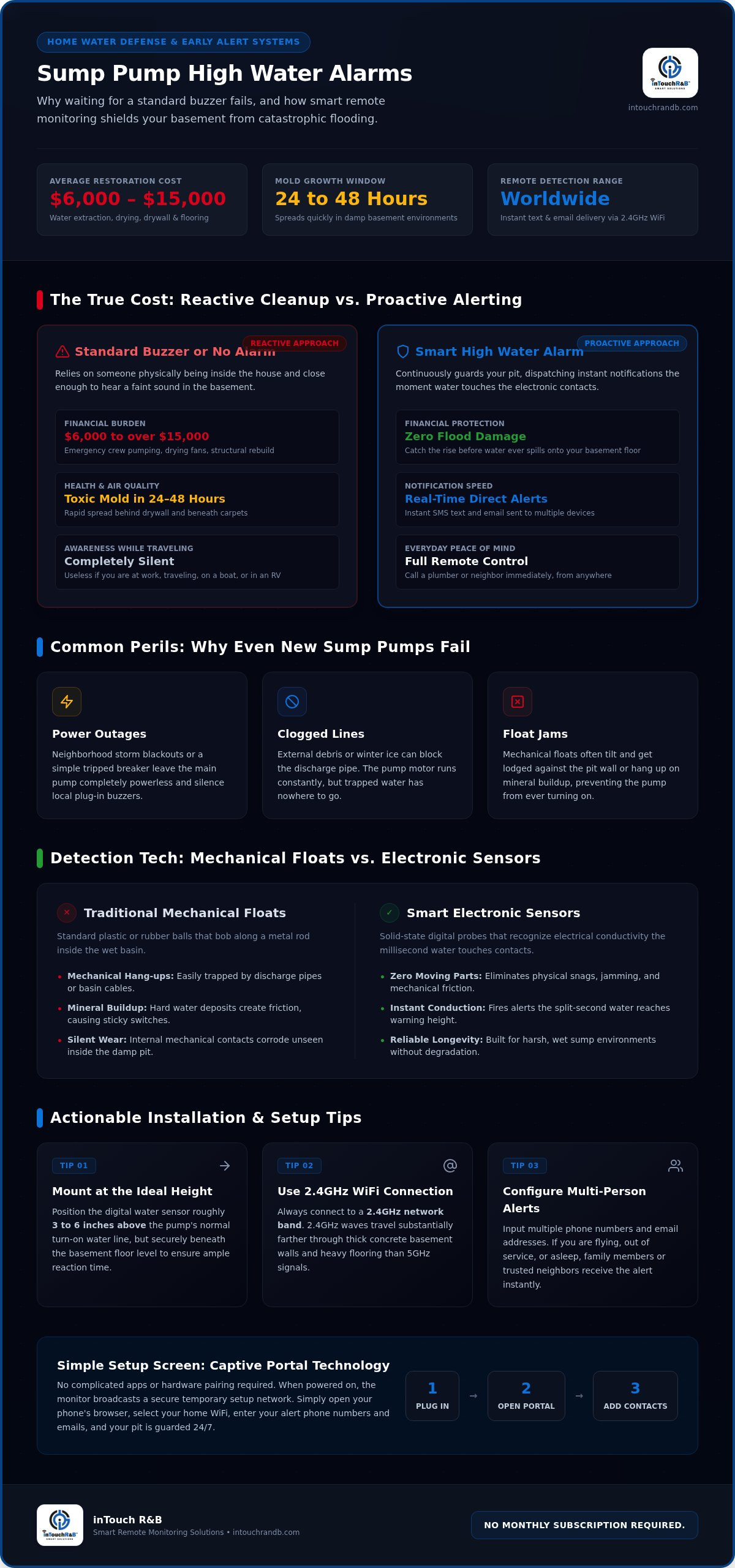
Waiting for a flood to happen is a recipe for financial disaster. On average, homeowners face restoration bills between $6,000 and $15,000 following a significant sump failure. These costs cover water extraction, drying equipment rentals, and replacing ruined drywall or flooring. Beyond the money, there's the health factor. Mold can start to take hold in warm, wet environments in as little as 24 to 48 hours. Choosing a proactive monitoring solution like the Sump Pump Minder allows you to catch issues early. The true benefit is the relief of knowing your assets are safe while you're away, allowing you to enjoy your vacation without checking the weather every hour.
Common Perils of an Unmonitored Sump
Even a brand-new pump can fail due to external factors. Heavy 2026 storm seasons have shown that environmental variables are just as dangerous as mechanical wear. Common issues include:
- Power Outages: A tripped breaker or a neighborhood-wide blackout can silence local, plug-in alarms while leaving your pump powerless.
- Clogged Lines: Debris or ice can block the discharge pipe, meaning the pump runs constantly but the water has nowhere to go.
- Float Jams: If the float gets stuck against the side of the pit, the pump won't turn on even if the motor is perfect.
- Mechanical Fatigue: Continuous operation during severe weather can wear out pump impellers and motors. For heavy-duty water transfer and high-volume drainage needs, specialized providers like Water Services, Inc. supply dependable centrifugal pumps built to withstand rigorous fluid management demands.
A smart monitor detects the rising water level regardless of why the pump failed, giving you the time needed to react before the situation becomes a total loss.
How Modern Water Alarms Prevent $15,000 in Damages
Modern technology has changed how we protect our homes from rising groundwater. According to this University of Minnesota Extension guide to basement moisture, hydrostatic pressure can force water through tiny cracks in your foundation during heavy rain. A sump pump high water alarm acts as your first line of defense by detecting this water before it reaches your living space. The system uses a specialized high level water sensor (which is essentially a digital probe that recognizes moisture the moment it touches the device's contacts) to monitor the pit around the clock.
Mechanical Floats vs. Electronic Sensors
Traditional systems often rely on mechanical floats that bob up and down. While they've been the standard for years, they're prone to "hang-ups" caused by mineral buildup or debris in the pit. If the float gets stuck, the alarm never sounds. A modern sump pump high water alarm with electronic sensors is a more reliable alternative because there are no moving parts to get jammed. They sit patiently in the pit and only react when the water circuit is completed. This design makes them perfect for 24/7 monitoring in second homes or rental properties where you can't check the basement every day.
The Notification Chain: Text and Email Alerts
Once the sensor detects water, it triggers a response through a central communication hub. This hub sends a signal to secure cloud servers, ensuring that no alert is ever lost in transit. Within seconds, you receive a clear text or email notification on your smartphone. We recommend setting up multi-recipient alerts so both you and a trusted neighbor are notified simultaneously. This redundancy is vital during emergencies. If you're on a plane or out of cell range, someone else can still step in to save your property.
Choosing a system that offers this level of detail provides a sense of security that a simple local buzzer cannot match. If you want to see how these sensors compare to traditional options, you can explore the Sump Pump Minder to see a professional-grade solution in action. Investing in this technology is a small price to pay to avoid the logistical nightmare of a flooded basement. You can find more protective tools at inTouchRandB.com to keep every part of your home safe.
Comparing Your Options: WiFi vs. Cellular Monitoring
Once you decide to install a sump pump high water alarm, the next step is choosing how that device talks to the outside world. Most modern homeowners lean toward WiFi-based systems because they leverage the wireless network you already have. These systems are typically easier to set up and allow you to monitor your basement from a smartphone, tablet, or laptop. It's a convenient way to keep tabs on your home's safety without adding another monthly bill to your stack of expenses. However, you need to ensure your basement has a stable signal. A quick tip is to take your smartphone down to the sump pit and check the bars; if you can stream a video without buffering, your alarm should connect just fine.
WiFi Monitoring: Pros and Cons
WiFi systems like the Sump Pump Minder are designed for simplicity. They often use a "Captive Portal" for setup, which is just a temporary webpage that pops up on your phone to help you link the device to your home network. You won't need to fumble with complicated passwords initially. These devices operate on a 2.4GHz frequency. While many modern routers offer 5GHz, 2.4GHz is the standard for smart home tech because it travels through thick basement walls and subfloors much more effectively. The only real downside is that if your router loses power, your connection drops. That is why it's vital to follow Ready.gov flood preparedness guidelines and ensure your monitoring system has a reliable battery backup to keep the sensors active even when the lights go out.
Cellular alternatives are available for remote cabins or areas where WiFi isn't an option. These use the same towers as your cell phone, but they come with a catch. Most cellular monitors require a mandatory service plan that can cost between $60 and $85 per year. Over the life of the device, those small fees add up to hundreds of dollars in extra costs.
The Problem with Subscription-Based Alarms
Many companies try to lock you into "subscription fatigue" by charging for basic text alerts. If you're paying $10 a month just to be told your basement is wet, the lifetime cost of that alarm skyrockets. We believe you shouldn't have to pay a "ransom" to receive alerts from hardware you already own. When you are looking at different models, check the fine print for hidden data limits or app fees. You can see how different systems stack up by reviewing our comparison matrix of all Minders to find a solution that fits your budget. Choosing a system with no recurring fees is the smartest way to get professional-grade protection without the ongoing drain on your wallet.
Actionable Tips for Installing and Testing Your Alarm
Installing your sump pump high water alarm correctly is just as important as choosing the right model. We often see homeowners make the mistake of simply dropping the sensor into the pit without thinking about height. If the sensor is too low, you'll get annoying false alarms every time the pump runs. If it's too high, you won't have enough time to react before the water hits your floor. The "sweet spot" is mounting the sensor about 2 to 3 inches above your primary pump's activation level, but at least 2 inches below the basement floor rim. This gives you a vital head start without the headache of constant notifications.
Step-by-Step Hardware Installation
Start by mounting the controller hub on a wall where you can easily see the indicator lights. You should keep it away from large appliances like microwaves that might interfere with the wireless signal. When you run the sensor wire into the pit, use zip ties to secure it to the discharge pipe. This prevents the cord from tangling with the pump's mechanical float, which could cause the very failure you're trying to prevent. Once it's plugged in, look for the LED lights; a steady green light means you have power, while a blue light indicates a successful WiFi connection.
Configuring the software is equally straightforward. Your device will broadcast its own temporary signal (this is the captive portal we mentioned earlier). Simply connect your phone to the "SumpPumpMinder" network and follow the on-screen prompts to link it to your home WiFi. During this process, you'll encounter what we call the "YES" factor. This is where you acknowledge the terms and confirm your alert preferences. It's the final click that turns your hardware into a 24/7 guardian.
Maintenance Checklist for 2026
A proactive safety plan requires a little bit of upkeep. We recommend a quick check every six months to ensure everything is in top shape. Start by wiping down the sensor probes to remove bacterial slime or mineral buildup that could delay detection. Next, use your phone to verify that the WiFi signal in your basement remains strong. These systems often update "over the air" to improve security, so ensure your device stays connected to receive the latest firmware. Finally, perform a "bucket test" by slowly pouring water into the pit until the sensor is submerged. If your phone buzzes with a notification, you know your sump pump high water alarm is ready for a real emergency.
For a reliable system that guides you through every step, consider the Sump Pump Minder. You can secure your home today and rest easy knowing you're protected. NO Monthly Subscription Required.
The Sump Pump Minder: Reliable Protection Without the Fees
When you choose a sump pump high water alarm, you are looking for a digital guardian that stays vigilant so you don't have to. The Sump Pump Minder was designed with this specific goal in mind. It is a professional grade tool tailored for both residential basements and mobile environments like boats or RVs. Unlike many other systems on the market that charge you every month just to keep the service active, our focus is on providing a one time solution that works for you indefinitely. We believe that your safety shouldn't be tied to a recurring bill.
One of the most helpful features of this system is its deep level of customization. You can name your specific locations (for example, "Main House Basement" or "Lake Cottage Pit") so you know exactly where the trouble is the moment your phone buzzes. You also have the power to set alert frequencies. If a situation is critical, you can ensure the system pokes you until the issue is resolved. This proactive approach to property management is what sets inTouch R&B apart; we don't just tell you there is a problem, we ensure you have the information needed to stop a flood before it starts.
Why Homeowners Trust inTouch R&B
With over a decade of experience in remote monitoring for critical equipment, we understand the mechanics of risk. We've spent years perfecting the trigger and response sequences that keep assets safe. Our customers often talk about the "relief of being informed" as the biggest benefit of our technology. It is the feeling of security that comes from knowing that if your primary pump fails, you won't be the last to know. For a deeper look at how this fits into a total home safety plan, you can read our complete guide to proactive protection.
Ready to Secure Your Basement?
Getting started with the Sump Pump Minder is a decision that pays for itself the very first time it prevents a disaster. The setup process is designed to be approachable even if you aren't a tech expert. By using the browser based captive portal, you can have your sump pump high water alarm connected to your network and ready to send alerts in just a few minutes. It is a small investment in hardware that stands between you and the $15,000 restoration costs we discussed earlier. You can take control of your home's safety today and enjoy the peace of mind that comes with true, reliable monitoring.
Secure Your Home and Your Peace of Mind
You now have the tools to prevent a minor mechanical failure from becoming a $15,000 disaster. By choosing a modern sump pump high water alarm, you're moving from a reactive stance to a proactive one that keeps your property safe year-round. Remember that 24/7 protection and control are your best defense against rising groundwater, especially when you're away from home. Our secure cloud servers ensure that no alert is ever lost, delivering simple and easy-to-read text alerts that give you clear information when every second counts.
Whether you're traveling in an RV or simply sleeping upstairs, you can trust that you'll be the first to know if your basement is at risk. It's time to stop worrying about the weather and start enjoying the security of a well-monitored home. If you ever have questions during setup, you can reach our team at 231-INTOUCH (231-468-6824). You can protect your home with the Sump Pump Minder today and join a community of homeowners who value reliable, high-tech safety.
NO Monthly Subscription Required.
Frequently Asked Questions
How does a high water alarm notify me if I am not home?
The system uses an onboard communication hub to send a signal to secure cloud servers. These servers then trigger an instant text or email alert to your smartphone. Because the system is connected to the internet, you can receive these notifications anywhere in the world. This ensures you're informed immediately if the water level rises too high, allowing you to take action before damage occurs.
Do I need a professional plumber to install a sump pump alarm?
No, you don't need a professional plumber to set up this system. Most homeowners can complete the installation in just a few minutes using basic tools. The process involves mounting the controller, securing the sensor wire to your discharge pipe, and following the browser-based captive portal for WiFi configuration. If you can follow a few simple steps on your phone, you can secure your basement yourself.
What is the difference between a local alarm and a remote monitor?
A local alarm only makes noise inside your home, which is useless if you're traveling or sleeping on an upper floor. A remote monitor, like a sump pump high water alarm, sends digital notifications directly to your devices. This technology bridges the gap between your basement and your phone. It provides a proactive safety net that ensures you stay informed of potential flooding even when you're miles away.
Will the Sump Pump Minder work during a power outage?
The system is designed to provide 24/7 protection, but it does require a power source to communicate with your WiFi router. While the sensors are highly reliable, we recommend plugging the hub into an uninterruptible power supply or a circuit with battery backup. This ensures that even if the main power fails during a storm, your alert system continues to monitor the water levels and send out critical notifications.
Why does my alarm need to use 2.4GHz WiFi instead of 5GHz?
The 2.4GHz frequency is used because it has a much longer range and can penetrate thick basement walls or subfloors better than 5GHz. While 5GHz is faster for streaming video, it lacks the physical reach needed for smart home security devices. Using 2.4GHz ensures that your sump pump high water alarm maintains a stable, reliable connection to your router, even from the bottom of a concrete pit.
Can I send alerts to my property manager or a neighbor?
Yes, you can easily configure the system to send multi-recipient alerts. During the setup process, you have the option to add secondary contacts like a trusted neighbor, a property manager, or even a professional service technician. This redundancy is a key part of a proactive maintenance plan. If you are unavailable to answer your phone, someone else can step in to prevent a major flood or equipment failure.
What should I do if I receive a high water alert while traveling?
First, don't panic; the alert is your early warning to prevent a disaster. Contact your secondary emergency responder, such as a neighbor or a plumber, and ask them to check the basement immediately. They should verify if the pump has lost power, if a breaker tripped, or if the float is jammed. Having a remote monitor gives you the time needed to coordinate help before the water overflows.
Is there a monthly fee for the text and email notifications?
Unlike many competitors who charge recurring service fees, our system is designed to provide professional-grade monitoring without any ongoing costs. You pay for the hardware once and enjoy lifetime access to text and email alerts. We believe that protecting your home shouldn't involve subscription fatigue. You get full control and peace of mind without worrying about hidden charges or data limits appearing on your monthly bill.
NO Monthly Subscription Required.

Article by
Jimmy Nesbitt
Principle
Be the first to comment