

You’re hundreds of miles away from your property when a summer storm knocks out the power, silencing your air conditioner during a humid heatwave. Without a way to check in, you won't know that the internal temperature is climbing until you walk through the front door weeks later to find a $5,000 mold remediation bill. It's a heavy weight to carry, that constant worry about what might be happening to your home, boat, or RV when you aren't there to watch over it. We understand that you want to enjoy your travels without the nagging anxiety of frozen pipes or undetected leaks. That's why choosing the right system for remote hvac temperature monitoring is about more than just convenience; it's about protective vigilance.
In this 2026 guide, you'll learn how to prevent thousands in property damage by selecting a monitoring solution that acts as a watchful guardian for your assets. We'll show you how to get real-time alerts for temperature spikes and power loss on a 120 VAC circuit, giving you the chance to act before a small glitch becomes a catastrophe. You'll discover how easy it is to set up a browser-based portal that keeps you informed and provides total peace of mind while you're on the move.
Key Takeaways
- Learn why setting up remote hvac temperature monitoring is the most effective way to prevent damage from frozen pipes or mold while you're away.
- Discover how the HVAC Minder tracks humidity and the 120 VAC power circuit, which is the standard electrical supply, to confirm your system is functioning.
- Get practical tips on sensor placement in high-risk zones, such as the A/C drip pan, to catch clogged drain lines before they cause a flood.
- Compare WiFi and cellular monitoring options to choose the most reliable connection for your home, boat, or RV.
- Find out how multi-recipient alerts can send notifications to both you and your repair technician to ensure a fast, proactive response to any failure.
What is Remote HVAC Temperature Monitoring?
At its core, remote hvac temperature monitoring is a system of specialized sensors designed to track the environmental health of your property and alert you instantly via phone or email if something goes wrong. While a standard HVAC control system manages the day-to-day operation of your heating and cooling, a monitoring system acts as an ever-present guardian. It’s a proactive solution for when you aren't there to hear a strange mechanical rattle or feel the first signs of a damp carpet. By staying informed, you can catch issues before they escalate into expensive repairs.
This technology matters because HVAC failure is the leading cause of property damage in unattended homes and vessels. It often starts a devastating chain reaction that is hard to stop once it begins. For example, a simple power loss shuts down the air conditioner. In a humid climate, this leads to a rapid rise in dew point and humidity, which then creates the perfect environment for mold growth. If you’re on a boat, that same power loss might mean your onboard chargers stop working, eventually leaving you with dead batteries and a non-functional bilge pump.
The Difference Between a Thermostat and a Monitoring System
Many homeowners assume a smart thermostat provides enough protection, but there's a critical gap to consider. A thermostat is built to control temperature; it doesn't necessarily monitor the mechanical health of the unit itself. A dedicated system like the HVAC Minder tracks the actual 120 VAC power circuit and the status of the drip pan. You need a system that stays vigilant even when the HVAC is "off" or in a standby mode, ensuring that a clogged drain line doesn't turn into a flood while the system is idle.
Monitoring for Boats, RVs, and Residential Homes
The stakes change depending on your environment. In marine settings, high humidity can ruin expensive electronics and upholstery in just a few days. For RV owners, remote monitoring is often a lifesaver for pets left inside or a shield against frozen pipes during winter storage. In residential homes, the risk is often hidden away. An average loss from an attic A/C leak is about $5,000, a cost that is easily avoided when you have sensors detecting water in the pan before it overflows through your ceiling. Whether it's a house or a hull, being informed is your best defense.
How Remote HVAC Sensors Prevent Costly Damage
Effective remote hvac temperature monitoring does more than just watch a digital thermometer. It identifies the specific mechanical and environmental triggers that lead to property destruction. One of the most common threats is a clogged condensate drain line. Over time, bacteria and debris build up in these lines, causing water to back up. Without a sensor, you won't know there's a problem until the secondary drain pan overflows, leading to saturated insulation and collapsed ceilings. By placing a sensor directly in that pan, you get a notification the moment water appears, allowing you to clear the line before any damage occurs.
Another critical factor is the status of your power supply. Most standard systems only tell you if the air is getting warm, but a professional monitor tracks the 120 VAC circuit, which is the standard electrical supply for your home or RV. If a breaker trips or the shore power at a marina fails, you'll know instantly. This immediate insight is vital because a power loss often starts a countdown toward mold growth or frozen pipes. Staying ahead of these events is much easier when you have a proactive monitoring solution acting as your eyes and ears.
The High Level Water Sensor: Your First Line of Defense
Wired and wireless water sensors are designed to detect standing liquid in high-risk areas, specifically the HVAC drip pan. Units located in attics are essentially leaky time bombs; if they fail, gravity ensures the water ruins everything beneath them. To keep your system reliable, you should perform a simple maintenance check once a year. Actionable Tip: Test your water sensor annually by placing the probes into a shallow dish of water. Confirm that the system triggers an alert to your phone within seconds. This ensures the hardware and your cloud connection are both ready for a real emergency.
Temperature and Humidity: Beyond Comfort
While we often think of climate control in terms of personal comfort, it's actually about structural health. In cold climates, a sudden drop in temperature is the first sign of a furnace failure, which can lead to burst pipes in hours. In warmer areas, tracking the "Dew Point" is even more important. Put simply, the dew point is the temperature where air turns to water. When the dew point inside your boat or cabin rises, condensation begins to form on walls and electronics, inviting mold to take root. Monitoring these levels allows you to manage your HVAC Minder settings remotely, ensuring the air stays dry enough to protect your interior finishes and sensitive equipment.
Comparing WiFi vs. Cellular HVAC Monitoring Systems
Deciding how your remote hvac temperature monitoring system connects to the world is a vital step in protecting your property. For most residential homes, WiFi systems are the most practical choice. They are cost-effective and easy to scale, utilizing the internet connection you already have in place. On the other hand, cellular systems are the gold standard for remote cabins, rural properties, or marinas where local WiFi is either unreliable or completely non-existent. These units operate independently of local networks, ensuring they stay online even if a router fails.
Some advanced setups use hybrid solutions, where a central communication hub bridges the gap between individual sensors and the cloud. Regardless of the connection type, the real value lies in the backend infrastructure. You should always look for a system that uses secure cloud servers. This setup ensures that no alert is ever lost, providing a reliable record of every temperature spike or power dip. When a sensor is triggered, the data is immediately pushed to a secure environment that manages the notification process, so you aren't relying on a single piece of hardware to do all the heavy lifting.
Why 2.4GHz WiFi is the Industry Standard
You might notice that most specialized monitoring devices, including the Light Minder, rely on 2.4GHz WiFi rather than the faster 5GHz bands used by modern laptops. This isn't an oversight; it's a calculated choice for better range and penetration. The 2.4GHz signal travels through thick walls and floors much more effectively, which is essential when your hardware is installed near an HVAC unit in a basement or attic. Actionable Tip: To keep your signal strong, place your monitoring hub at least three feet away from microwaves or large metal appliances, as these can cause signal interference that might disrupt your connection.
Modern systems have also moved away from clunky, proprietary apps that take up space on your phone. Instead, look for a system that features a browser-based Captive Portal. This allows you to handle the entire configuration through a standard web browser, making the setup process fast, secure, and accessible from any device without needing to download additional software.
The Importance of Multi-Recipient Alerts
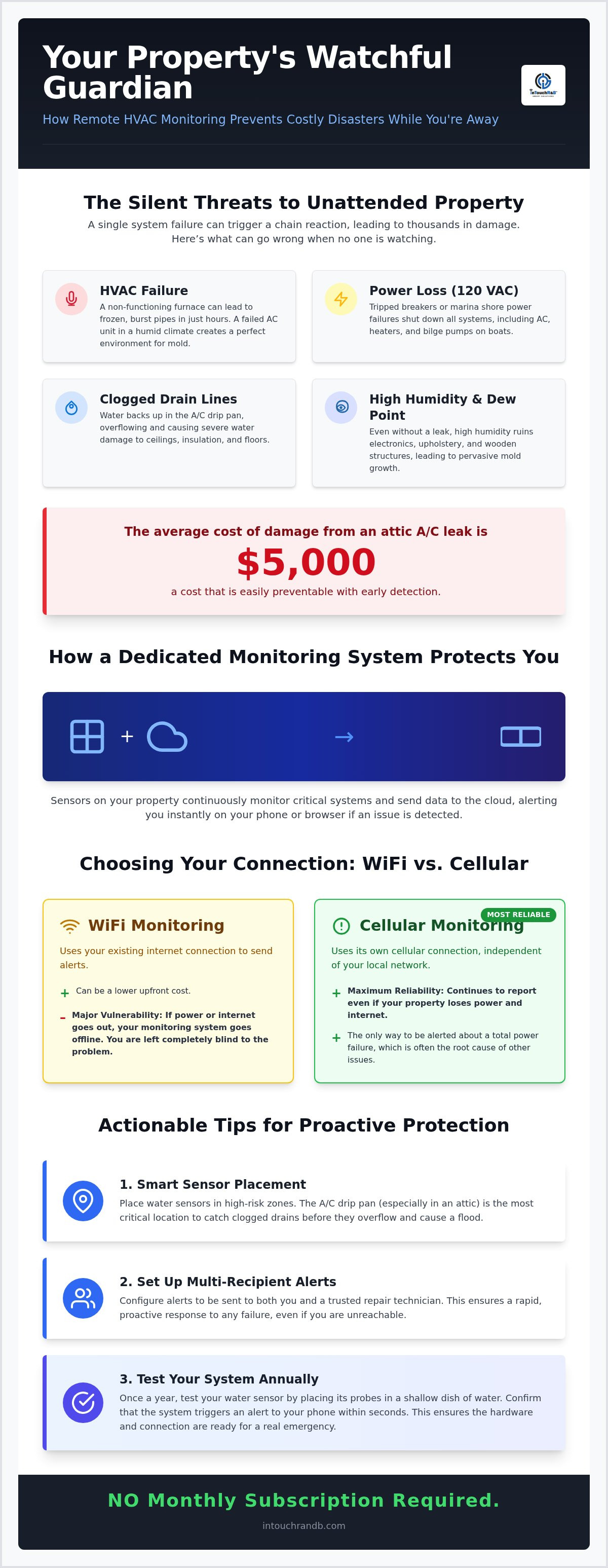
A notification doesn't do much good if it sits unread in your inbox while you're busy or traveling. That's why configuring multi-recipient alerts is a critical safety feature. You can set the system to notify you, a spouse, a trusted neighbor, or even your professional technician simultaneously. This "safety in numbers" approach means that if you're unavailable, someone else can step in to check the property or start the repair process. You can also tailor the frequency of these updates, choosing between hourly status reports, daily summaries, or immediate alerts only when a problem is detected. To find the right balance of features for your home or vessel, See how our HVAC Minder compares to other systems.
Setting Up Your HVAC Monitoring System for Success
Getting your remote hvac temperature monitoring system up and running is a straightforward process, but it requires a bit of focused attention to ensure long-term reliability. Before you start the hardware integration, take a few minutes to read the installation guide and user's manual fully. This small step prevents common setup errors and helps you understand the protective features of your new device. Once you're ready, strategic sensor placement is your next priority. You'll want to position sensors in high-risk zones, specifically the secondary drip pan, near your primary thermostat, and directly by the power circuit.
As you install each component, configure custom names for every location. Instead of generic labels, use descriptive terms like "Main Cabin HVAC" or "Attic Unit" so that any alert you receive is instantly clear. After the physical installation, perform a startup test sequence. This involves watching the device's LEDs to verify that both the Green and Blue lights are functioning as expected. This visual confirmation is your first sign that the system is ready to stand guard over your property.
Step-by-Step Configuration Tips
To begin the digital setup, access the configuration page via the default IP address, 192.168.4.1, using your tablet or smartphone. This connects your device directly to the monitoring hardware's internal setup portal. From here, enter your WiFi SSID and password carefully; a stable connection is the backbone of your security. Don't forget to set the correct Time Zone (for example, EST is entered as -5) so that your alert logs reflect the actual time an event occurs. These details ensure that when you look back at your data, the timeline is accurate and actionable.
Maintenance and Troubleshooting
Understanding the language of your device helps you maintain its health without a struggle. The Blue LED is your primary indicator: two short blinks mean the unit is attempting to connect to your router, while one long blink confirms it's functioning and connected to the cloud. Most modern systems handle "Over the Air" firmware updates automatically, so you'll always have the latest security patches without manual intervention. Actionable Tip: If your alert triggers three times within a single 24-hour period, it's time to call a professional technician. Frequent alerts often indicate that a component is on the verge of total failure, and catching it now prevents a much larger repair bill later.
To ensure your home or vessel is fully protected before your next trip, order your proactive monitoring system today.
The inTouch R&B Solution: Proactive HVAC Protection
When you're looking for a reliable way to manage remote hvac temperature monitoring, you need a system that doesn't just record data but actively guards your property. The HVAC Minder is built to be a comprehensive controller that tracks water, temperature, humidity, and power status simultaneously. It's designed to withstand the toughest conditions, whether it's installed in the humid, salt-air environment of a yacht cabin or the sweltering heat of a residential attic. By providing 24/7 vigilance through secure cloud reporting, this system ensures you're never left in the dark about the health of your heating and cooling equipment.
One of the biggest advantages of the inTouch R&B ecosystem is how seamlessly everything works together. You can integrate your HVAC monitoring with other specialized devices like the Bilge Minder or the Sump Pump Minder to create a total security shield for your property. This modular approach means you can customize your protection based on your specific risks, such as flood threats or power failures. Having all your alerts managed through one secure cloud server means you won't have to juggle multiple confusing apps to know your home or boat is safe.
Why Choose the HVAC Minder Package?
We've simplified the process of securing your property by offering the HVAC Minder as a complete package. This bundle includes the main controller, a high-level water sensor for your drip pan, and precise environmental sensors to track temperature and humidity. It's a "plug-and-play" solution that removes the guesswork from hardware integration. To get started, you can explore the HVAC Minder for your home or boat and see how it fits your needs. If you're still curious about why these systems are so vital, you can also learn the early signs of HVAC failure to help you stay ahead of mechanical issues.
A Value You Cannot Ignore
Moving from a reactive "break-fix" model to proactive maintenance is the smartest financial move a property owner can make. While a sudden repair can cost thousands, a proactive system allows you to catch small leaks or power dips before they spiral out of control. There's also a significant benefit to the ownership model. Unlike many industrial systems that require ongoing enterprise contracts, we believe you should own your security hardware outright. This provides long-term peace of mind without the burden of recurring costs. Actionable Tip: Once your system is installed, set a calendar reminder to review your monthly alert logs; this helps you spot "drifting" temperature patterns that might suggest your unit needs a professional tune-up before the next season hits.
Don't wait for a disaster to find out your climate control has failed. Protect your property today with inTouch R&B.
NO Monthly Subscription Required
Secure Your Property for the Future
Protective vigilance is about staying ahead of the curve. By implementing a professional system for remote hvac temperature monitoring, you're choosing to be proactive rather than waiting for a disaster to strike. You now understand how tracking the 120 VAC power circuit and placing sensors in high-risk zones like drip pans can prevent the $5,000 average loss often seen from attic leaks. It's about more than just numbers; it's about the security of knowing your home, boat, or RV is being watched by a reliable guardian.
Since we were founded in 2014, we've focused on providing dependable solutions that use secure cloud server reporting to ensure no alert is ever lost. If you ever have a question or need a hand with your setup, our 231-INTOUCH support line is ready to help. You deserve to travel and relax with the confidence that your property is safe from mold, frozen pipes, and unexpected failures. Protect your HVAC system and property today at inTouch R&B. We're here to help you maintain that peace of mind year-round.
NO Monthly Subscription Required
Frequently Asked Questions
Why do I need a remote temperature monitor if I have a smart thermostat?
A smart thermostat is designed to control your comfort while you're inside, but it often misses critical mechanical failures. While a thermostat might tell you it's getting warm, a dedicated system for remote hvac temperature monitoring tracks the actual 120 VAC power circuit and the presence of water in your drip pan. This allows you to catch a clogged drain line or a tripped breaker before it leads to a flooded attic.
What is the primary cause of HVAC water leaks in the home?
Most water leaks are caused by a clogged condensate drain line, which is typically the result of bacteria growth or debris buildup over time. When this line is blocked, water backs up into the secondary drain pan. If your unit is in the attic, this can cause an average of $5,000 in property damage. Actionable tip: Regularly flushing your drain line is a great proactive step to keep the system flowing.
Can I monitor my HVAC system without a monthly subscription?
Yes, you can monitor your property without being tied to a recurring contract. Unlike many industrial systems that require enterprise agreements, our solution allows you to own your hardware and security outright. This ownership model provides 24/7 protection and peace of mind without the burden of ongoing fees. You get the same reliable, secure cloud server reporting and real-time alerts without a monthly bill hitting your inbox every single month.
How does the system alert me if the power goes out at my property?
The HVAC Minder includes a specialized AC Voltage Monitor that tracks the 120 VAC circuit. If the power cable is removed or a breaker trips, the system detects the loss of voltage and immediately sends an alert through our secure cloud servers. This notification reaches your phone or email instantly, giving you time to respond before your batteries die or your refrigerator contents spoil. It's a critical safety net for unattended homes.
Is it difficult to set up a remote HVAC monitoring device yourself?
Hardware integration is designed to be straightforward for most homeowners and boat owners. You'll use a browser-based Captive Portal by typing 192.168.4.1 into your smartphone or tablet to handle the initial configuration. This allows you to name your locations and set up your WiFi connection without needing a special app. Actionable tip: Always read the installation guide and user's manual fully before starting to ensure your sensors are placed in high-risk zones.
What happens if my boat or RV loses WiFi connection?
Your device needs a stable 2.4GHz WiFi connection to send real-time alerts to the cloud. If the connection is lost, the Blue LED on the controller will give two short blinks to indicate it's searching for the router. To prevent this, ensure your communication hub stays within range of your router and away from interference like microwaves. Once the connection is restored, the device automatically reconnects and resumes its 24/7 protective vigilance over your assets.
Can I send HVAC alerts to my service technician automatically?
You can definitely set up multi-recipient alerts to keep your professional team in the loop. The system allows you to send notifications to yourself and a secondary person, such as a service technician or a trusted neighbor, at the same time. This ensures that if a fault is detected while you're traveling, someone on the ground can take immediate action. It's a key part of moving from a reactive model to proactive maintenance.

Article by
Jimmy Nesbitt
Principle
Be the first to comment