

A small amount of trapped condensate can become a bigger HVAC problem if it goes unnoticed. An HVAC condensate overflow alarm detects rising water in or near the drain pan and sends an alert or triggers an equipment response, depending on its design. Common sensors use a float that rises with the water or a probe that detects water contact.
Choosing the right sensor location can be tricky, especially when equipment is tucked away or ducts run through the home. The location depends on what the sensor needs to detect: water rising at the unit or a change in conditions near a wall or duct.
This article explains how an alarm detects an overflow, what happens when its sensor responds, and how float and water-sensing designs differ. You’ll also learn where wall-mounted and duct-mounted sensors fit, what they detect, and why placement matters. These basics help clarify what an alarm can alert you to and how it fits into broader HVAC monitoring.
Key Takeaways
- Learn what can interrupt condensate drainage and recognize why an overflow alarm is useful before water spreads.
- Compare common sensor approaches and understand how the signal can prompt an alert or equipment response.
- See how wall-mounted and duct-mounted sensors serve different monitoring purposes, so placement better matches the concern.
- Understand which factors shape alarm costs, including the sensor setup and the work needed to install it.
- Explore when HVAC Minder may be a useful way to monitor HVAC equipment remotely.
Cooling and air-conditioning applications
In a central heating and air conditioning system, a blower moves conditioned air through ducts to room registers. During air conditioning, the system also removes moisture from indoor air, and that water must drain away.
An HVAC condensate overflow alarm detects water rising in or near the drain pan. Depending on its design, the signal can alert someone or interrupt equipment operation.
To see how condensate safety switches operate and connect to HVAC equipment, watch this training video:
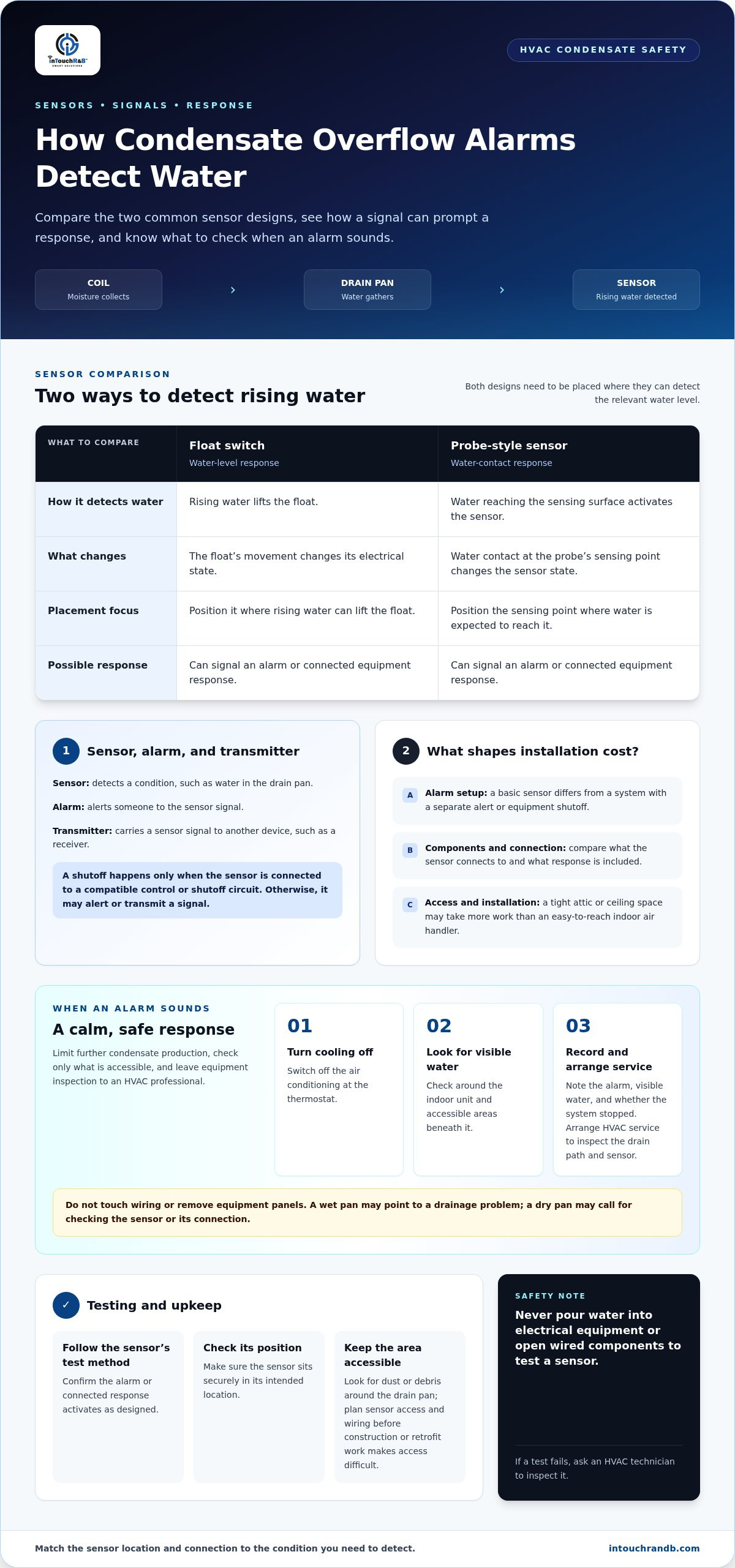
During a typical cooling cycle, warm indoor air passes across a cold coil inside the air-conditioning system. Moisture collects on the coil, drips into a pan, and exits through a condensate drain line. If water cannot leave the pan, its level can rise toward the alarm sensor. The sensor changes state, triggering an alarm or connected response.
The process involves several components: the coil, drain pan, drain line, sensor, and alert or shutoff circuit. A blocked line can allow the cooling system to keep running as water accumulates. A float sensor responds as rising water lifts its float; a water-contact sensor responds when liquid reaches its sensing surface. Both must be positioned to detect the relevant water level.
Condensate Alarm Costs
The cost of a condensate alarm includes the alarm setup and any installation work. The total depends on the components needed and how easily the HVAC unit can be accessed.
A basic sensor differs from a system connected to a separate alert or equipment shutoff. Access also matters: an indoor air handler that’s easy to reach may require less installation work than equipment in a tight attic or ceiling space. Compare sensor type, connection method, and installation needs as separate cost factors.
Responding to an Alarm
When an alarm sounds, turn off the air conditioning at the thermostat and look for visible water around the indoor unit. This limits further condensate production while you check whether the drain pan or nearby floor is wet.
Don’t touch wiring or remove equipment panels. Note the alarm condition, visible water, and whether the system has stopped, then arrange HVAC service to inspect the drain path and sensor. Water in the pan may indicate a drainage problem; a dry pan may warrant checking the sensor or its connection.
Central systems distribute cooled air through ducts and registers, so the air handler may be far from the rooms where symptoms appear. Check accessible areas beneath the indoor unit and along the visible drain outlet. If your home has separate systems, such as radiant heating and a window air conditioner, identify which equipment connects to the affected drain before reporting the issue.
HVAC transmitters and sensors
HVAC sensors detect specific conditions, while transmitters carry sensor signals to another device. Knowing which component detects water helps clarify what an overflow alarm can do.
Alarm, Float Switch, and Drain Pan Sensor Differences
A condensate alarm is the alerting device or system; a float switch is a water-level sensor, and a drain-pan sensor detects water at the pan. The distinction matters: the sensor detects a condition, while the alarm or connected equipment responds to its signal.
A float switch moves as water rises, changing its electrical state. A probe-style drain-pan sensor responds when water reaches its sensing point. For example, a sensor positioned to detect water in the pan can signal an alarm before water spreads beyond the HVAC unit.
An HVAC transmitter sends information from a sensor to another device, such as a receiver. Unlike a sensor wired directly into a shutoff circuit, a transmitter carries the signal. The response depends on how the components are connected.
Other HVAC sensors measure temperature or conditions related to indoor air quality. A thermostat senses indoor temperature to guide heating and cooling, while a filter monitor tracks a different system condition. These devices don’t automatically detect condensate: their purpose and placement must match the condition being monitored.
In the U.S., whether an overflow alarm is required depends on locally adopted building requirements and the equipment arrangement. Broad HVAC standards and environmental design principles alone don’t determine whether a specific installation needs one.
A condensate sensor can shut off HVAC equipment automatically when connected to a compatible control or shutoff circuit. Without that connection, it may only trigger an alarm or transmit a signal.
Alarm Testing and Maintenance
Testing confirms whether a sensor detects water and whether the connected alarm or shutoff responds. A failed sensor, electrical connection, or alert device may not signal a rising water level.
Use the manufacturer’s test method for the specific sensor. Check that it sits securely in its intended location, then confirm that the alarm or connected response activates as designed. Don’t pour water into electrical equipment or open wired components. Ask an HVAC technician to inspect a failed test.
Keep the area around the drain pan accessible, and look for dust or debris that could interfere with a sensor. During construction or a retrofit, confirm the sensor’s location and wiring plan before access becomes difficult. For a broader view of equipment monitoring options, explore inTouch R&B’s information for property owners.
Heating, cooling, and ventilation
Heating, ventilation, and air conditioning work together, but each function handles a different indoor condition. Heating raises indoor temperature; cooling lowers it, and ventilation moves air between indoor and outdoor spaces. That distinction helps explain why condensate concerns are most closely tied to cooling rather than every HVAC operating mode.
During cooling, an air conditioner removes some moisture from indoor air as it lowers the temperature. The collected water must drain away from the equipment. Heating equipment works differently, so a sensor designed for a cooling drain pan may not monitor every component in a combined system. Identify which unit is running and where its drain connects before tracing an alarm.
Ventilation affects indoor air quality, but it isn’t the same as air conditioning. Natural ventilation moves air through openings such as windows and vents; mechanical ventilation uses equipment to move air. An air handler can draw indoor air through a filter, which captures dirt and other particles before the air circulates again. A filter supports cleaner airflow, but it doesn’t detect condensate or replace a water sensor.
System layout changes where equipment and drainage sit. A central heating and cooling system typically sends air through ducts from a central unit, while ductless systems deliver air to separate rooms or zones. A multi-zone ductless system can connect up to 8 indoor units. During a home renovation, note whether a new unit uses existing drainage or has a separate drain path.
Mapping the equipment is useful when a sensor signals trouble. First, identify whether the system is central or ductless. Next, trace the drain from the cooling equipment to its outlet, using visible access points only. Then note which room or zone has reduced cooling, unusual moisture, or a system interruption. These observations can help distinguish a drain issue from a ventilation or airflow concern.
Replacing a dirty filter can help restore airflow, but it won’t clear a blocked condensate line. Keep these maintenance tasks separate: check the filter for airflow problems, and have the drain and sensor inspected when an alarm activates. Poor airflow and water in the drain pan can occur together, but one doesn’t prove it caused the other.
Refrigeration components move heat during air conditioning, while ventilation manages air exchange. These functions may share equipment without sharing sensors. A technician’s training or certification concerns safe system work; it doesn’t determine what a particular sensor detects. When describing an issue, name the equipment type, its operating mode, and the alarm or area involved.
What causes an HVAC condensate drain to overflow?
An overflow occurs when water from an air conditioner’s cooling process collects faster than the drain system can carry it away. The drain pan fills, and water may escape if the blockage or drainage problem continues.
A clogged drain line is a common cause. Dust, algae, and other buildup can narrow the passage, slowing the water until it backs up into the pan. An air conditioner may continue cooling while a partially blocked pipe drains only a trickle. A complete blockage can stop the flow.
Debris can also collect at the drain opening or in an accessible section of the line. A disconnected, damaged, or poorly positioned line may not carry water to its intended outlet. Look for water near the indoor unit or an unusual lack of discharge at the visible drain outlet, but don’t assume either sign identifies the exact fault.
The drain pan itself can contribute to the problem. If it’s cracked, misaligned, or obstructed, water may leak or fail to reach the drain opening. A rusted or damaged pan may leak even when the line is open. Check accessible areas around the air handler for dampness or staining instead of removing panels or reaching into equipment.
Airflow problems can also cause water to appear where it shouldn’t. A dirty air filter can restrict airflow across the cooling coil. If the coil becomes unusually cold, ice may form and later melt into the pan. The sudden flow can overwhelm a drain line that is already struggling. A clogged filter alone doesn’t prove the cause of an overflow.
These causes can look similar from outside the unit. Use a simple sequence: note whether the system is cooling, check for visible water around the air handler, inspect the accessible filter, and record whether water appears at the drain outlet. Share these observations with the technician. Don’t pour cleaners into the line or dismantle drain components unless the equipment instructions specifically allow it.
Water around an indoor unit needs prompt attention, especially near ceilings, flooring, or stored belongings. Turn off cooling at the thermostat if water is actively escaping, then keep people and possessions clear of the wet area. Avoid touching electrical parts or standing water near wiring. An alarm can indicate rising water, but normal drainage requires resolving the underlying blockage or pan issue.
After the drain is cleared or repaired, ask the technician to inspect the pan, line connection, and sensor position together. A clear pipe won’t prevent leakage from a cracked pan, and a working alarm won’t remove debris. Checking these related parts can help identify the cause of the overflow and whether it could recur.
How much does a condensate overflow alarm cost?
Total cost depends on the alarm components, installation work, and how the system connects to HVAC equipment. A sensor alone involves a different scope from a setup that also sends an alert or shuts equipment off. Compare the complete installation, not just the device.
Start by identifying the alarm’s purpose. A float switch or water-sensing probe detects rising condensate, while a separate alarm may notify someone. If the system also needs to interrupt equipment operation, the installer must account for that control connection. Each added component affects the work involved as well as the hardware list.
Installation access is another factor. An air handler in an open utility area may be easier to reach than one above a finished ceiling or inside a tight attic. Existing wiring and sensor location also matter. Adding a sensor beside an accessible drain pan, for example, can require different work from routing a connection through finished spaces.
- Sensor type: A float switch and a water-contact probe detect water differently.
- Alarm response: A local sound, remote signal, or equipment shutoff requires different components.
- Access: A cramped attic or concealed air handler can add installation work.
- Existing setup: An available compatible control connection may affect the scope.
Separate alarm installation from drain repair. If a technician finds a clogged line, damaged pan, or faulty wiring, that work addresses the underlying problem, not the alarm itself. Ask for a work proposal that distinguishes the sensor, alarm, connection, and any repairs. This makes it easier to compare what each estimate covers.
For a useful comparison, describe the equipment location and the response you want. Say whether you need a nearby audible warning or an automatic system response. Then check whether the estimate includes parts, installation, testing, and any work to connect the sensor. These details explain differences between proposals better than a device-only price.
Consider access for future maintenance, too. A sensor placed where it can be inspected is easier to include in routine HVAC checks. A hidden sensor may require extra access for testing or cleaning. Ask for its location and test method to be recorded with the system details, so future maintenance can identify the correct device and connection.
Before approving work, match the proposed setup to the risk area: identify the drain pan, choose the desired alert or shutoff response, and account for access and wiring. This gives you a clearer basis for evaluating total alarm cost than comparing sensor prices alone.
These are course prices, not estimates for condensate overflow alarm installation. Use an itemized proposal to assess the actual system cost.
InTouch R&B: Bilge Minder
inTouch R&B offers HVAC Minder to monitor HVAC equipment, while Bilge Minder is designed for bilge pump monitoring. If you want remote alerts about HVAC equipment beyond a local condensate sensor, HVAC Minder is the relevant option to explore. It can complement a drain sensor, but it won’t clear a blockage or repair a damaged drain pan.
Consider HVAC Minder if you want remote monitoring for an HVAC unit, especially one in a space you don’t visit regularly. Choose a monitoring approach based on the equipment and conditions you want to track, and keep routine drain and sensor checks in place.
Visit intouchrandb.com to learn more about HVAC Minder, or contact inTouch R&B with your questions. No monthly subscription is required.
Make Your Next Monitoring Decision
Decide what you want a condensate sensor to do: signal rising water, alert you remotely, or trigger a connected equipment response. Then match that goal to your HVAC setup and include the drain and sensor in routine equipment checks. An HVAC condensate overflow alarm can help you stay informed, but addressing the source of a drainage problem remains essential.
If you’re considering remote equipment monitoring, inTouch R&B offers HVAC Minder. Other offerings include Bilge Minder and Light Minder, each designed for a different monitoring need. Consider which equipment you want to monitor and what information would help you respond.
For a practical next step, contact inTouch R&B to explore the monitoring options that fit your equipment. A clearer view of what you want to monitor can help you make a confident choice. NO Monthly Subscription Required.
Frequently Asked Questions
What is an HVAC condensate overflow alarm and how does it work?
An HVAC condensate overflow alarm warns of water buildup associated with air-conditioning equipment. Treat the alarm as a prompt to investigate, not a diagnosis: it won’t tell you whether the cause is a blocked line, damaged pan, or another fault. Note when it activates, whether cooling was running, and any visible water. These details can help an HVAC technician narrow down the issue.
How do you install a condensate overflow alarm or float switch?
Identify the HVAC unit and alarm or switch model, then follow the instructions supplied for those specific components. Installation may involve equipment controls, so have a qualified HVAC technician handle connections you aren’t trained to make. Before work begins, explain whether you want a local warning or connected system response. After installation, ask the technician to demonstrate the intended test and show you how to recognize an alarm condition.
Where should an HVAC condensate overflow sensor be installed?
Choose a location based on the water source the sensor needs to monitor, not simply the nearest wall or duct. For condensate protection, the installation plan should account for the HVAC unit’s drain-pan arrangement and where escaping water would first collect. Keep the sensor accessible for inspection, and avoid placing it where service work could move it. The equipment instructions and sensor design determine the appropriate mounting position.

Article by
Jimmy Nesbitt
Principle
Be the first to comment