

Imagine walking into your home after a winter weekend away only to find three inches of standing water and a collapsed ceiling because a single pipe froze. This nightmare scenario is far too common, as water damage and freeze-related incidents cost U.S. insurers more than $15 billion every winter. If you have ever felt that knot of anxiety while leaving your property unattended during a cold snap, you are not alone. Installing a prevent frozen pipes sensor is the most effective way to replace that worry with a sense of protective vigilance.
We know you want to safeguard your home without getting lost in complex tech or high ongoing costs. You deserve a solution that is both professional and easy to manage. In this article, you will learn how to use remote temperature sensors to catch freezing conditions before your pipes burst, which can save you thousands in repair costs. We will walk you through the simple steps of setting up these devices so you receive immediate alerts on your phone the moment the temperature drops too low. From choosing the right sensor placement to understanding how the hardware communicates with your mobile device, we have organized everything you need to keep your home safe and dry all season long.
Key Takeaways
- Understand how pressure builds up behind ice blockages so you can identify and monitor the most vulnerable spots in your home's plumbing.
- Discover how to use a prevent frozen pipes sensor to monitor unheated areas and receive instant smartphone alerts the moment temperatures drop.
- Learn the simple process of connecting a remote sensor hub to your WiFi, ensuring you're always informed about your property's environmental status.
- Combine smart technology with practical habits, like insulating pipes and opening cabinets, to maximize your home's winter defenses.
- Explore how the HVAC Minder tracks temperature and humidity simultaneously to provide a complete safety net for your property’s assets.
The Science of the Freeze: Why Early Detection is Key
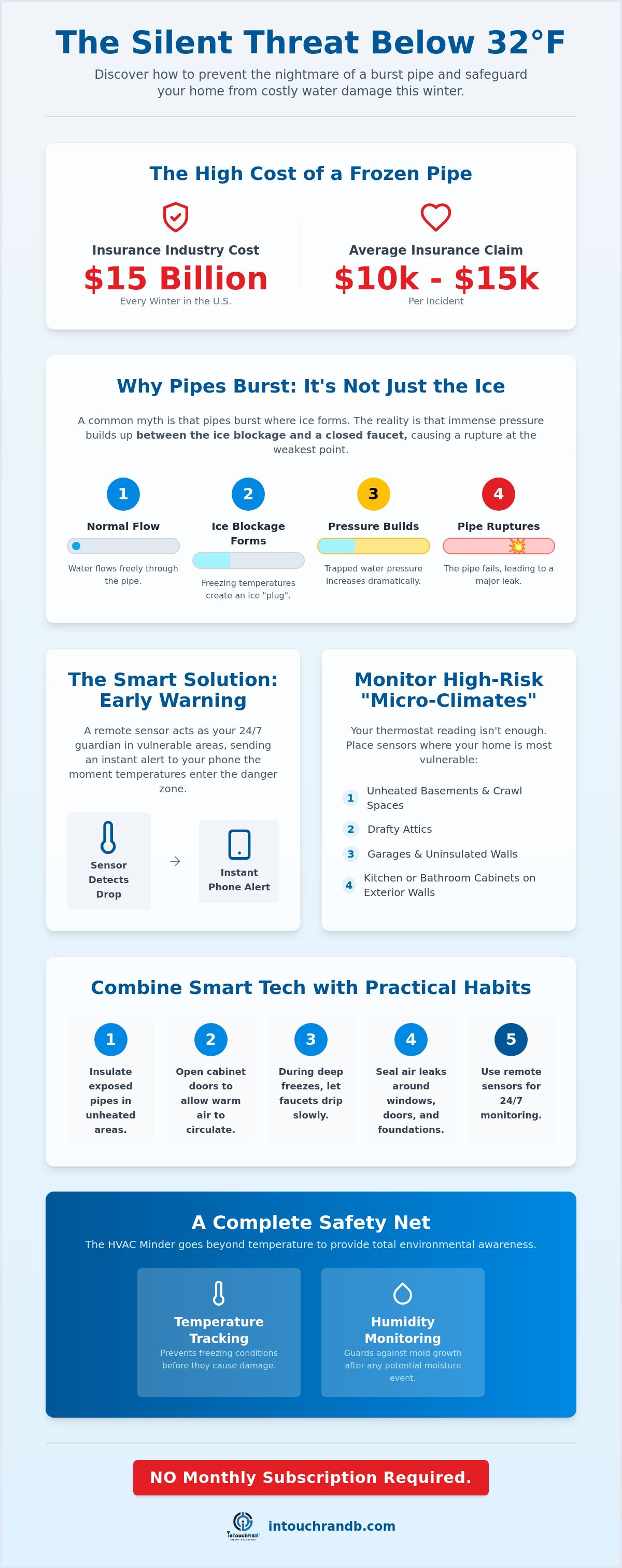
Water is a powerful force of nature. When it turns from a liquid to a solid, it expands by approximately 9% in volume. This expansion might seem small, but within the rigid confines of a metal or plastic pipe, it creates thousands of pounds of pressure that no material can withstand for long. Most people assume that a pipe bursts exactly where the ice forms, but the physics are actually more complex. The burst usually happens between the ice blockage and a closed faucet. The ice acts like a plug, and as it grows, it pushes the remaining liquid water toward the tap. This hydraulic pressure eventually causes the pipe to fail at its weakest point, often a joint or a section of thinned metal.
Because this process happens deep inside your walls or under your floorboards, it is often a silent disaster. You might not even know there is a problem until the ice thaws and water begins pouring into your living space. This is why a prevent frozen pipes sensor is so critical for homeowners. It acts as your 24/7 eyes in the dark, unheated corners of your property where you cannot easily check the conditions yourself. By monitoring the air temperature surrounding your plumbing, these sensors give you the lead time needed to take action before the pressure reaches a breaking point.
To better understand this concept, watch this helpful video:
The 32-Degree Danger Zone
It is a common mistake to think your pipes are safe just because your thermostat is set to 68 degrees. While water freezes at 32°F, the temperature inside a drafty crawl space or an uninsulated attic can be much lower than what you feel in the living room. Drafts can create a "wind chill" effect inside these small spaces, accelerating the freezing process even when the outdoor temperature hasn't reached a record low. When winterizing your home, it is vital to know your materials. Copper pipes are highly susceptible to bursting because they are rigid and do not stretch. PEX (cross-linked polyethylene) is more flexible and can sometimes expand without breaking, but it is still not immune to the extreme hydraulic pressure caused by ice blockages. Installing a prevent frozen pipes sensor in these specific high-risk zones ensures you are alerted the moment the micro-climate around your plumbing enters the danger zone.
The Financial Impact of a Burst Pipe
The cost of a single burst pipe can be staggering for any property owner. Research shows that the average insurance claim for water damage from frozen pipes ranges between $10,000 and $15,000. If you aren't home to catch the leak immediately, that figure can easily climb as water ruins flooring, drywall, and expensive electronics. Mold growth is another major concern, as it can begin to take hold within just 24 to 48 hours of the initial soak. Insurance companies may also deny claims if they determine the damage resulted from neglect or a failure to take reasonable precautions. Using a dedicated tool like the HVAC Minder provides the documentation and early warning you need to protect your assets. It offers a simple, proactive way to avoid the stress of a major restoration project and the long-term financial burden of increased insurance premiums.
How Remote Sensors Actually Stop the Damage
Most smart thermostats are great for keeping you comfortable, but they don't know what's happening in your crawl space. A prevent frozen pipes sensor is designed to live exactly where the danger is highest. These small devices monitor the ambient temperature in unheated areas like basements, attics, or near exterior walls. By placing a prevent frozen pipes sensor in these micro-climates, you get a real-time look at the conditions your plumbing is actually facing. It's about having a watchful guardian that stays awake while you sleep.
The National Weather Service suggests several ways to prevent frozen pipes, such as keeping the heat on and letting faucets drip. However, you can't always be there to turn the knob. When your sensor detects a drop in temperature, it sends an alert directly to your smartphone. This proactive notification gives you the window of time needed to call a neighbor or adjust your smart heater before ice begins to crystallize inside the line. Modern systems can even track humidity levels, which is vital during the thaw phase to ensure you don't end up with a secondary mold problem.
Temperature Thresholds and Alerts
Setting your alerts correctly is the difference between a minor chore and a major repair. We recommend a warning alert at 40°F. This gives you plenty of lead time to react. If the temperature continues to fall, a critical alert at 35°F should trigger immediate intervention. Most reliable systems use a combination of text and email notifications. This multi-channel approach ensures that even if you miss a single ping, the next one will get your attention before the situation becomes dire.
WiFi vs. Cellular Monitoring
Stability is everything for remote monitoring. WiFi sensors are an excellent choice for primary residences where the internet is consistently active. For remote cabins or boats where WiFi might be spotty, cellular options provide an extra layer of security. A direct-to-cloud connection is far superior to a local-only alarm. If you're away and the power goes out, a cloud-based system for reliable environmental monitoring can notify you that the sensor has gone offline, alerting you to a potential heating failure.
How to Set Up Your Frozen Pipe Prevention System
Setting up a prevent frozen pipes sensor is a straightforward DIY project that doesn't require a professional plumber or expensive tools. Unlike complex smart water shut-off valves that require cutting into your main line, these sensors are "plug-and-play" guardians. Your first priority is choosing a device that monitors both ambient temperature and power status. If your furnace fails during a blizzard, you need to know immediately, as your pipes will follow that downward temperature trend within just a few hours. Once you have your hardware, you'll simply connect your communication hub to your home WiFi network and prepare for placement.
Step 1: Strategic Sensor Placement
Success depends on putting your sensors where the danger is most likely to strike first. Many homeowners make the mistake of placing sensors in plain sight, but the real threats are in "unseen" areas like crawl spaces and attics. These spots are often poorly insulated and subject to drafts that create micro-climates far colder than the rest of your home. You should also target basements and any plumbing runs located near exterior walls. We recommend placing a prevent frozen pipes sensor near your main water shut-off valve. If this area freezes and bursts, you won't be able to stop the flood until the city turns off the water at the street.
One practical tip is to avoid placing your sensor directly on a cold concrete floor. Concrete acts as a "heat sink," which means it absorbs and holds the cold, potentially giving you a false reading that doesn't reflect the actual air temperature around your pipes. Instead, use a mounting bracket or even a small piece of wood to create a buffer. This ensures your environmental monitoring system provides the most accurate data possible without interference from the cold surface below.
Step 2: Configuring Your Alerts
Once your sensors are in place, it's time to customize how the system talks to you. Most modern setups allow you to configure settings via a web browser or a dedicated smartphone app. Don't just rely on your own phone number. Input multiple contact numbers, including a trusted neighbor or a property manager, to ensure someone can respond if you're out of cell range. You should also enable "Power Loss" notifications. If your heater goes out, your pipes are on a countdown to freezing, and knowing about the power failure early gives you a massive head start.
Before the first freeze arrives, you must test your setup to ensure total reliability. A simple way to do this is by placing an ice pack directly against the sensor for a few minutes. This should trigger a mock alert on your phone. Seeing that notification pop up provides the peace of mind that your system is active and ready to act as a watchful guardian for your home. You can check our comparison matrix to see which device best fits your specific property layout.
5 Proactive Tips to Combine with Your Sensors
While your prevent frozen pipes sensor acts as a watchful guardian, combining it with physical preventative measures creates a multi-layered defense for your home. Technology tells you when there's trouble, but these proactive steps help ensure that the trouble never actually happens. One of the most effective things you can do is insulate any pipes located in unheated areas. Foam sleeves or fiberglass wrap are inexpensive and easy to install. You should also take a walk around your foundation to look for small cracks where cold air whistles in. Sealing these gaps with caulk or spray foam can significantly reduce the wind chill inside your crawl space.
Another simple habit is keeping cabinet doors open under kitchen and bathroom sinks during extreme cold snaps. This allows the warm air from your living space to circulate around the plumbing. It might seem like a small thing, but it can keep the ambient temperature around those pipes just high enough to avoid a freeze. These manual habits work in tandem with your digital monitoring to keep your property safe and dry.
The "Drip" Method Explained
There is a common myth that letting a faucet drip works because it keeps the water moving. In reality, the drip is about relieving the immense pressure that builds up between an ice blockage and a closed tap. If you don't relieve this pressure, the pipe will eventually fail at its weakest point. You don't need a heavy flow; a very slow, steady drip is all it takes to be effective. Focus on the faucet that is furthest from the water main, as this ensures the pressure relief travels through the longest run of plumbing in your home.
Managing Power and Heat
If you're heading out for the winter, it's tempting to turn the heat way down to save on bills. However, you should never set your thermostat below 55°F. Keeping the internal structure of the house warm is the best way to support your prevent frozen pipes sensor and keep your plumbing safe. Of course, even a high thermostat setting won't help if your furnace loses power. This is where AC voltage monitoring becomes your best friend. By using an AC Minder, you can monitor the specific circuits that power your heating system.
If the power fails, you'll get an immediate notification, giving you time to act before the house cools down. Combining smart monitoring with these manual habits gives you the ultimate peace of mind. Ready to secure your property for the season? Visit our shop today to find the perfect monitoring solution for your home.
Why the HVAC Minder is the Ultimate Winter Guardian
Many smart home guides push you toward complex ecosystems that require a central hub or a monthly fee just to monitor a single temperature point. The HVAC Minder breaks this pattern by offering a standalone, professional-grade solution that connects directly to your WiFi. It serves as the ultimate prevent frozen pipes sensor because it tracks temperature, humidity, and dew point simultaneously. The dew point (the temperature at which air becomes saturated and water droplets form) is a critical metric for preventing the moisture buildup that often leads to mold during a winter thaw. By monitoring these three factors at once, you gain a level of protective vigilance that standard thermostats simply cannot provide.
This system isn't just for traditional homes. It's a versatile tool for RV owners and boaters who need to keep a watchful eye on their assets during the off-season. Whether you're worried about a cabin in the woods or a vessel in a marina, having a dedicated prevent frozen pipes sensor ensures you're never caught off guard by a sudden cold front. For those whose maritime interests involve commercial vessels and global logistics, you can discover Adimar Shipping, Inc. for specialized ship agency services. It acts as a reliable expert, providing the pragmatic reassurance you need to enjoy your winter without constant anxiety about what's happening back at the property.
Real-Time Protection Without the Hassle
Setting up your monitoring shouldn't feel like a second job. You can configure the HVAC Minder in minutes using any smartphone browser, which eliminates the need for a complex hub or a deep understanding of smart home networking. Once active, it acts as a watchful guardian, sending alerts directly to your phone the moment your custom thresholds are breached. You can even add secondary recipients, such as a property manager or a trusted neighbor, to ensure that a notification is never ignored. Its rugged design is specifically built for the harsh environments of attics and crawl spaces, where standard consumer electronics often fail due to dust or extreme temperature swings.
A Solution for Every Vulnerable Spot
Plumbing protection is just one part of a complete safety strategy. If you're worried about basement flooding during a spring thaw or a heavy rain event, the Sump Pump Minder offers targeted protection for your home's drainage system. Finding the right balance of sensors for your property is easy when you use our comparison of different Minders. This matrix helps you visualize which devices cover temperature, power, or water levels so you can build a customized safety net that fits your specific needs. Whether you are protecting a primary residence, a remote cabin, or a boat, a dedicated sensor is a small investment that pays for itself the first time an alert reaches your pocket. Prevention is always cheaper than a plumber, and staying informed is the best way to ensure your assets remain safe all winter long.
NO Monthly Subscription Required.
Secure Your Home Before the First Freeze
Safeguarding your property against winter's worst doesn't have to be a complex or high-cost project. By understanding the physics of ice pressure and strategically placing a prevent frozen pipes sensor in unheated areas, you've built a professional-grade defense. You now know that early detection is the only way to stop a silent leak before it turns into a five-figure restoration bill. When you combine smart monitoring with simple habits like pipe insulation, you create a safety net that works even when you're miles away.
Gaining this level of security is simple and only takes a few minutes of your time. Our devices offer an easy DIY setup and provide 24/7 text and email alerts to keep you connected to your home's health. Don't let another cold snap cause you anxiety. Protect your home today with the HVAC Minder and rest easy knowing your assets are under a watchful eye. You've taken the right steps to stay ahead of the weather and keep your property dry.
NO Monthly Subscription Required.
Frequently Asked Questions
At what temperature do pipes start to freeze?
Water inside your plumbing begins to turn to ice at 32°F (0°C). However, most pipes are somewhat protected by the home's structure, so they generally reach the danger zone when outdoor temperatures drop below 20°F for an extended period. It is best to set your prevent frozen pipes sensor to alert you at 40°F to ensure you have enough lead time to intervene before actual ice forms.
Where is the best place to put a temperature sensor for pipes?
You should place your sensors in the coldest, most isolated areas where your plumbing runs, such as crawl spaces, attics, or basements. Avoid placing them directly on cold concrete floors, as this can skew the readings by absorbing the ground's chill. Instead, mount them on a wall or a wooden joist near the most vulnerable exterior-facing pipes to get the most accurate environmental data.
Will a WiFi sensor work if the power goes out?
A standard WiFi sensor requires an active internet connection to send alerts, so it won't function if your router loses power. To solve this, you can plug your router into a small battery backup. Some advanced systems also send a "Heartbeat" or "Loss of Signal" notification from the cloud, which lets you know immediately if your device has gone offline due to a power failure.
How can I monitor my house temperature from my phone for free?
You can monitor your property by choosing hardware that doesn't require an ongoing service contract. While you'll need to pay for the device upfront, many professional-grade sensors allow you to receive unlimited text and email alerts without any extra costs. This is the most cost-effective way to maintain 24/7 protective vigilance over your property during the winter months without worrying about hidden fees.
Do I need a plumber to install a frozen pipe sensor?
No, you don't need a plumber because these sensors don't require any cutting or modification to your water lines. Most devices are designed for a simple DIY setup that involves connecting the hub to your WiFi and placing the sensors in high-risk zones. It's a pragmatic and quick solution that offers immediate peace of mind without the cost or scheduling hassle of a professional service call.
Can I use a sensor in an RV or boat to prevent freezing?
Yes, remote sensors are an excellent choice for RVs and boats stored in cold climates. Using a tool like the HVAC Minder or Bilge Minder allows you to track the internal climate of your vessel or vehicle from anywhere. This is especially useful for preventing damage to onboard water tanks and delicate plumbing systems that are highly susceptible to cold when left unattended in storage. Additionally, if you use cold water purposefully for wellness, you can learn more about professional cold plunge tubs designed for health and recovery.
What is the difference between a leak detector and a temperature sensor?
A leak detector tells you that a pipe has already burst and water is present, while a prevent frozen pipes sensor tells you that conditions are right for a freeze to happen. Using a temperature sensor is a proactive approach because it allows you to stop the damage before it starts. It is the difference between being alerted to a flood and being alerted to prevent one.
How do I get an alert if my furnace fails in the winter?
You can get an immediate notification by using an AC voltage monitor like the AC Minder. This device plugs into a standard outlet and monitors the electrical circuit powering your heating system. If the power drops out or the furnace stops drawing current, the system sends an alert to your phone so you can fix the heat before your pipes reach dangerously low temperatures.
NO Monthly Subscription Required.

Article by
Jimmy Nesbitt
Principle
Be the first to comment