

If your bilge pump starts running while you’re away, would you know before a small leak becomes a serious problem? Learning how to prevent boat from sinking at dock starts with a simple truth: a pump can move water, but it can’t fix the leak that’s letting it in.
It’s understandable to feel uneasy leaving your boat unattended, especially when shore power drops or a weak battery could affect onboard equipment. A working bilge pump is important, but it needs regular checks. Alerts can also help you notice trouble when you’re not there.
Use this checklist to create a repeatable routine for looking for water, checking bilge equipment, and reviewing power and battery conditions. Monitoring can report high water or bilge-pump activity, and a second alert recipient may help arrange an in-person check while you’re away. These steps don’t replace maintenance or an in-person response, but they can give you clearer warning and a practical next step.
Key Takeaways
- Understand how water can enter faster than a boat can remove it, and why a developing problem may go unnoticed while you’re away.
- Use a repeatable check of the bilge, pump, discharge path, visible water, power, and battery, following your equipment manuals.
- Reduce the risk of a dockside sinking by combining inspections, a working automatic bilge pump, high-water sensing, and alerts.
- Before leaving, confirm your alert recipients can respond and know what to check if a warning arrives.
- Bilge Minder can report high water and bilge-pump activity to help you decide when an in-person check is needed.
How can a boat sink at the dock, even when nobody is aboard?
A dockside sinking happens when water enters a boat faster than it can safely be removed. The change may start out of sight: a leak develops, water builds in the bilge, or equipment stops working as expected. The bilge is the lowest interior area where water collects. With nobody aboard to notice a change or investigate, a manageable warning can go unchecked.
Possible sources include a leak around a hull fitting, a damaged hose or connection, or rainwater that can’t drain because an opening is blocked. These are possibilities, not a diagnosis. Water in the bilge, an unusually damp area, or a pump that runs often is a reason to inspect the boat and find the cause. It doesn’t prove exactly what has failed. If inspections reveal worn components and you need replacement hardware or supplies, click here to explore boat and yacht equipment.
For a visual overview of why boats can sink and ways to reduce the risk, watch this BoatUS video:
What can cause a docked boat to take on water?
Water intrusion can begin with a leak or a drainage problem. An equipment or power issue can also affect how water is removed. An unattended boat may continue taking on water before anyone sees a change in its position or notices water inside. Treat warning signs as a reason to investigate promptly. Identifying the cause may require a closer inspection or help from a qualified marine professional. For long-term maintenance, addressing mechanical wear, or off-water options, explore Marine mechanical repairs and boat storage to keep your vessel in peak condition.
Why is an automatic bilge pump not a complete safeguard?
A bilge pump moves accumulated water out of the boat. It needs power, a clear discharge path, and proper operation to do that job. The pump can reduce water in the bilge, but it can’t repair a leak or address every equipment failure. If it runs frequently or continuously, investigate why instead of treating its operation as proof that everything is fine.
A pump alone also doesn’t tell an absent owner that it’s running. Without separate monitoring, you may not know there’s a problem until you return or someone nearby notices. That’s why how to prevent boat from sinking at dock involves more than relying on a pump. Regular checks help identify developing issues, and alerts can bring a warning to someone’s attention. Monitoring supports awareness, but it doesn’t replace inspection or an in-person response.
Which bilge, power, and battery checks help reduce sinking risk?
A consistent inspection makes it easier to spot changes before they’re overlooked. Choose a routine you can repeat, and follow your boat and equipment manuals for the correct way to inspect or test each system. The goal isn’t to assume a pump or power connection is reliable. It’s to notice when something looks or behaves differently.
How should owners check bilge pumps and high-water areas?
Make sure you can access the bilge, then look for unexpected water, debris, or anything that could block the pump or its discharge path. Note the water level and whether it changes between visits. Test the pump only as directed by its manufacturer. If the instructions aren’t clear, don’t guess at a test method.
Keep track of unusual activity, such as a pump that runs more often than usual, and investigate rather than treating it as routine. A high-water warning also calls for a prompt in-person check. It can indicate rising water, but it doesn’t identify the cause. For background on causes discussed in boating coverage, see The Log’s overview of dockside sinking causes.
Why check shore power and battery condition?
Shore power is the electrical supply connected to the dock. If it’s lost, onboard systems that rely on electricity may be affected. Look over accessible shore-power connections for visible damage or an unexpected disconnection, but don’t handle damaged electrical equipment. Arrange an in-person assessment by someone qualified to inspect it.
Check battery condition using the boat’s monitoring equipment and the battery maker’s guidance. A battery alert can draw attention to a voltage concern, but it can’t correct the problem or confirm its cause. Check power and battery alerts promptly, and arrange for someone to inspect the boat if you’re away.
- At each visit: Look for unexpected bilge water and check that the area and pump discharge path are clear.
- As directed by the manuals: Test the pump and review shore-power and battery checks.
- If a warning repeats: Record when it occurs and arrange an in-person inspection if the concern persists.
This repeatable routine is a practical part of how to prevent boat from sinking at dock, but checks alone can’t tell you what’s happening between visits. For added awareness of high water and bilge-pump activity, learn more about Bilge Minder bilge monitoring. Alerts can help guide your next step, while an in-person inspection is still needed to assess and address a problem.
Which dockside protections work together, and what can each one do?
Dockside protection works best in layers. Inspections help you notice changes, a bilge pump removes water, and monitoring can alert someone when conditions need attention. Each layer has limits. Together, they create more opportunities to detect a problem and arrange an in-person response, rather than relying on one piece of equipment to do everything.
| Protection layer | What it can detect or do | What it can’t do | Your next action |
|---|---|---|---|
| Routine inspection | Visible water, debris, or changes in equipment condition | Watch the boat between visits or identify every hidden fault | Investigate changes and arrange a closer inspection if needed |
| Automatic bilge pump | Remove accumulated water when it has power and operates properly | Repair a leak or alert you by itself | Check pump operation and investigate repeated activity |
| High-water sensing | Signal rising water when the sensor is set up for that purpose | Determine why water is rising or stop the source | Arrange an in-person check as soon as practical |
| Remote notifications | Report monitored conditions to designated contacts | Guarantee message delivery, diagnose a fault, or respond in person | Check the alert and contact someone who can inspect the boat |
What does a high-water or bilge-pump alert tell you?
A high-water alert signals that water has reached the sensor’s configured threshold. A pump-activity alert can show that the pump is running, and repeated activity may be a reason to investigate. Neither alert confirms the source of the water or tells you whether a leak, blockage, or equipment issue is responsible. Treat the notification as a prompt to check, not a diagnosis.
How does remote monitoring complement dockside checks?
Remote reports can bring a monitored change to your attention while you’re away. If you can’t get to the boat, a second alert recipient, such as a marina manager or service technician, may be able to coordinate an in-person check. Before relying on alerts, confirm what the monitoring setup reports, who receives notifications, and what connectivity it needs. Check the equipment instructions and test its alert process as directed.
For how to prevent boat from sinking at dock, think in terms of a chain: inspections help spot changes, equipment helps manage water, and alerts prompt human action. Bilge Minder bilge monitoring can report high water and bilge-pump activity. Monitoring improves awareness, but it can’t guarantee a boat won’t sink or replace maintenance and an in-person response.
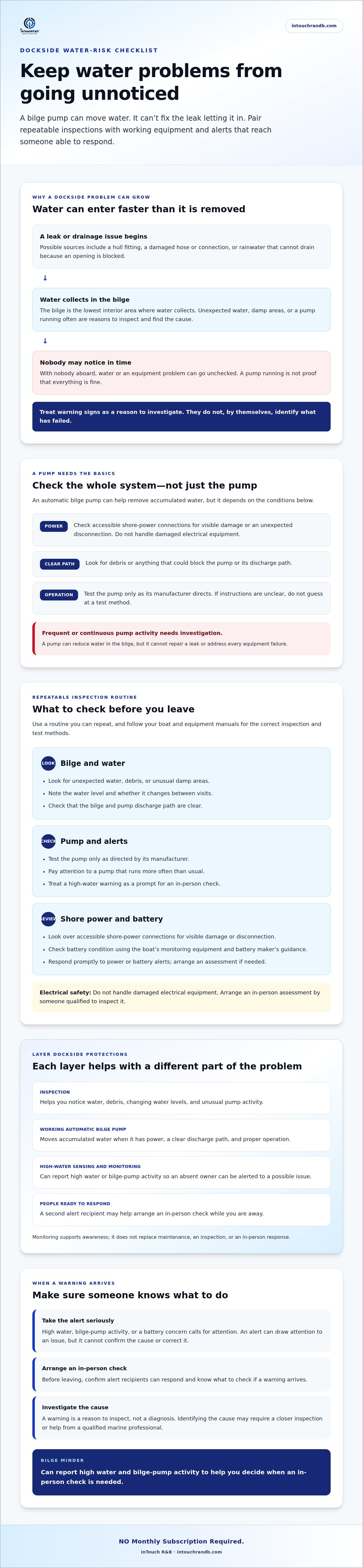
What should you do before leaving a boat unattended at the dock?
A short, repeatable departure routine can help you catch visible changes and make sure someone knows what to do if an alert arrives. Adapt these steps to your boat and equipment, and follow the relevant manuals. A checklist won’t rule out every problem, but it can make your final check before leaving more consistent.
What belongs on a pre-departure dockside checklist?
Work through the same sequence each time. If something looks different from your usual check, investigate rather than assuming it’s harmless.
- 1. Look for unexpected water. Check accessible bilge areas and note any water that wasn’t there before.
- 2. Review pump activity. Consider whether the pump has run more often than expected. If you’re unsure how to test it, use the pump and vessel manufacturers’ instructions.
- 3. Check the discharge path. Confirm it appears clear and unobstructed, as directed by your equipment guidance.
- 4. Look over shore power and battery status. Check accessible connections and any available battery readings. Treat damage or an unexpected power change as a reason to arrange an assessment, not to attempt an unfamiliar repair.
- 5. Review monitoring and notifications. Confirm the equipment appears operational and the intended alert recipients and settings are current, following the monitoring system’s instructions.
- 6. Confirm the response plan. Know who can reach the boat, how to contact them, and who should be notified if they can’t inspect it.
How should you respond to a high-water or pump alert?
Use a clear sequence: acknowledge the alert so you know it’s been received, then contact someone who can safely check the boat in person. A marina manager or service technician may be a practical nearby contact. Ask them to assess the situation and report what they find. If they can’t reach the boat or the condition appears to be worsening, follow the marina’s established escalation process and contact another appropriate responder.
Don’t assume that acknowledging or silencing a notification fixes the underlying issue. The alert reports a condition, not its cause, and an inspection is needed to determine what requires attention. Before you leave, make sure your secondary contact agrees to receive alerts and understands the next step.
A reliable response plan is an important part of how to prevent boat from sinking at dock. To explore monitoring equipment that can help you stay informed about high water and bilge-pump activity, learn about inTouch R&B boat monitoring.
How can inTouch R&B help you stay informed about dockside water risks?
Regular inspections and working bilge equipment remain the foundation of dockside prevention. Monitoring adds another layer by reporting selected conditions while you’re away, helping you decide whether someone should check the boat. It doesn’t stop water from entering, repair equipment, or replace an in-person response.
What dockside conditions can Bilge Minder help monitor?
Bilge Minder can monitor high water and bilge-pump activity. The broader inTouch R&B monitoring system can also track power and battery conditions. These signals can draw attention to a change, such as a high-water condition or pump activity that warrants a closer look. They don’t identify the cause or confirm which repair is needed.
Think of a sensor as a reporter, not a pump or repair tool. If an alert arrives, someone still needs to inspect the vessel and determine what’s happening. To check whether the product’s monitoring capabilities fit your needs, review the Bilge Minder monitoring details.
How can owners make alerts actionable?
Before relying on alerts, decide who will receive them and who can reach the boat. Choose a primary contact who can review notifications, then name a practical secondary responder, such as a marina manager or service technician. Confirm that each person is willing to be contacted and knows what action to take if a warning arrives.
Check the monitoring setup’s instructions to understand which conditions it reports, how notifications are sent, and what connectivity it depends on. Alert delivery depends on the system and working connectivity, so don’t assume every message will arrive in every circumstance. A clear plan should identify who will inspect the boat, how they’ll report what they find, and whom to contact if they can’t get there.
As part of your approach to how to prevent boat from sinking at dock, combine remote awareness with routine checks and a real person ready to respond. If you’re comparing ways to stay informed, explore boat monitoring options and consider which monitored conditions and alert recipients match your plan.
NO Monthly Subscription Required.
Make Your Dockside Routine a Lasting Habit
Knowing how to prevent boat from sinking at dock starts with repeatable checks, not a single piece of equipment. Look for unexpected water, confirm the bilge pump and its discharge path are in working order according to the manuals, and keep an eye on shore power and battery conditions.
These checks work best alongside layers of protection. A pump can remove accumulated water, while high-water and pump-activity monitoring can alert you to changes. A clear response plan matters too: choose a reachable primary contact and a secondary person who can arrange an in-person inspection if you’re away. Alerts can support a timely response, but they don’t diagnose or fix the problem.
inTouch R&B monitoring can report high water, bilge-pump activity, power, and battery conditions, with alerts sent to an owner and a secondary contact. Review the system and consider whether it fits your dockside response plan.
With a steady routine and the right people ready to respond, you can leave the dock with greater confidence. NO Monthly Subscription Required.
Frequently Asked Questions
Can a boat sink while it is docked?
Yes, a docked boat can take on water while nobody is aboard. Being tied up doesn’t remove the need for regular checks. A bilge pump may remove accumulated water, but water entering faster than the pump can remove it, loss of power, or equipment problems can still create risk. Look for changes, such as unexpected water or unusual pump activity, and arrange an in-person inspection if something seems wrong.
Is an automatic bilge pump enough to prevent a boat from sinking?
No. An automatic bilge pump is an important part of water management, but it can’t guarantee that a boat won’t sink. It needs power and must be working properly, and it may not keep up with every situation. Follow the manufacturer’s maintenance and testing instructions, investigate unusual or repeated pump activity, and consider monitoring that can alert someone while the boat is unattended.
How often should I check my boat at the dock?
Set a regular inspection routine that fits how your boat is kept and used, and follow the vessel and equipment manufacturers’ maintenance guidance. Check for unexpected water, unusual bilge-pump activity, and changes in power or battery status. Remote alerts can help you notice conditions between visits, but they don’t replace physical inspections. Make sure someone you trust can check the boat if a warning arrives while you’re away.
What should I do if my boat’s high-water alarm goes off?
Arrange a safe, prompt in-person inspection. Contact someone who can reach the vessel, such as a marina manager or service technician, and share the alert details. A high-water alarm signals a condition, but it may not identify the cause. Acknowledging or silencing it doesn’t resolve the problem. Follow your boat’s emergency procedures and seek appropriate assistance if the person checking finds a serious or worsening issue.
Can shore-power loss cause a boat to sink?
Loss of shore power can affect onboard electrical systems, but the consequences depend on the boat’s setup and condition. Equipment that relies on power, including a bilge pump, may be affected. Monitoring power and battery conditions can help alert you to a change, but it can’t restore power or confirm that each system is working. If you receive a power or battery warning, arrange an in-person assessment.
Can remote boat monitoring prevent a boat from sinking at the dock?
Remote monitoring can help notify an owner or another contact about conditions such as high water or bilge-pump activity. That warning may help someone decide to check the vessel, but monitoring doesn’t remove water, repair equipment, or guarantee that a boat won’t sink. Use alerts alongside routine maintenance and inspections. Before leaving, confirm who receives notifications and who can reach the boat to investigate if needed.
Explore inTouch R&B boat monitoring solutions to see whether remote bilge monitoring fits your dockside response plan. NO Monthly Subscription Required.

Article by
Jimmy Nesbitt
Principle
Be the first to comment