

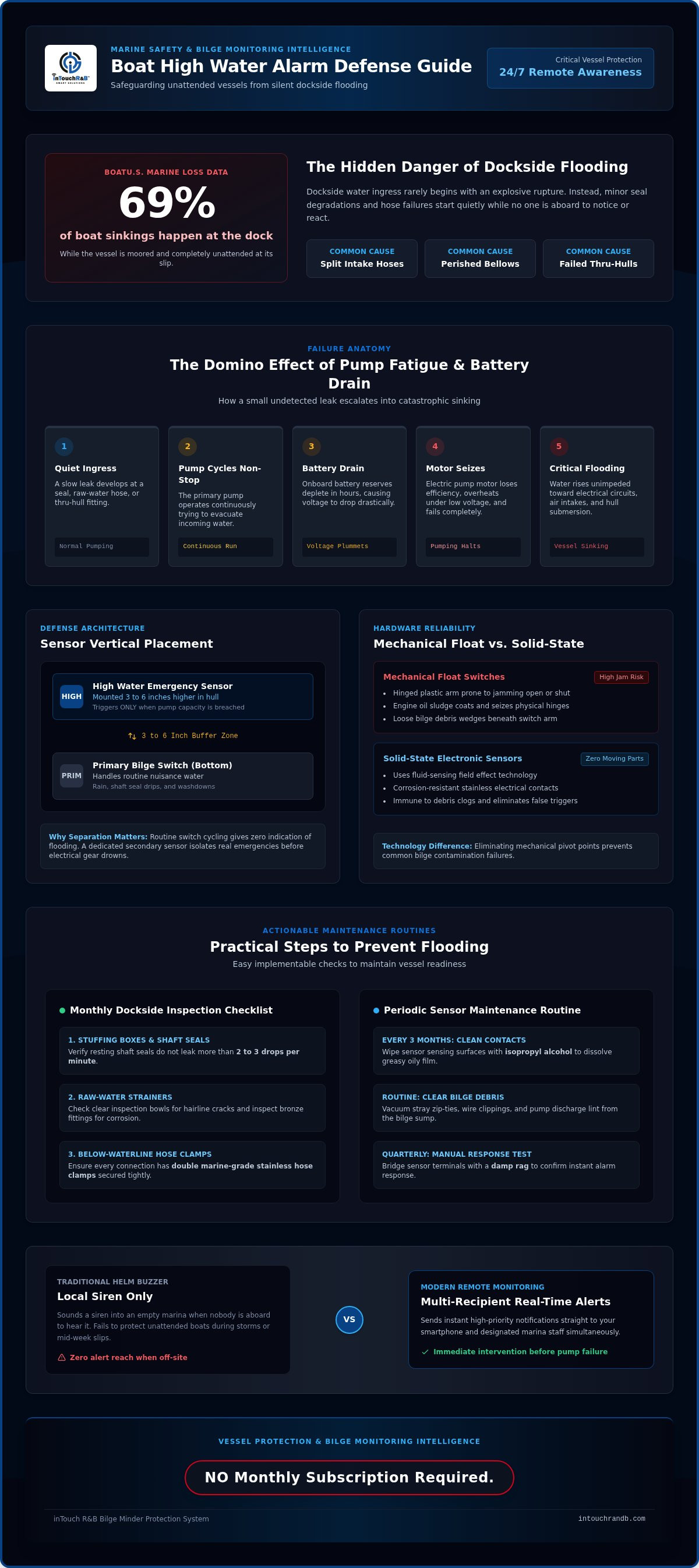
According to BoatU.S., 69% of boat sinkings happen while the vessel is safely tied to the dock. A traditional helm buzzer won't do much good if nobody is aboard to hear it, making a modern boat high water alarm system your most critical line of defense against unattended water intrusion.
We've all felt that pit in our stomach during a heavy storm, wondering whether a mechanical switch jammed or if a dead battery left the bilge vulnerable. You shouldn't have to live with the constant worry of arriving at the marina only to find your pride and joy sitting dangerously low in the water.
This guide shows you how modern remote monitoring prevents dockside disasters, sends instant alerts straight to your smartphone, and safeguards your investment. We'll explore the practical differences between mechanical float switches and solid-state sensors, explain how simultaneous alerts keep both you and marina staff informed, and review dependable setups that operate smoothly without monthly fees.
Key Takeaways
- Understand why a dedicated boat high water alarm system serves as your critical secondary defense when primary pumps fail, protecting against silent dockside flooding.
- Compare traditional mechanical float switches with modern solid-state sensors to avoid debris clogs and eliminate false triggers.
- Apply straightforward installation practices, including optimal vertical sensor placement, to catch rising bilge water before it reaches vital vessel systems.
- Discover how multi-recipient remote alerts notify both you and marina staff in real time, delivering dependable peace of mind without monthly subscription fees.
Why Every Vessel Needs a Boat High Water Alarm System
Every boat owner relies on their primary bilge pump to keep the hull dry, but relying on a single mechanical switch creates a false sense of security. A dedicated boat high water alarm system acts as a vital secondary safety barrier, alerting you only when normal pumping capacity has been breached. While routine rain accumulation triggers standard drainage, high water alarms warn of an active breach before water reaches critical electrical circuits or engine air intakes.
Data from BoatU.S. reveals that 69% of boat sinkings happen while the vessel is moored at a slip. When a boat sits unattended, a traditional helm buzzer can sound for hours into an empty marina without anyone noticing. To see how modern setups protect against catastrophic dockside flooding, watch this helpful overview:
The Hidden Risk of Dockside Sinking
Dockside water ingress rarely happens in an explosive rush. Instead, failures occur quietly through split raw-water intake hoses, perished sterndrive bellows, or failed underwater thru-hulls. If shore power gets accidentally disconnected, the battery charger cuts out, leaving your primary pump running entirely on battery reserves.
Protecting your boat begins with regular dockside checks. Inspect these key areas monthly:
- Stuffing boxes: Verify shaft seals don't leak more than two to three drops per minute while resting.
- Raw-water strainers: Check clear inspection bowls for hairline cracks or corroded bronze fittings.
- Hose clamps: Ensure every below-waterline connection has double marine-grade stainless hose clamps secured tightly.
Primary Bilge Switches vs. High Water Alarms
A primary mechanical switch handles routine nuisance water from rain, shaft seals, or wet gear. In contrast, an emergency sensor for a bilge pump sits mounted three to six inches higher in the hull. Because the primary switch cycles frequently, it provides zero warning when water begins entering faster than the pump can discharge.
The Domino Effect of Pump Fatigue and Battery Drain
When a leak develops, the primary pump begins cycling continuously. Running non-stop drains onboard battery banks within hours. As voltage drops, electric pump motors lose efficiency, overheat, and eventually seize altogether. Once the pump fails, water rises unimpeded. Installing a dedicated Bilge Minder provides continuous oversight by tracking switch activations and voltage changes, giving you immediate warning before water reaches dangerous levels.
Key Components of Modern Marine High Water Alarm Systems
A reliable boat high water alarm system relies on three integrated parts: a dependable detection sensor, a communication processor, and a stable direct-current power supply. While traditional setups relied on simple noise buzzers, modern marine safety combines smart hardware to process raw bilge information into real-time alerts. Understanding how these hardware elements interact helps boaters build a foolproof defense system.
Detection Sensors: Mechanical Floats vs. Solid-State Detectors
Traditional mechanical float switches use a hinged plastic arm containing a physical switch. Over time, engine oil sludge coats the hinge, or loose bilge debris wedges beneath the arm, jamming it open or shut. Solid-state electronic sensors eliminate mechanical movement entirely. By using fluid-sensing field effect technology or corrosion-resistant stainless electrical contacts, they detect rising water without moving parts.
To keep your sensors operating properly, follow these simple maintenance habits:
- Clean sensor contacts: Wipe sensing surfaces every three months with isopropyl alcohol to dissolve greasy film.
- Clear loose debris: Vacuum stray zip-ties, wire clippings, and pump discharge lint from the bilge sump.
- Manual test: Bridge sensor terminals quarterly with a damp rag to confirm instant trigger response.
Alert Delivery: Local Helm Sirens vs. Remote Mobile Notifications
Audible sirens and dashboard lights satisfy basic commercial guidelines for Bilge high level alarms under federal maritime rules, but an audible tone does nothing if you are miles away from the marina slip. Modern systems link water sensors to an intelligent onboard hub. When water lifts the sensor, the hub transmits instant text messages and emails to your smartphone and your marina manager simultaneously. Explore complete multi-contact protection directly on the Bilge Minder product page.
Electrical Infrastructure and Voltage Monitoring
A dependable alarm must never share a switched accessory circuit that turns off when you switch off the master battery selector. Always wire sensors directly to your house battery bank using an unswitched, inline-fused circuit with marine-grade tinned copper wire and adhesive-lined heat-shrink connectors. Continuous voltage tracking ensures your monitoring system remains fully functional even during seasonal shore power outages. If you want seamless remote surveillance designed to safeguard your vessel, explore equipment options at inTouch R&B.
How to Choose the Right High Water Alarm for Your Boat
Selecting the best boat high water alarm system comes down to your storage setup, hull layout, and how quickly someone can reach the vessel during an emergency. A center console on a trailer has vastly different security demands than a twin-diesel cruiser berthed year-round in a wet slip. While many anglers book trips with professional outfitters like Bass Online to enjoy world-class waters without the operational upkeep, private boat owners must actively protect their own craft. Following a systematic five-step framework helps you invest in the right gear without overpaying for unnecessary extras.
Step 1 & 2: Assess Mooring Location and Sensor Layout
Start by considering how your vessel is kept. Wet-slipped vessels face continuous hydrostatic pressure against thru-hull fittings, making comprehensive monitoring mandatory. As highlighted by safety organizations focused on avoiding flooding problems, early detection is the only dependable way to stop uncontrolled hull breach before pumps get overwhelmed.
Next, evaluate how you want to run wiring through your stringers and bulkheads:
- Hardwired sensors: Best for central engine rooms where cabling can easily follow existing wiring raceways straight to the main distribution panel.
- Wireless sensors: Ideal for isolated forward compartments, lazarettes, or secondary bilge spaces where pulling long cable runs through finished headliners is impractical.
- Vertical mounting height: Position every detection sensor two to four inches above the primary pump switch so minor rain washdowns don't trigger false notifications.
Step 3 & 4: Select Connectivity and Multi-Party Notification
Modern remote systems require a data path to push alerts off the boat. Check your dock for steady 2.4GHz marina Wi-Fi, or choose an onboard cellular communication hub if you moor on a swinging mooring or remote anchor. The frequency band matters because long-range marina networks often operate on 2.4GHz frequencies that pass easily through fiberglass decks.
Crucially, confirm the hardware supports multi-recipient dispatch. If an alarm triggers while you are miles away at work, simultaneous text and email alerts sent directly to your slip neighbor or marina manager ensure rapid hands-on response before damage mounts. You can compare capabilities across models using this helpful comparison matrix of all inTouch R&B Minders.
Step 5: Examine Ownership Costs and Subscription Models
Many marine tracking gadgets lure boaters in with low hardware prices, only to charge hefty recurring monthly fees just to keep the communication link active. Over several seasons, those recurring charges quickly eclipse the value of the device itself. Prioritize standalone systems that offer automated cloud reporting and instant smartphone alerts without locking you into monthly contracts.
Actionable Tip: Before finalizing your setup, verify that the manufacturer provides responsive technical support and accessible firmware updates. A dependable alarm system should be simple to test each spring and easily serviceable for years of trouble-free protection.
Step-by-Step Installation and Sensor Placement Best Practices
Installing a boat high water alarm system requires careful planning to prevent false alarms while guaranteeing immediate detection when genuine emergencies occur. Cutting corners with wiring or rushing sensor placement puts your vessel at risk. Following marine electrical best practices ensures your system triggers reliably the moment rising water threatens your hull.
Determining Sensor Mounting Height and Position
Mount your high water sensor between two and four inches vertically above the turn-on height of your primary bilge pump switch. This critical vertical offset allows standard pumps to manage minor washdowns without sending nuisance alerts to your phone. At the same time, it ensures the alarm triggers well before water reaches starter motors, engine oil pans, or battery terminals.
Keep these placement rules in mind during physical mounting:
- Avoid turbulent zones: Place sensors away from high-flow raw water intake sea chests and direct engine exhaust runs.
- Protect from moving belts: Ensure cables and sensors sit completely clear of alternating belts, pulleys, and exposed drive shafts.
- Ensure clean access: Mount hardware where you can easily reach down to inspect contacts and perform seasonal wipe-downs.
Wiring, Fusing, and Direct Battery Connections
Never splice a safety alarm into a helm accessory circuit controlled by a master battery switch. When you leave the slip and turn off battery switches, the monitoring system would shut off too. Instead, run marine-grade tinned copper wire directly to the house battery bank terminals.
Install an in-line fuse holder within seven inches of the positive battery terminal to satisfy marine electrical safety standards. Protect all bilge wire joints using adhesive-lined, heat-shrink butt connectors. Heat-activated internal sealant blocks corrosive salt air, stopping hidden copper corrosion before it severs your electrical path.
Testing and Validating Alert Transmission
Never assume an alarm functions simply because a built-in test button beeps. Test the entire loop quarterly by introducing actual water into the bilge or immersing the sensor in a small cup of clean water. Confirm that the sensor detects the fluid and that automated text and email alerts deliver to all designated contacts within seconds.
Expanding your monitoring strategy across all critical onboard systems prevents catastrophic losses before they develop. Take proactive control of your vessel today by exploring advanced protection gear at inTouch R&B remote marine solutions.
Protecting Unattended Vessels with inTouch R&B Bilge Minder
Traditional high water buzzers only work when someone is standing close enough to hear them. The Bilge Minder transforms vessel protection into an active, intelligent defense system. Instead of waiting for water to breach your floorboards, it serves as an advanced boat high water alarm system that unifies high water detection, pump run-time telemetry, and real-time battery voltage tracking into a single, compact hub.
Proactive vs. Reactive: Catching Leaks Before Sinking
Most boat flooding starts as a minor trickle that escalates while the boat sits unattended. Bilge Minder tracks every single activation of your primary bilge switch. If your pump begins cycling more frequently than normal, or runs continuously for 15 minutes due to an intake clog or severe breach, the system flags the abnormal behavior immediately.
Continuous monitoring provides three vital layers of protection:
- Early leak warning: Detects creeping hull leaks before bilge water ever reaches emergency thresholds.
- Run-time alerts: Flags mechanical switch hang-ups that threaten to burn out pump impellers.
- Battery voltage tracking: Monitors 12V supply health in real time so weak batteries never leave your bilge defenseless.
Multi-Recipient Notifications and Rapid Emergency Response
Distance shouldn't compromise your boat's safety. When a potential hazard triggers an alert, the system dispatches simultaneous automated text messages and emails to multiple recipients. While you review the warning on your phone at home or at the office, an alert reaches your marina manager, dockmaster, or local technician at the same instant. This immediate handoff gives personnel on the ground the green light to step aboard, assess the bilge, and shut a leaking seacock before disaster strikes. Secure cloud infrastructure guarantees that no alert is ever lost or delayed in transit.
Seamless Setup and Zero Subscription Burdens
Setting up your onboard monitoring hub takes just minutes. You don't need proprietary software; simply open any standard web browser on your phone, tablet, or laptop to adjust settings and assign alert recipients. The system accommodates both wired sensor runs and flexible wireless detectors, allowing you to secure hard-to-reach aft lazarettes, bow thruster compartments, and main engine sumps with equal ease.
Best of all, this continuous dockside protection avoids the burden of recurring monthly cellular bills or app fees. You own the hardware outright and enjoy perpetual peace of mind. Discover full vessel security solutions at inTouch R&B.
Take Command of Your Vessel's Dockside Safety
Leaving your boat unattended shouldn't mean enduring constant worry about failed hoses, split bellows, or silent power outages. With BoatU.S. documenting that 69% of boat sinkings happen while docked, relying solely on standard primary switches or audible helm buzzers leaves your pride and joy exposed to unnecessary risk. Installing a modern boat high water alarm system provides the reliable, watchful barrier your boat deserves.
Real vessel security comes from proactive detection and instant communication. By dispatching simultaneous multi-recipient alerts to both you and your marina manager, smart monitoring ensures immediate help reaches your slip long before rising water damages engines or batteries. Because alerts route through secure cloud delivery, you know critical warnings will never get lost in transit. Give yourself true peace of mind whenever you step off the gangway. Protect your vessel today with inTouch R&B Bilge Minder solutions. NO Monthly Subscription Required.
Frequently Asked Questions
Where should a boat high water alarm sensor be installed?
Install the sensor two to four inches above the turn-on height of your primary bilge pump switch, right in the lowest section of the sump where water naturally pools. Keep it positioned away from turbulent engine water discharges, belts, and shifting gear. Mounting it slightly above routine drainage levels prevents false alarms from light rainwater washdowns while catching dangerous hull breaches early.
Can a boat high water alarm notify my smartphone remotely?
Yes, a modern boat high water alarm system connects to an onboard communication hub that transmits automated text and email alerts directly to your smartphone. When linked through marina Wi-Fi or cellular networks, the hub dispatches emergency messages within seconds of sensor contact. This remote delivery gives you instant awareness whether you are at home, traveling, or miles away from the marina.
What causes boat bilge pumps to fail during high water events?
Bilge pumps typically fail because of debris clogs, mechanical switch hang-ups, or sudden battery exhaustion. When water floods in rapidly, the pump cycles continuously, which drains onboard battery reserves within hours. As voltage drops, the motor draws excess current, overheats, and seizes completely. In other cases, loose zip-ties, stray wire bits, or engine sludge wedge under the float switch arm.
Why is a high water alarm necessary if my boat already has an automatic bilge pump?
An automatic bilge pump handles routine moisture quietly without notifying you, meaning it won't warn you when a serious breach begins. If a split hose or loose thru-hull lets in more water than the pump can discharge, flooding happens fast. A dedicated boat high water alarm system serves as an essential secondary defense, signaling that your primary pump is overwhelmed before water reaches engines or electronics.
How do I test my boat high water alarm system safely?
Test your alarm by simulating real fluid contact rather than simply pressing an electrical bypass button. Pour clean fresh water into the bilge sump until it touches the sensor, or immerse the sensor directly into a cup of water. Confirm that the audible alarm triggers immediately, and check your smartphone to verify that automated text and email alerts arrive within seconds.
Does a high water alarm drain my boat battery while docked?
No, dependable high water monitoring units draw negligible standby power measured in micro-amps or minimal milliamps. They run continuously on standard 12V house batteries for months without depleting power reserves. Wiring the alarm directly to the house battery bank through a dedicated in-line fuse ensures continuous protection even when you turn off the master battery switches before heading home.
Can high water alerts be sent directly to my marina manager?
Yes, advanced systems like Bilge Minder feature multi-recipient dispatch that notifies multiple contacts simultaneously. When water intrusion trips the sensor, automated alerts dispatch to both you and your local marina dockmaster at the exact same moment. This immediate handoff allows dock staff to step aboard with portable salvage pumps and inspect seacocks while you are still en route.

Article by
Jimmy Nesbitt
Principle
Be the first to comment